Salotto Screening Series — Wednesday, June 17th, 2026, 7:00 pm at Salotto — New York, communities, and the making of a global game beyond the pitch
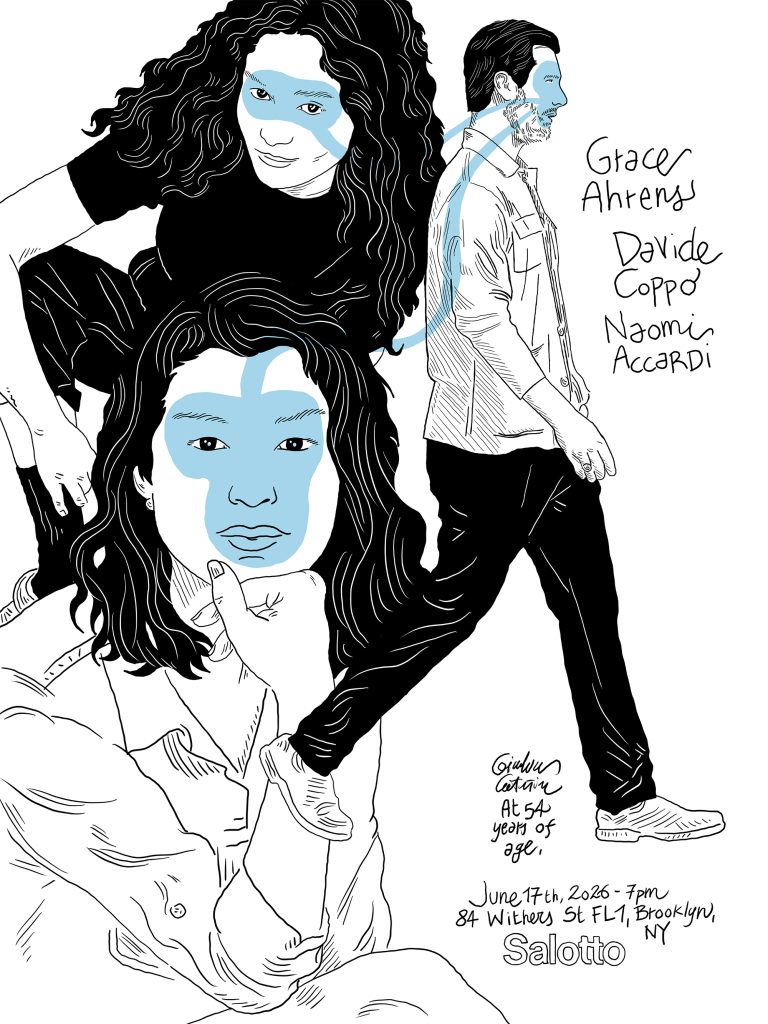
As the United States prepares to host the FIFA World Cup once again in 2026, thirty-two years after the tournament held in 1994, an important question emerges: what does soccer culture look like in America today?
This question lies at the heart of Soccer Society, the short documentary produced by Undici and presented in New York as part of the magazine’s international launch. Written by journalist Davide Coppo and directed by Marco Rosella, the film explores how soccer has evolved from a relatively marginal sport into a growing cultural force within American society.
Rather than focusing on professional leagues or star players, Soccer Society examines the communities, organizers, journalists, supporters, and cultural actors who are shaping the present and future of the game in the United States. Set in New York City—a place where cultures, languages, and identities intersect—the documentary uses soccer as a lens through which to observe broader social transformations.
The film is guided by the perspective of Davide Coppo, a journalist whose work frequently explores the relationship between sport, media, culture, and identity. Throughout his writing, Coppo has consistently treated sport not merely as entertainment but as a powerful social and cultural phenomenon. In Soccer Society, he investigates how soccer is becoming a shared language in one of the world’s most diverse urban environments.
Following the screening, the conversation expands through the participation of Naomi Accardi and Grace Ahrens, two voices offering distinct yet complementary perspectives on the contemporary game.
Naomi Accardi is a writer and co-founder of Systemarosa, a project dedicated to exploring the intersections of sport, culture, gender, and representation. Her work focuses on the stories often overlooked by mainstream sports media, examining how athletes, supporters, and communities are portrayed and remembered. Through her writing and editorial work, Accardi has contributed to a broader discussion about inclusion, identity, and the cultural narratives surrounding sport.
Joining her is Grace Ahrens, Executive Director of Women in Soccer, an organization committed to advancing opportunities and leadership for women throughout the soccer industry. In a country where women’s soccer has achieved remarkable sporting success and cultural visibility, Ahrens’ work addresses the ongoing challenge of ensuring equal access, professional development, and representation at every level of the game. Her perspective highlights how soccer can function not only as a sport but also as a platform for social change and professional empowerment.


Together, Coppo, Accardi, and Ahrens bring three different viewpoints to the discussion: journalism, cultural criticism, and institutional leadership. Their conversation reflects a broader question that extends beyond soccer itself: how do sports help shape communities, identities, and collective experiences in contemporary society?
The choice of New York as the setting for this event is particularly significant. Few cities illustrate the globalization of soccer as clearly as New York, where immigrant communities, international influences, and local initiatives have contributed to the growth of a unique soccer culture. The city offers a glimpse of what the future of the sport in America may look like as the country approaches the 2026 World Cup.
The event also marks the international debut of Undici, the Italian magazine that has built its reputation by treating football as a cultural subject rather than simply a sporting one. Through essays, interviews, photography, and long-form journalism, Undici has consistently explored the connections between football, politics, society, art, and media.
In this sense, Soccer Society is more than a documentary about soccer. It is a portrait of a changing cultural landscape and an exploration of how a sport can become a vehicle for identity, belonging, and social transformation. As the United States prepares to welcome the world’s biggest sporting event, the film offers a timely reflection on the people and communities who are redefining what soccer means in America today.


