How a global network transformed my work as an artist and graphic journalist

Reading Ali Hashem‘s beautiful article in Al Jazeera about the twentieth anniversary of Twitter, I found myself in so many of his words. What struck me wasn’t only what he wrote about journalism, but the way he described the birth of a new human geography built through the internet. In many ways, it mirrors my own story.
I discovered the internet in 1995. At the time, it felt almost magical. It wasn’t yet a space dominated by giant platforms, but an open territory waiting to be explored. I created several personal websites and published them on GeoCities, the free hosting service that allowed anyone to have a small corner of the web. It was recommended to me by a friend, Marco Lobietti, with whom I would go on to share many projects over the years.
The internet felt like a frontier. There were no algorithms deciding what you should see, no platforms mediating every relationship. You navigated from one website to another driven purely by curiosity. It was chaotic, but it was free. You could connect with people on the other side of the world who shared your interests without any intermediary.
Over the years came Blogger, Indymedia, discussion forums, then Facebook, and finally Twitter. I joined in 2009. At first, I didn’t really understand how it worked. Those short messages seemed almost insignificant. I had no idea that the platform would completely transform the way I worked and, in part, my entire life.


Like Ali Hashem, I followed Iran’s Green Movement in 2009 almost in real time. For the first time, I was watching images, testimonies and eyewitness accounts arrive directly from the people living through those events. They no longer had to pass through the filters of traditional media. It was a global conversation unfolding before our eyes.
Then came the Arab Spring.
That was when I truly understood what a drawing published online could do.

My portraits and political drawings began circulating in Tahrir Square in Cairo. People wrote to me asking for images they could print, share and carry during demonstrations. I spent entire days drawing to respond to those requests. For the first time, I realized that an image created in my small studio in Ravenna could cross the Mediterranean in a matter of minutes and become part of a protest.
Ali Hashem writes:
“Like many around the world, this was the moment that defined my presence on Twitter. As I covered events, my profile grew and attracted more and more followers.”
The same thing happened to me.


In 2012 my drawings accompanied the Gezi Park protests in Istanbul. The following year came Occupy Central and the Umbrella Movement in Hong Kong. I was drawing almost without stopping. Every image responded to an urgent situation: an arrest, a disappearance, a political trial, a demonstration violently suppressed.
Twitter was not simply a place where I published my work. It became a meeting point for artists, journalists, photographers, activists, lawyers and families fighting for political prisoners. Every day it expanded my network and transformed my work.
Those were the years when my career changed completely. I gradually stopped thinking of myself simply as a political illustrator and moved increasingly toward human rights advocacy and graphic journalism.

I began creating portraits of imprisoned activists, persecuted journalists, censored writers, lawyers, dissidents and human rights defenders. From Bahrain to Venezuela, from Belarus to China, from Egypt to Iran, from Turkey to Russia.
Every portrait began with a request that arrived through the network.
Twitter became a vast, decentralized newsroom.
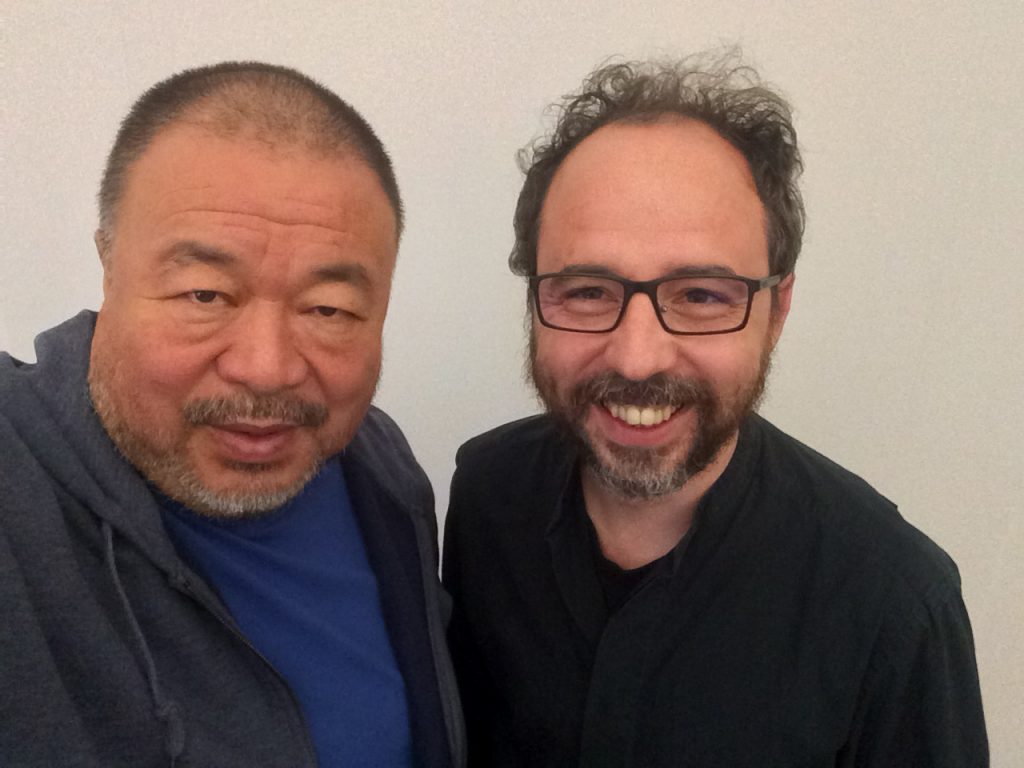

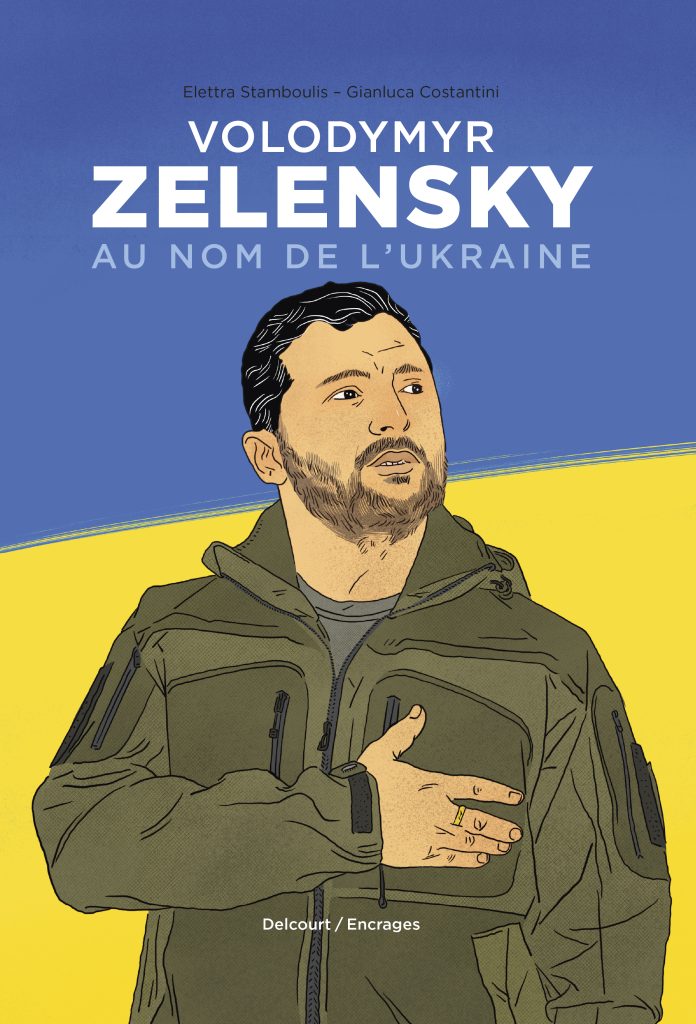

Many of my most important projects were born there. The portraits of Patrick Zaki, the drawings supporting Julian Assange, the series dedicated to the journalists killed in Gaza created with the Committee to Protect Journalists, the work with SOS Méditerranée aboard the Ocean Viking, campaigns for Amnesty International, ActionAid and PEN International, and later my books on Xi Jinping and Volodymyr Zelensky, as well as Zodiac, created together with Ai Weiwei.
Even my relationship with Ai Weiwei began, indirectly, on Twitter.
For years I observed the way he used the platform as both an artistic and political space. He was one of the few contemporary artists who understood that social media could become an extension of the artist’s studio. Eventually we met in person, I visited his studio, and together we created a book. I’m convinced that none of this would have happened without Twitter.
At the same time, Twitter had become an immense archive of memory.
Scrolling through my timeline, I can reconstruct almost twenty years of wars, revolutions, political trials, deaths and hopes. I encounter people who are no longer alive: journalists murdered, activists assassinated, friends who have disappeared. Their accounts remain online like small digital memorials preserving photographs, words and fragments of lives.
Then came 2023.


Elon Musk bought Twitter and turned it into X.
It wasn’t simply a change of name or logo. It marked the end of an era.
The little blue bird, symbol of an open and horizontal global conversation, was replaced by a black X, cold and aggressive, a graphic mark that has always reminded me more of authoritarian aesthetics than of a place where people meet.
Many of the journalists, artists and activists with whom I had shared fifteen years of work left the platform. The algorithm changed profoundly. Conversations gave way to noise, provocation and paid visibility. Organizing international campaigns became much harder. Discovering new people, new stories and new struggles no longer happened naturally.
And yet I still open it every morning.
I still type “twitter.com” into my browser, even though I know I’ll be redirected somewhere else.
Perhaps because, like Ali Hashem, I still call it Twitter.
And perhaps because an important part of my life as an artist, activist and graphic journalist was born there, under that little blue bird that, for many years, made us believe that a drawing, a photograph or 140 characters could genuinely change something.