The 23-year-old Alraadi Media Network reporter died four days after being shot in Baidoa. UNESCO calls for an investigation and stronger protection for journalists working amid Somalia’s continuing violence.
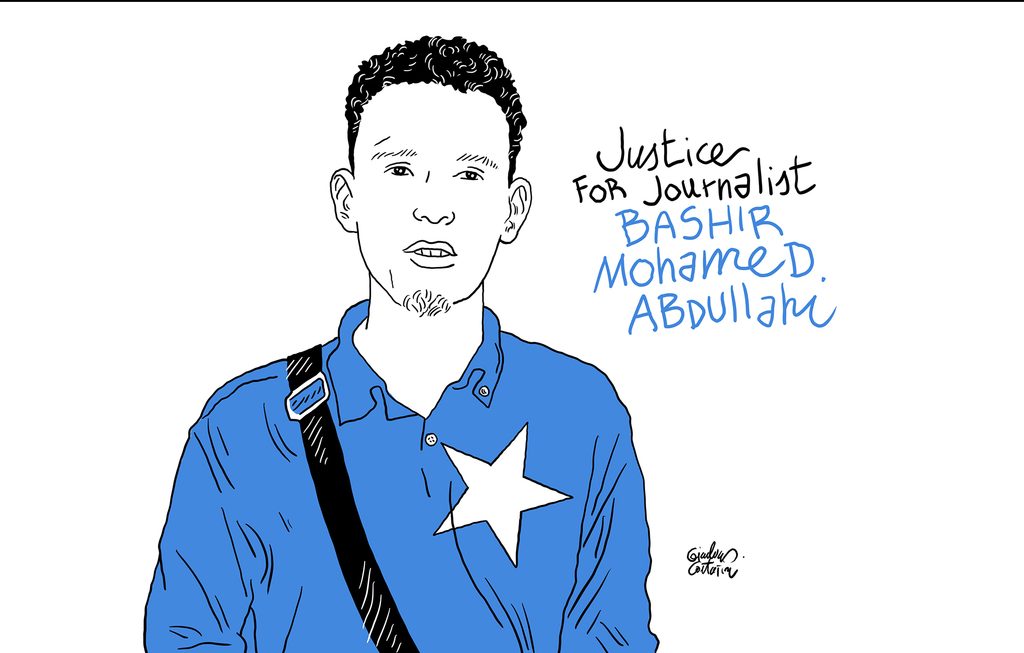
UNESCO has condemned the killing of Somali journalist Bashir Mohamed Abdullahi, a young reporter for Alraadi Media Network who died on 7 September 2026 after being shot four days earlier in Baidoa, in southwestern Somalia.
Abdullahi was 23, according to UNESCO and the National Union of Somali Journalists (NUSOJ), and worked primarily on local and sports news. On 3 September, armed clashes broke out in the Al-Ahmaar area of Baidoa. During the violence, Abdullahi was shot and critically wounded. He was taken to Bay General Hospital, where he underwent treatment but died from his injuries on 7 September.
Accounts of the exact circumstances surrounding the shooting differ slightly. UNESCO reports that Abdullahi was attacked by assailants while on his way to work. NUSOJ, citing local journalists, says he had initially remained at home after fighting began and later left to carry out his journalistic duties, when he encountered unidentified armed men. The Somali Journalists Syndicate reported that he was shot twice in the back near his home during the clashes. What remains clear across the accounts is that Abdullahi was a working journalist caught in an extremely dangerous environment and that the circumstances of his death require an independent investigation.
On 14 September, UNESCO Director-General Khaled El-Enany publicly condemned the killing and called on Somali authorities to investigate the attack. He also recalled the obligations established by United Nations Security Council Resolution 2222, adopted unanimously in 2015, concerning the protection of journalists, media professionals and associated personnel as civilians in situations of armed conflict.


“Journalists play a crucial role in informing the world and ensuring the local population’s right to information,” El-Enany said, urging authorities to protect journalists who receive threats because of their work.
According to UNESCO, Bashir Mohamed Abdullahi is the second journalist killed in Somalia in 2026. His death is part of a much longer history of violence against media workers in a country where reporting has repeatedly meant confronting armed conflict, political pressure and the risk of physical attack. UNESCO’s Observatory of Killed Journalists has documented numerous Somali journalists killed over the past decades, many of whose cases remain unresolved.
Reporters Without Borders (RSF) has also called for accountability. The organisation reports that Abdullahi died after being shot twice in the back as rival forces fought in his neighbourhood and says the precise circumstances in which he was targeted must be established. RSF notes that Somali journalists regularly face arrests, harassment, assaults and threats. In the 2026 World Press Freedom Index, Somalia ranks 126th out of 180 countries and territories.
The International Federation of Journalists (IFJ) has joined NUSOJ in condemning Abdullahi’s death and demanding an investigation capable of identifying those responsible and bringing them to justice. The case therefore goes beyond the death of a single reporter. It raises once again the question of impunity and of whether journalists can continue to document conflict and political violence when their own safety cannot be guaranteed.
Abdullahi worked for a local media organisation serving communities that are often far from the attention of international news organisations. Alraadi Media Network describes itself as Somalia’s first media network broadcasting in Maay, one of the country’s principal languages, and operates across radio and television. His work belonged to the essential infrastructure of local journalism: reporting what happens within a community and preserving the public’s ability to know what is taking place around it.


CHANNELDRAW STUDIO · INDEPENDENT PUBLISHING
Active Art Yearbook
A year of drawings, stories and civic engagement. Discover the Channeldraw annual volumes.
Explore the yearbooks →The killing of Bashir Mohamed Abdullahi is therefore also a reminder that attacks on journalists do not silence only individuals. Every reporter killed, threatened or forced away from their work reduces the space available for witnesses, information and public scrutiny. Protecting journalists means protecting the possibility of documenting events — particularly in places where violence and instability make independent information most necessary.
Sources and further reading
UNESCO — Director-General condemns the killing of journalist Bashir Mohamed Abdullahi in Somalia
https://www.unesco.org/en/articles/unesco-director-general-condemns-killing-journalist-bashir-mohamed-abdullahi-somalia
UNESCO Observatory of Killed Journalists — Bashir Mohamed Abdullahi
https://www.unesco.org/en/safety-journalists/observatory/4f59609e-b822-46f0-9dc1-b81c195447e2
Reporters Without Borders (RSF) — Somalia: Bashir Mohamed Abdullahi shot twice in the back; impunity for violence against journalists must end
https://rsf.org/en/somalia-bashir-mohamed-abdullahi-shot-twice-back-impunity-violence-against-journalists-must-end
International Federation of Journalists (IFJ) — Somalia: Journalist dies from gunshot wounds sustained while reporting on clashes in Baidoa
https://www.ifj.org/fr/salle-de-presse/nouvelles/detail/category/press-freedom/article/somalia-journalist-dies-from-gunshot-wounds-sustained-while-reporting-on-clashes-in-baidoa
ChannelDraw is independent and reader-supported. Your support helps us continue documenting artists, journalists and activists whose voices are threatened or censored.
Other ways to support ChannelDraw
You can also support our independent work by joining us on Patreon or Substack, or by purchasing a ChannelDraw Yearbook. Every contribution helps us keep ChannelDraw independent and continue documenting stories that need to be seen.


