The assassination of former anti-corruption prosecutor Juan Francisco Solórzano Foppa on a football field in Guatemala City has renewed concerns about organized crime, political influence and the independence of the judiciary. His death comes after years of investigations, legal battles and public denunciations of corruption, in a country where prosecutors, judges and journalists have faced threats, criminal proceedings and exile.
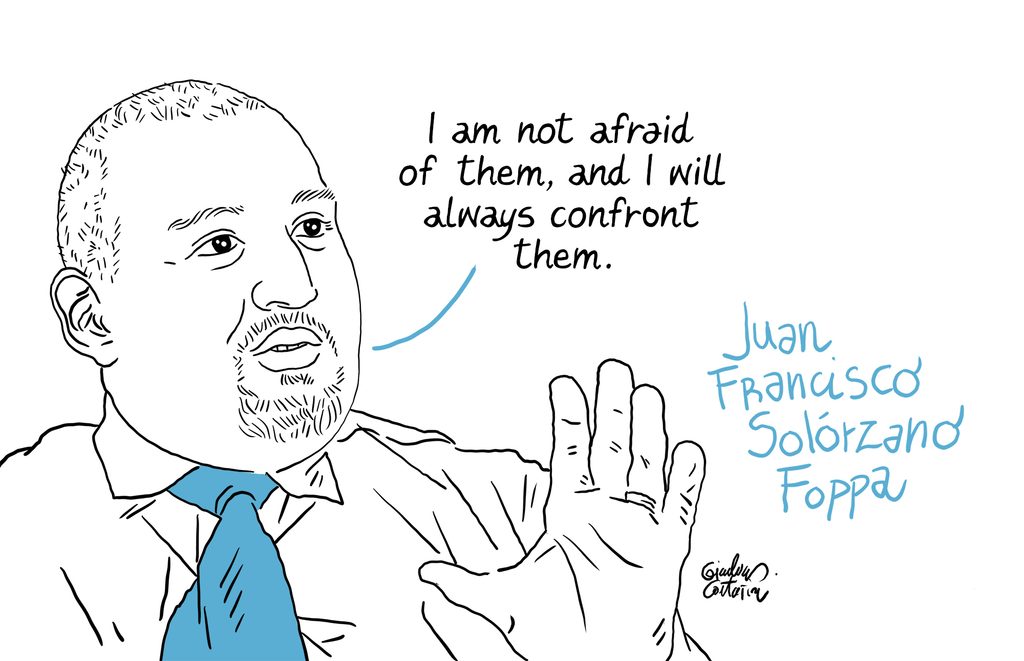
On the morning of October 17, 2026, Juan Francisco Solórzano Foppa was at the Campo Marte sports complex in Guatemala City, coaching a football team. It was a familiar setting, far removed from the courtrooms, political controversies and corruption investigations that had defined much of his professional life. Shortly before ten o’clock, armed attackers opened fire, killing the 43-year-old former prosecutor and lawyer. Another man, Gustavo Adolfo Aguilar Gamarro, also died in the attack, turning an ordinary Saturday morning into a double homicide that immediately raised questions about the security of those who had challenged powerful interests in Guatemala.
According to Human Rights Watch, Solórzano Foppa was coaching football when he was attacked. He had been assigned police protection because of the risks associated with his professional activities, yet the presence of security officers was not enough to prevent his murder. The circumstances of the shooting have prompted questions about how the attackers were able to approach him and whether the protective measures in place were adequate.
Solórzano Foppa was not an ordinary former public official. Throughout his career, he had become one of the recognizable figures in Guatemala’s struggle against corruption, investigating financial crimes, challenging influential political and business interests and publicly denouncing alleged connections between criminal organizations and state institutions. His professional trajectory reflected both the possibilities and the limitations of the country’s efforts to dismantle networks of corruption that have historically operated within its political system.
He began his career within Guatemala’s Public Prosecutor’s Office, where he eventually became director of criminal analysis, working on investigations involving complex financial operations and organized criminal structures. His work placed him within a generation of prosecutors and investigators who sought to demonstrate that corruption was not simply the result of isolated illegal transactions but could function as an organized system involving political officials, business interests and criminal networks.
One of the most important moments in this struggle was the investigation known as La Línea, a customs fraud scandal that exposed an extensive network of illicit payments and contributed to the resignation of President Otto Pérez Molina in 2015. The case became a turning point in Guatemala’s recent history, showing that investigations supported by independent prosecutors and international cooperation could reach the highest levels of political power. Solórzano Foppa contributed to the broader anti-corruption efforts associated with this period, which challenged the widespread belief that influential public officials were effectively beyond the reach of justice.
Between 2016 and 2018, he served as head of Guatemala’s Superintendency of Tax Administration, known as SAT, the institution responsible for administering and enforcing the country’s tax system. During his leadership, the agency pursued cases involving tax evasion and unpaid obligations, including investigations affecting powerful economic actors. His work demonstrated how tax administration could become an important instrument in confronting corruption, particularly in a country where the relationship between economic privilege and political influence has long shaped public institutions.
The significance of these investigations extended beyond the recovery of public revenue. Tax evasion, fraudulent customs operations and financial concealment can provide mechanisms through which illegal wealth enters legitimate economic structures, while the failure to enforce fiscal obligations undermines the resources available for public services. In Guatemala, where profound social inequalities coexist with limited public investment and persistent poverty, the struggle against financial corruption is closely connected to broader questions of democratic accountability and social justice.
After leaving public office, Solórzano Foppa continued working as a lawyer and political commentator, increasingly using public platforms to denounce what he considered the penetration of criminal interests into political and judicial institutions. His criticism was often direct, and his accusations attracted attention because they concerned powerful individuals and organizations. In 2025, he publicly alleged connections between the Barrio 18 criminal gang and figures associated with the Unidad Nacional de la Esperanza (UNE), one of Guatemala’s major political parties. These allegations were part of his broader warnings about the relationship between organized crime and political power, although they must be distinguished from judicially established findings of criminal responsibility.
A Reuters report published on October 22, 2026 placed his murder within the continuing debate over the influence of organized crime on Guatemala’s institutions. The country occupies a strategic position along trafficking routes connecting South America, Central America, Mexico and the United States, and criminal organizations have historically sought to influence public officials, security institutions and judicial processes. These relationships are not limited to drug trafficking: corruption can also involve public contracts, illicit campaign financing, customs fraud and the manipulation of legal proceedings.
For Solórzano Foppa, exposing these structures was not simply a matter of prosecuting individual offenders. His public statements suggested that confronting corruption required an understanding of the networks through which political influence, economic interests and criminal activity could reinforce one another. This approach placed him in conflict with interests that benefited from weak institutions and limited accountability.


CHANNELDRAW STUDIO · INDEPENDENT PUBLISHING
Active Art Yearbook
A year of drawings, stories and civic engagement. Discover the Channeldraw annual volumes.
Explore the yearbooks →His professional life also became closely connected to the struggle for press freedom in Guatemala. In 2023, he briefly joined the legal defense team of José Rubén Zamora, the founder of the independent newspaper elPeriódico, whose arrest and prosecution had attracted international condemnation. Zamora, one of Guatemala’s best-known investigative journalists, had spent decades exposing corruption and abuses of power before becoming the subject of criminal proceedings that press freedom organizations criticized as politically motivated.
Solórzano Foppa’s involvement in Zamora’s defense brought him into another confrontation with Guatemala’s judicial authorities. He was accused of obstructing criminal investigations in connection with the case, allegations that he disputed. He subsequently accepted a plea agreement that allowed him to obtain an early release, explaining that he did not believe he could receive a fair trial. The episode reflected the increasingly difficult environment faced by lawyers who represented journalists, former prosecutors and other individuals involved in high-profile anti-corruption cases.
In June 2023, while discussing his decision to accept the charges, Solórzano Foppa made a statement that revealed the tension between his insistence on his innocence and his determination to regain his freedom:
“I committed no crime, but I will do it simply to regain my freedom and continue fighting proudly against this corrupt system.”
The declaration, reported by Emisoras Unidas, became a particularly revealing moment in his public life. Rather than describing his legal situation as an isolated personal conflict, Solórzano Foppa presented it as part of a wider struggle over the independence of the judicial system and the ability of prosecutors and lawyers to confront institutional corruption.
As Human Rights Watch has documented, the prosecution of Solórzano Foppa formed part of a wider pattern of legal actions against critics during the tenure of Attorney General Consuelo Porras. International human rights organizations have repeatedly expressed concern about the use of criminal proceedings against prosecutors, judges, journalists and anti-corruption activists, warning that such practices can weaken judicial independence and discourage investigations into powerful interests.
The origins of Guatemala’s current institutional crisis cannot be understood without examining the history of the International Commission against Impunity in Guatemala, widely known by its Spanish acronym, CICIG. Established in 2006 through an agreement between the Guatemalan government and the United Nations, the commission began operating in 2007 with a mandate to investigate illegal security structures and clandestine organizations that had penetrated state institutions.
Unlike conventional international monitoring bodies, CICIG worked alongside Guatemalan prosecutors, supporting investigations and helping strengthen the capacity of national institutions to confront complex criminal networks. Its work contributed to some of the country’s most significant corruption investigations, including cases involving senior political officials, business leaders and organized criminal structures. The commission demonstrated that international cooperation could support domestic accountability while revealing the depth of the resistance encountered by investigators seeking to challenge entrenched interests.
In 2019, CICIG’s mandate ended after the government of President Jimmy Morales refused to renew its presence in the country. Its closure represented a major turning point for Guatemala’s anti-corruption efforts, depriving prosecutors of an important source of investigative expertise and international support at a moment when many of the institutions involved in previous investigations were coming under increasing political pressure.
In the years that followed, numerous prosecutors, judges, journalists and human rights defenders faced threats, criminal proceedings or professional retaliation. More than one hundred justice officials and journalists have left Guatemala amid this climate of intimidation and legal pressure, according to reporting on the country’s institutional crisis. The departures have weakened the networks of professionals who had previously contributed to anti-corruption investigations, while creating an atmosphere in which pursuing politically sensitive cases can carry substantial personal risks.
The consequences have extended beyond the judiciary. Independent journalism, civil society organizations and human rights defenders have also confronted increasing obstacles, particularly when investigating corruption, land conflicts, organized crime or abuses committed by public officials. These developments have raised fundamental questions about the ability of democratic institutions to protect those who expose wrongdoing.
The election of President Bernardo Arévalo in 2023, followed by his inauguration in January 2024, generated expectations of renewed institutional reform. Arévalo, whose political platform emphasized transparency and the fight against corruption, entered office after a difficult transition marked by legal challenges and efforts that threatened to prevent him from assuming the presidency.
His administration has sought to restore confidence in public institutions, but the persistence of established networks of political and judicial influence has complicated those efforts. The president has acknowledged the difficulties involved in confronting criminal organizations and institutional structures that have developed over many years, illustrating the gap between electoral promises of reform and the practical challenges of transforming deeply entrenched systems.
Following Solórzano Foppa’s murder, Arévalo publicly condemned the attack and called for the identification and prosecution of everyone responsible, including those who may have ordered or organized the killing. His response reflected the gravity of the case, which immediately attracted attention from diplomats, former justice officials and international human rights organizations.
The circumstances of the assassination have also exposed troubling questions about the protection of individuals facing serious security risks. According to Prensa Libre, Solórzano Foppa had four police officers assigned to his protection, working in rotating shifts. Two officers were reportedly on duty when the attack occurred, but the gunmen nevertheless managed to carry out the shooting. Investigators must determine the precise sequence of events and whether failures in the security arrangements contributed to the outcome.
Guatemalan police initially detained two men in connection with the attack and reported seizing a firearm and a motorcycle. However, prosecutors subsequently stated that the available evidence did not establish a connection between the detainees and the murders, and a judge ordered their release. As of October 23, the perpetrators had not been publicly established, and the motive remained under investigation.
The distinction is essential. Solórzano Foppa’s history of anti-corruption work, public accusations and legal confrontations provides important context for understanding why his death has generated such concern, but it does not establish that he was murdered because of those activities. A credible investigation must examine all relevant possibilities without treating political interpretations or suspicions as proven facts.
On October 20, Human Rights Watch called for a prompt, thorough and credible investigation, emphasizing that accountability must extend beyond identifying the individuals who physically carried out the attack. Investigators must also determine whether other people planned, financed, ordered or facilitated the crime, an essential requirement in cases where organized violence may involve several levels of responsibility.
The murder has revived memories of Guatemala’s long history of political violence, particularly the decades during which journalists, trade unionists, students, lawyers, Indigenous leaders and human rights defenders were targeted for challenging powerful institutions. During the country’s internal armed conflict, which lasted from 1960 to 1996, state violence and repression profoundly affected Guatemalan society, leaving a legacy of trauma and institutional mistrust that continues to shape contemporary debates about justice.
Although the political circumstances of contemporary Guatemala are different from those of the armed conflict, the persistence of impunity remains a central concern. When individuals who investigate corruption or defend fundamental rights are threatened, prosecuted or killed, the consequences extend beyond the immediate victims. Such attacks can discourage others from pursuing investigations, weaken public confidence in institutions and reinforce the perception that powerful interests can operate without accountability.
For ChannelDraw, the story of Juan Francisco Solórzano Foppa belongs to a broader visual and editorial investigation into the lives of people who confront corruption, political violence and restrictions on fundamental freedoms. Through political portraiture and visual journalism, the project seeks to document individuals whose experiences reveal the human consequences of institutional conflict and the struggle for accountability.
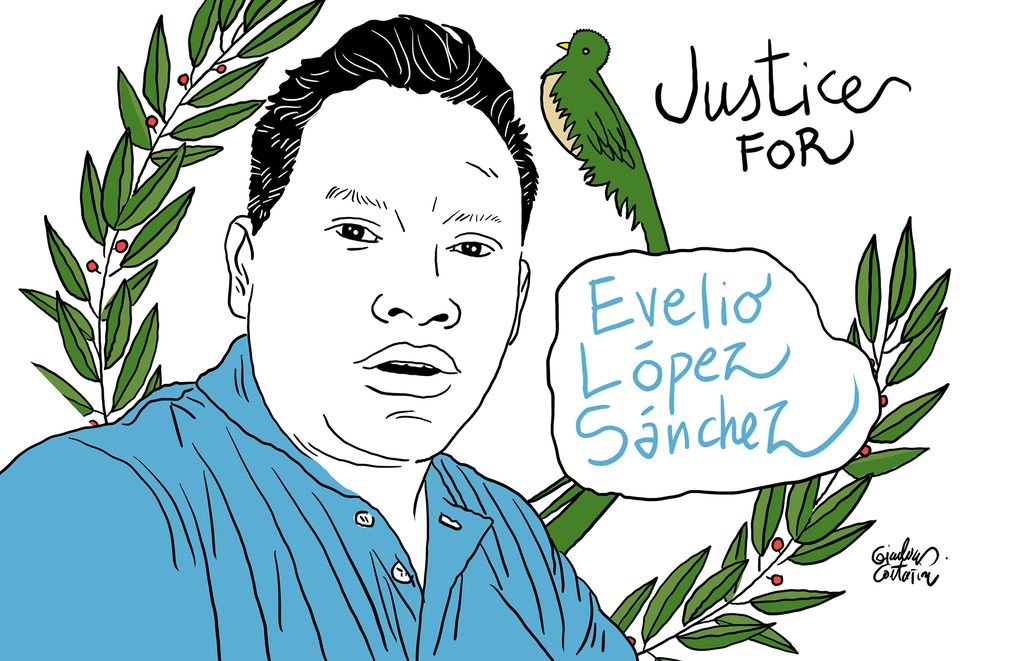
His death also recalls the vulnerability of journalists and community reporters working in Guatemala, particularly those operating far from the capital. Earlier in October, Maya Mam journalist Evelio Lisandro López Sánchez was murdered in the department of Huehuetenango after having publicly reported threats against his life. The circumstances and possible motives of the two killings are distinct, and no connection between them has been established, but both cases have intensified concerns about the safety of people whose work brings them into contact with political power and sensitive local interests.
The experiences of Solórzano Foppa and López Sánchez illustrate different dimensions of the same fundamental challenge: the need for institutions capable of protecting those who investigate, document and publicly question the exercise of power. Whether through criminal investigations, legal advocacy or independent journalism, their work depended on the possibility of examining public affairs without facing violence or intimidation.
For Solórzano Foppa, that commitment had defined much of his professional life. He had investigated financial crimes, led a national tax institution, confronted powerful economic interests, publicly denounced alleged criminal connections and defended a journalist whose prosecution had become an international symbol of Guatemala’s judicial crisis. His career was marked by controversy and confrontation, but also by a sustained engagement with the institutions responsible for enforcing the law.
On October 17, he was killed in a place where he had gone to coach football, away from the courtrooms and political disputes that had made him a public figure. His death has left a family mourning and a country confronting questions that extend far beyond a single criminal investigation.
Who carried out the attack? Who, if anyone, ordered it? Why was a man with an established security detail so vulnerable? And will Guatemala’s institutions be able to investigate the murder independently, regardless of the political or criminal interests that may emerge during the proceedings?
The answers remain unknown.
What is already clear is that the murder of Juan Francisco Solórzano Foppa has become an important test of Guatemala’s capacity to investigate violence against a prominent former justice official and to establish accountability through an independent judicial process.
Remembering his life means understanding the work he carried out, the institutions he sought to strengthen and the conflicts that accompanied his attempts to confront corruption. It also means recognizing that the defense of the rule of law depends not only on the existence of courts and prosecutors but on their ability to operate without intimidation, political interference or violence.
Juan Francisco Solórzano Foppa was 43 years old. His murder remains unresolved, and the demand for a credible investigation is now inseparable from the wider struggle for justice and institutional accountability in Guatemala.
ChannelDraw is independent and reader-supported. Your support helps us continue documenting artists, journalists and activists whose voices are threatened or censored.
Other ways to support ChannelDraw
You can also support our independent work by joining us on Patreon or Substack, or by purchasing a ChannelDraw Yearbook. Every contribution helps us keep ChannelDraw independent and continue documenting stories that need to be seen.


