From exposing corruption in public hospitals to defending nurses’ right to strike, Saman Rathnapriya has spent decades at the intersection of trade union activism and Sri Lankan politics. On November 6, 2026, he joined protesters in Colombo opposing new counterterrorism and organized crime legislation, warning that the government could use its expanded powers against dissent. His story reflects a country still struggling to reconcile public security, democratic promises and the legacy of repression.
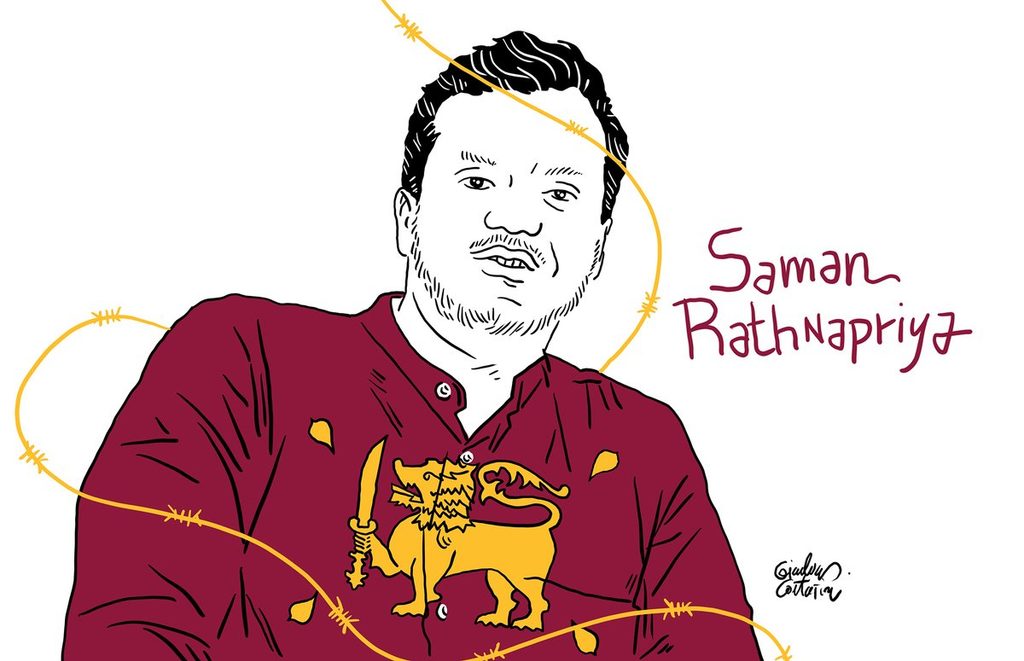
On November 6, 2026, trade unionists and political activists gathered in Colombo, the capital of Sri Lanka, to protest two legislative proposals that they feared could expand the state’s power to arrest, detain and monitor its citizens. Among the demonstrators was Saman Rathnapriya, a veteran trade union leader whose public life has moved between hospitals, workers’ organizations, Parliament and the presidential administration. Speaking to the Associated Press, Rathnapriya condemned the proposed laws and warned that their broad provisions could be used to suppress political opposition and public protest. The demonstration took place at a moment when Sri Lanka was still attempting to recover from the economic and political upheavals of recent years, and when the promises made by the government elected in 2024 were increasingly being tested against its legislative decisions.
“These are clearly draconian laws,” Rathnapriya told the Associated Press, warning that “anyone can be turned into a terrorist by these laws.” His words expressed a concern shared by human rights organizations: that legislation presented as a necessary response to terrorism and organized crime might also give security institutions powers capable of restricting legitimate political activity. The immediate controversy concerned the Protection of the State from Terrorism Bill and the Prevention of Organised Crimes Bill, two measures introduced in October 2026 and expected to be debated by Parliament. Both proposals were defended as instruments for protecting public security, but critics argued that they reproduced important elements of earlier legislation associated with arbitrary detention, torture and the suppression of dissent.
For Rathnapriya, the controversy was not simply a disagreement over the technical provisions of criminal law. It concerned the relationship between the state and the people who challenge it, a question that has shaped much of his career. Born on December 13, 1967, in Balapitiya, in the Galle District of southern Sri Lanka, he grew up in a country marked by political polarization, social inequality and increasingly violent conflicts. According to his published biography, he attended G/Rewatha National College before becoming involved in the trade union movement. His public profile developed particularly through the health sector, where he became associated with campaigns concerning working conditions, public services and the management of government resources.
Rathnapriya eventually became president of the Government Nursing Officers’ Association and a prominent figure in broader coalitions of health workers. His activism combined demands for better working conditions with allegations of corruption and mismanagement in public institutions. The connection between these issues was central to his approach: for health workers, corruption was not merely a matter of financial misconduct but a problem capable of affecting the availability of medicines, the safety of patients and the functioning of hospitals. When procurement systems failed or public funds were misused, the consequences could be experienced directly by nurses, doctors and the people who depended on public healthcare.
 samanrathnapriya.com
Official biographyMeet Saman RathnapriyaHis own account of his background, trade union work and appointment as Director General of Trade Unions.
His work received recognition in December 2013, when Transparency International Sri Lanka awarded him a special mention at its National Integrity Awards. The organization highlighted his investigations and campaigns concerning alleged irregularities in the health sector, including the procurement of medicines without proper tender procedures, concerns about the quality of medical supplies and other forms of administrative malpractice. It also credited trade union campaigns led by Rathnapriya with contributing to institutional responses to allegations of wrongdoing. The recognition placed him among individuals and organizations whose work had drawn attention to corruption despite professional and political risks.
The award reflected a broader dimension of trade union activity that is sometimes overlooked in public debate. Unions are often associated primarily with wages, working hours and industrial disputes, but their representatives can also become important sources of information about how public institutions operate. Health workers observe the daily consequences of procurement decisions, staffing policies and administrative failures. When they organize collectively, they may be able to expose problems that would otherwise remain hidden within government departments. Rathnapriya’s campaigns illustrated this connection between labor rights and public accountability, although the effectiveness and political implications of particular union actions have remained subjects of debate.
His activism developed within a country profoundly affected by decades of civil war. From 1983 until 2009, Sri Lanka experienced a devastating conflict between government forces and the Liberation Tigers of Tamil Eelam, an armed separatist organization seeking an independent Tamil state. The war caused extensive civilian suffering, displacement and allegations of serious violations of international humanitarian and human rights law. Its legacy continued long after the military defeat of the Tamil Tigers, particularly in debates concerning accountability, enforced disappearances, the treatment of minorities and the powers of the security services. The Prevention of Terrorism Act, introduced in 1979, became one of the most controversial legal instruments associated with this history.
The law gave authorities exceptional powers to detain individuals suspected of terrorism-related activities and was repeatedly criticized for enabling prolonged detention without adequate safeguards. Tamil and Muslim communities were among those disproportionately affected, while journalists, activists and people challenging government institutions also faced risks under broad national security provisions. As Human Rights Watch documented in its 2026 assessment of Sri Lanka, successive governments promised legal reform but repeatedly failed to dismantle the structures that had enabled abuses. The question of how to replace the Prevention of Terrorism Act without reproducing its most problematic features has consequently remained central to Sri Lanka’s democratic development.
Rathnapriya’s own political trajectory has not been limited to opposition activism. He became involved in national political debates and developed ties with the United National Party, one of Sri Lanka’s longstanding political organizations. In January 2020, he entered Parliament through the party’s National List, serving briefly before the dissolution of the legislature in March. His official parliamentary profile records this period of service. The appointment marked a transition from representing workers through trade union structures to participating directly in the country’s legislative institutions, demonstrating the extent to which his public career had become intertwined with national politics.
This political involvement complicates any attempt to present Rathnapriya simply as an independent activist standing permanently outside government. He has participated in political alliances, accepted public office and supported administrations that were themselves criticized by sections of civil society. His relationship with institutional power has therefore changed over time. That complexity matters when examining his current opposition to the proposed legislation, because his criticism comes from someone who has experienced both the pressures of labor mobilization and the responsibilities and compromises associated with political office.
During the COVID-19 pandemic, Rathnapriya emerged as a prominent critic of the management of Sri Lanka’s public health system. Nurses and other healthcare workers faced increased workloads, occupational risks and financial difficulties, while questions were raised about staffing, protective equipment and the accuracy of official health information. In June 2021, he publicly challenged the Health Ministry’s ability to provide reliable figures concerning infections, testing and deaths. As reported by the Daily Mirror, he argued that inaccurate information undermined efforts to control the pandemic and criticized the treatment of nurses and other hospital employees who had continued working under difficult conditions.
The dispute illustrated how public health emergencies can intensify existing tensions between workers and government authorities. Healthcare personnel were expected to maintain essential services while confronting extraordinary risks, yet their demands for allowances, adequate staffing and recognition were sometimes treated as obstacles to the management of the crisis. Rathnapriya defended the right of workers to organize even during the emergency, arguing that the effectiveness of the health system depended on addressing the conditions faced by those who kept it functioning.
In September 2021, the Government Nursing Officers’ Association participated in industrial action involving public hospitals across Sri Lanka. According to the Daily Mirror’s reporting, Rathnapriya said that the protest concerned the withdrawal of a COVID-related allowance and the additional expenses faced by healthcare workers. The union stated that the action excluded facilities treating COVID-19 patients and certain specialist hospitals, including children’s, maternity and cancer services. The dispute reflected the difficult balance between the right to strike and the obligation to protect patients, a tension that frequently becomes central when governments seek to restrict industrial action in essential public services.


CHANNELDRAW STUDIO · INDEPENDENT PUBLISHING
Active Art Yearbook
A year of drawings, stories and civic engagement. Discover the Channeldraw annual volumes.
Explore the yearbooks →In February 2022, that conflict reached the courts. During a nationwide strike involving healthcare workers, a court order directed Rathnapriya and his union to suspend their participation. He subsequently argued that the government’s response violated trade union rights and announced plans to seek an international legal remedy. Speaking to the Daily Mirror, he referred to international labor standards concerning freedom of association and collective bargaining. The union complied with the court order, but the episode became another example of the recurring confrontation between organized labor and executive authority in Sri Lanka.
The same year, the country experienced one of the gravest economic crises in its modern history. Severe shortages of fuel, food, medicines and other essential goods, combined with inflation and financial instability, generated widespread public anger. Mass demonstrations developed into the movement commonly known as Aragalaya, meaning struggle, which demanded political accountability and ultimately contributed to the resignation of President Gotabaya Rajapaksa in July 2022. The crisis revealed the depth of public dissatisfaction with the political establishment and intensified debates about corruption, economic governance and the responsibilities of successive administrations.
In August 2022, following Ranil Wickremesinghe’s assumption of the presidency, Rathnapriya was appointed Director General of Trade Unions within the presidential administration. The appointment was confirmed by the President’s Media Division and reported by EconomyNext and other Sri Lankan media. For Rathnapriya, it represented another movement from trade union leadership into an official political role. It also generated controversy among sections of the labor movement, particularly because the Wickremesinghe administration was facing criticism over its treatment of protesters and union activists.
His appointment raised questions about the relationship between trade union independence and political participation. A union leader may seek influence within government in order to advance workers’ demands, but accepting an official position can also create tensions with organizations that expect their representatives to remain independent of executive power. Rathnapriya’s career illustrates these competing pressures. His critics have questioned his political alliances, while his supporters have emphasized his experience in labor negotiations and his history of campaigning for workers’ rights. Both dimensions are relevant to understanding his place in Sri Lankan public life.
The election of Anura Kumara Dissanayake as president in September 2024 introduced another major political change. His National People’s Power alliance presented itself as an alternative to the established political leadership and promised reforms addressing corruption, economic governance and civil liberties. Among its commitments was the abolition of oppressive legislation, including the Prevention of Terrorism Act. The promise was particularly significant because opposition to the PTA had become a longstanding demand of human rights organizations, minority communities and activists seeking accountability for past abuses.
The challenge of fulfilling that commitment became apparent when the government developed legislation intended to replace the existing counterterrorism framework. On October 6, 2026, the Protection of the State from Terrorism Bill was submitted to Parliament. According to Human Rights Watch’s analysis published on October 5, the proposal retained a broad definition of terrorism and provided extensive powers of search, arrest and detention. The organization warned that insufficient judicial oversight could permit abuses similar to those associated with the previous legislation.
Stories across the world

The proposed law contained provisions allowing security forces to stop, search and arrest individuals under broadly defined circumstances, while detention orders could be issued through executive authority. Human Rights Watch also raised concerns about restrictions on freedom of expression, assembly and association, including provisions relating to publications that might be interpreted as encouraging terrorism. Although the draft included exceptions intended to protect protest, advocacy and industrial action, the organization argued that these safeguards did not adequately address the risks created by other sections of the legislation.
The potential consequences for journalists and civil society organizations were particularly serious. A legal definition of terrorism that is excessively broad can create uncertainty about which forms of speech or political activity might be treated as criminal. When the circulation of information becomes part of a security investigation, reporters, publishers and digital media workers may face pressure to avoid subjects that could attract official scrutiny. Even without prosecution, the possibility of arrest or prolonged investigation can discourage critical reporting and weaken public debate.
On October 20, 2026, the government also submitted the Prevention of Organised Crimes Bill, presented as a measure to strengthen the response to organized criminal activity. In a statement published on October 29, Human Rights Watch warned that the proposal risked enabling arbitrary detention, ill-treatment and violations of privacy. Particular concerns included provisions allowing certain statements made to police to be admitted as evidence, restrictions on bail and extensive powers to obtain information from telecommunications and digital service providers. The organization argued that the bill could reproduce abusive practices associated with the existing counterterrorism framework rather than establishing a system consistent with international human rights standards.
The government’s position was different. Government spokesman Nalinda Jayatissa rejected allegations that the proposed legislation would undermine trade union rights or media freedom, maintaining that the measures were not intended to restrict legitimate public activity. The dispute therefore concerned both the wording of the bills and the degree of confidence that citizens could place in the institutions responsible for implementing them. Supporters of stronger security legislation emphasized the need to confront terrorism and organized crime, while human rights organizations warned that broad discretionary powers could be misused regardless of the stated objectives of the law.
It was against this background that Rathnapriya joined the November 6 demonstration in Colombo. His criticism focused on the contradiction he perceived between the government’s earlier opposition to repressive legislation and its decision to introduce new measures containing extensive security powers. Speaking to the Associated Press, he argued that the ruling alliance had opposed such laws when it was outside government and questioned its right to advance similar legislation after taking office. He also accused the administration of failing to revive the economy and suggested that fear of renewed public unrest was motivating efforts to expand the state’s capacity to control demonstrations. These were Rathnapriya’s political assessments, not established findings about the government’s intentions.
The protest brought together trade union members and political activists concerned that the proposed legislation could affect their ability to organize and demonstrate. For workers’ organizations, the issue was particularly sensitive because industrial action often depends on collective mobilization, public gatherings and the capacity to challenge government policy. Laws that give authorities broad powers to restrict movement, prohibit organizations or detain individuals can create risks for legitimate labor activity, even when such activity is not explicitly prohibited. The possibility of selective enforcement can be as important as the formal wording of legal safeguards.
Rathnapriya’s presence at the demonstration also reflected a longer history of confrontation over the boundaries of lawful protest. During the pandemic, he had challenged restrictions on strikes by healthcare workers; in 2026, he was questioning legislation that critics feared could provide new tools for controlling political dissent. The circumstances were different, but both controversies concerned the power of the state to limit collective action and the protections available to individuals who organize in opposition to government decisions.
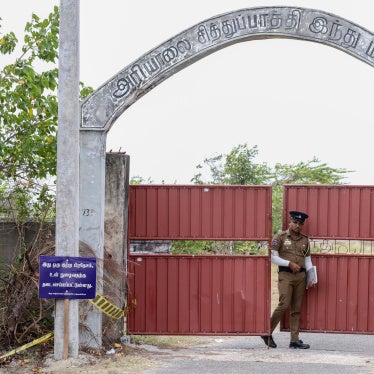 © Chamila Karunarathne / EPA / Shutterstock
Human Rights Watch“Not Genuine with Justice”A report on the barriers to prosecuting past abuses in Sri Lanka.
The historical context makes these concerns particularly significant in Sri Lanka. The country has experienced decades of emergency rule, militarization and allegations of serious abuses committed under national security legislation. The end of the civil war did not resolve questions of accountability, while successive governments struggled or declined to implement reforms demanded by victims’ families and international human rights institutions. In its September 2026 report, Not Genuine with Justice, Human Rights Watch examined the continuing obstacles to prosecuting past abuses and the failure to complete promised legal reforms. The persistence of these problems helps explain why new legislation expanding security powers provokes strong reactions from communities and organizations familiar with the consequences of earlier laws.
The debate also extends beyond Sri Lanka. Around the world, governments have justified exceptional security measures as necessary responses to terrorism, organized crime or political instability. Such measures can address genuine threats, but their legitimacy depends on clear legal definitions, independent judicial oversight, proportionality and effective protection of fundamental rights. Without these safeguards, security legislation can become a means of restricting opposition, journalism and peaceful protest. The experience of Sri Lanka demonstrates why the history of previous abuses must be considered when evaluating new laws, particularly when governments promise reform while retaining similar powers.
For ChannelDraw, which documents the experiences of journalists, activists and individuals confronting abuses of power, Saman Rathnapriya’s story provides an opportunity to examine the relationship between labor organizing, political participation and civil liberties. His career cannot be reduced to a simple confrontation between an independent activist and an authoritarian state. He has challenged governments, participated in political institutions and accepted an appointment within a presidential administration. These different roles reveal the complexities of democratic politics in a country where trade unions have long been important actors in public life.
The significance of his current position lies partly in that complexity. Rathnapriya’s criticism of the proposed legislation comes from someone familiar with both the demands of collective protest and the internal workings of political institutions. His biography demonstrates that defending the right to organize is not necessarily incompatible with participation in party politics, but it also raises questions about the independence of union leadership and the responsibilities of those who move between civil society and government.
The November 2026 protests are therefore part of a wider debate about the kind of political transformation Sri Lanka can achieve after the economic crisis and the electoral changes of 2024. The demand for accountability that brought large numbers of citizens into the streets during the Aragalaya movement was not limited to replacing individual leaders. It also reflected expectations that public institutions would become more transparent, responsive and respectful of fundamental rights. Whether those expectations can be fulfilled depends in part on the laws governing dissent, association and the exercise of state power.
As of November 8, 2026, the two bills remained proposals under parliamentary consideration. Their final provisions, possible amendments and eventual legal consequences had not yet been determined. Human rights organizations were calling for substantial changes or rejection of the measures in their current form, while the government continued to defend its approach to public security. Rathnapriya and other protesters had announced their intention to continue mobilizing unless the proposed legislation was withdrawn.
For Saman Rathnapriya, the confrontation represents another chapter in a public life shaped by the defense of workers, allegations of corruption, political alliances and disputes over the limits of government authority. His story begins in the health sector, where he challenged the management of public resources and the treatment of nurses, and reaches the streets of Colombo, where he is now warning about the consequences of expanding state security powers. The central question is no longer only whether workers can strike or whether citizens can protest, but whether the institutions created to protect society can be prevented from becoming instruments of intimidation.
Sri Lanka’s democratic future will not be determined by a single demonstration or a single legislative proposal. It will depend on whether political promises are translated into enforceable protections, whether the legacy of past abuses is confronted and whether citizens retain the ability to question those who govern them. Rathnapriya’s warning, whatever the political contradictions of his own career, places that question at the centre of the debate: when a government claims new powers in the name of security, who will protect the right of the people to disagree?
ChannelDraw is independent and reader-supported. Your support helps us continue documenting artists, journalists and activists whose voices are threatened or censored.
Other ways to support ChannelDraw
You can also support our independent work by joining us on Patreon or Substack, or by purchasing a ChannelDraw Yearbook. Every contribution helps us keep ChannelDraw independent and continue documenting stories that need to be seen.