Amid controversial trials, international mobilizations, and internal repression, the future of Biafra remains uncertain and marked by severe tensions.
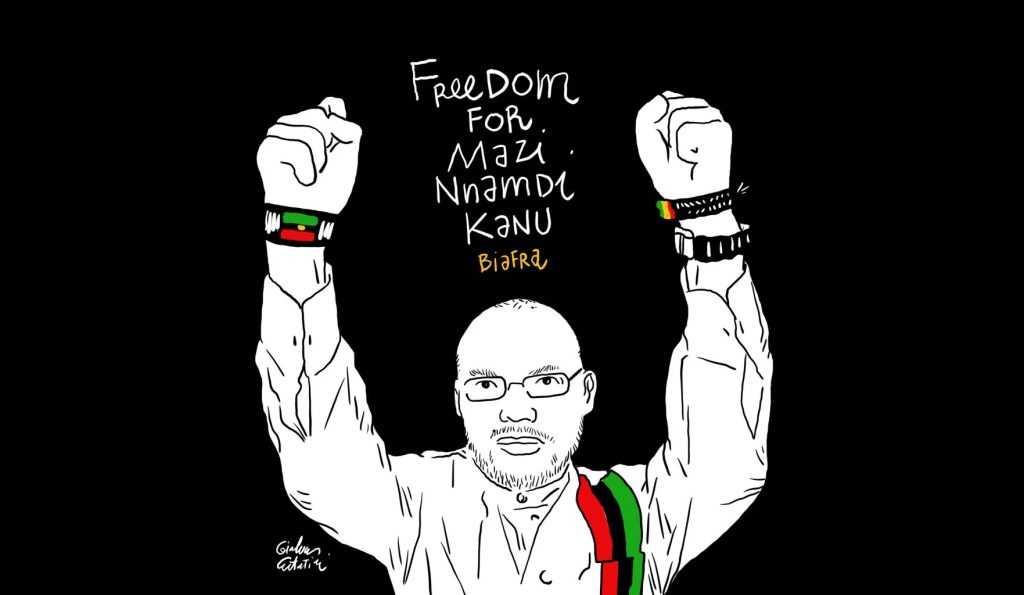
Nnamdi Kanu has resumed trial in Nigeria, appearing before Judge James Omotosho and pleading not guilty to seven charges related to terrorism and treason. Hearings were scheduled between April and May 2025. His lawyer denounced violations of constitutional rights, including the right to a fair and timely trial, and filed two lawsuits seeking to have the case transferred to the southeast and demanding billions in damages. Some legal experts have raised serious doubts about the validity of the trial, noting that the prosecution is based on an anti-terrorism law that has since been repealed. Meanwhile, a Nigerian court dismissed a 50-billion-naira civil suit filed by Kanu against the government, while IPOB condemned the entire case as a violation of the Constitution and international law, calling for his immediate release. On the international front, on June 27, 2025, a court in Kenya ruled that his 2021 arrest and forced rendition were illegal and violated fundamental human rights, condemning the complicity of the Kenyan government and INTERPOL.


At the same time, the Biafra independence movement has continued to grow. Under the leadership of Simon Ekpa, a “Republic of Biafra in Exile” was proclaimed, which promoted a digital referendum on secession, gathering millions of symbolic votes. In November 2024 in Lahti, Finland, a group of exiles declared the restoration of the State of Biafra with the support of some international organizations. In Nigeria, however, the movement remains the target of harsh repression: the weekly “sit-at-home” protests, also called to demand Kanu’s release, have caused more than 700 deaths since 2021 and massive economic losses estimated in trillions of naira. The situation in 2025 therefore remains extremely tense, with a judicial process marked by irregularities, a separatist mobilization gaining new momentum abroad, and an internal conflict that continues to produce victims and deepen divisions.


Nnamdi Kanu is a Nigerian political activist and separatist leader, best known as the founder and head of the Indigenous People of Biafra (IPOB), which advocates for the secession of southeastern Nigeria and the restoration of the independent state of Biafra, which existed briefly from 1967 to 1970. Born on September 25, 1967, and of Igbo ethnicity, Kanu studied in the United Kingdom, where he developed much of his media activity. He became known for using online radio and social media to spread the separatist message and denounce alleged discrimination against the Igbo. Over the years, he has been arrested multiple times by Nigerian authorities on charges of treason, terrorism, and incitement to secession; his capture and forced rendition in 2021 drew widespread criticism from international human rights organizations.
Despite periods of exile, particularly in the UK, Kanu has continued to lead IPOB and receive support from the diaspora and human rights groups. A polarizing figure, he is seen as a symbol of resistance by some and a threat to Nigeria’s territorial integrity by others. His story is intertwined with the growing political tensions in southeastern Nigeria and protests for the release of separatist leaders, profoundly shaping the debate over freedom of expression, Igbo rights, and the future of Biafra.


