The death of the founder of Holy Quran Radio Omdurman reflects the human rights crisis, the repression of the press, and the political collapse engulfing Sudan.
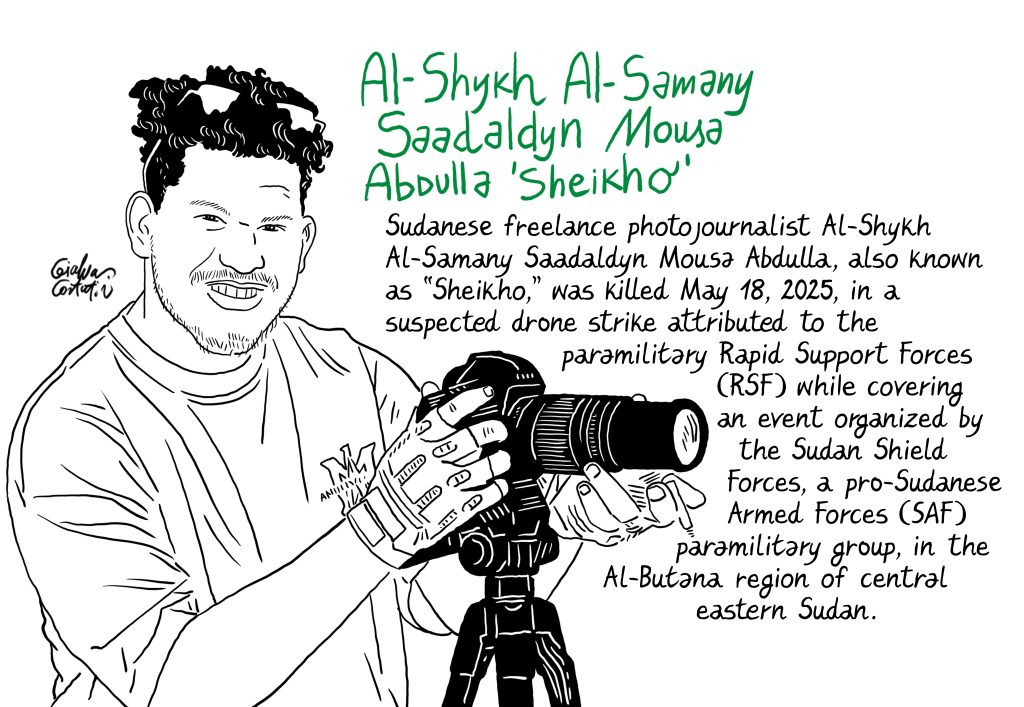
Sheikh Al-Samani Saad Al-Din Musa Abdullah, founder of the Holy Quran Radio Omdurman station, was killed on April 5, 2025, during an airstrike by the Rapid Support Forces (RSF) on the Al-Thawra area of Omdurman. The news was confirmed by the Sudanese Journalists Syndicate and local witnesses. Al-Samani was an influential voice in Sudan’s media and religious landscape, known for his work in spreading Islamic principles through radio, which served as a reference point for many citizens. His death is part of the growing violence that affects not only civilians but also media professionals, who are forced to operate in extremely dangerous conditions.
According to press freedom organizations, several journalists have been killed since the start of the conflict between the Sudanese Armed Forces (SAF) and the RSF. Many others have been threatened, arbitrarily arrested, or forced to leave the country. Reporting on the conflict has become a high-risk activity: newsrooms are under pressure from both sides, while control of information is considered a strategic weapon of war. The assassination of figures like Al-Samani and other local journalists highlights the very high price that media professionals are paying to try to tell the truth about the country.

Politically, Sudan is experiencing one of the most severe crises in its recent history. Since the military coup of 2021, the democratic transition process launched after the fall of Omar al-Bashir has been derailed. The open clash between the army and the RSF has turned large areas of the country into war zones, with millions of internally displaced people and a growing humanitarian crisis. Civil institutions remain paralyzed, peace negotiations repeatedly collapse, and human rights violations are widespread: summary executions, sexual violence used as a weapon of war, indiscriminate bombings of civilians. In this context, the deaths of journalists and media workers represent not only a personal and professional tragedy but also a further blow to the possibility for Sudanese society to access independent and verified information.


