A Chinese activist and veteran of the 1989 democracy movement faces a national-security prosecution after displaying an image on his phone at a monastery in Lhasa

On 28 August 2026, Amnesty International turned the detention of Zhang Yi into an international Urgent Action, calling on people around the world to write to the Chinese authorities and demand his immediate release. The organization says his detention appears to arise solely from the peaceful exercise of his human rights. It has also raised a further concern: Zhang is a person with a disability, and his wellbeing in detention remains uncertain.
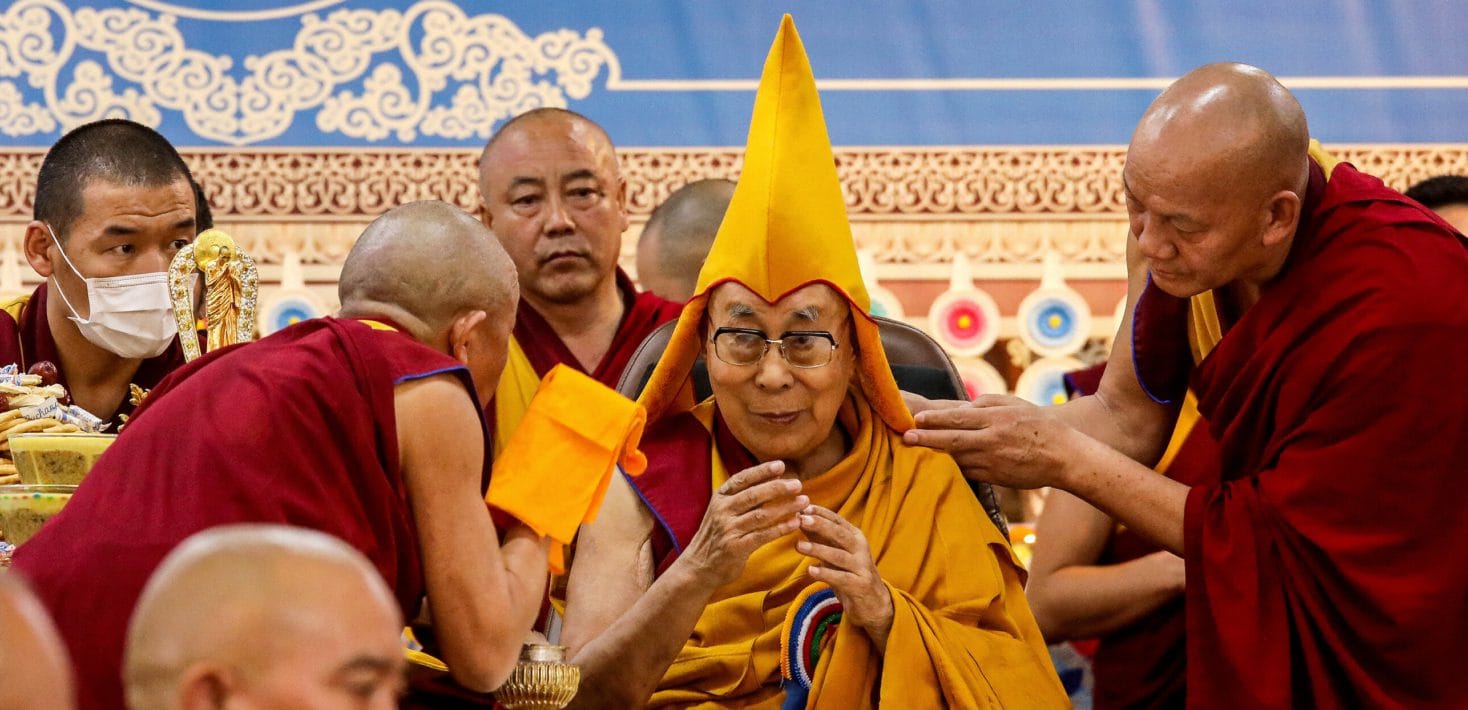
The incident began on 1 July at Sera Monastery in Lhasa. According to information reported by his family and included in Amnesty’s action, Zhang was visiting the monastery when he encountered a Tibetan worshipper with whom he could not communicate verbally. He used his mobile phone to show her a photograph of the 14th Dalai Lama. Two men in plain clothes were reportedly watching the exchange. Zhang was detained before he could leave the monastery.
AMNESTY INTERNATIONAL AUSTRALIA · 10 AUGUST 2026
Activist arrested over photo of Dalai Lama in Tibet must be released
Amnesty describes Zhang Yi’s arrest as a chilling example of the misuse of “inciting separatism” to criminalize peaceful expression.
Read Amnesty’s statement →A gesture lasting only a few seconds — opening an image stored on a telephone — has since been transformed into a national-security case.
On 28 July, Zhang was formally arrested on suspicion of “inciting separatism” (煽动分裂国家罪). His family was notified two days later, and Amnesty says it has reviewed the arrest notice. He remains held at the Lhasa Detention Centre. The authorities have not publicly disclosed the factual basis for the accusation or explained how showing a photograph could constitute incitement to separatism.
The progression is stark: a photograph of the Dalai Lama, an arrest inside one of Tibet’s best-known monasteries, a separatism accusation, detention under the machinery of national security, and now an international Urgent Action. The case shows how an apparently minimal act of communication can be reclassified as a threat to the state.

Related book
Xi Jinping, L’Empereur du silence
The graphic biography by Éric Meyer and Gianluca Costantini traces Xi Jinping’s life and rise to power while examining the transformation of modern China.
Zhang Yi is Han Chinese, not Tibetan. Originally from Wuhan, he has a long history in China’s democracy movement dating back to the 1989 Tiananmen protests. This detail makes the case particularly revealing: the authorities’ use of separatism provisions is not confined to Tibetan identity. It can also reach a Han activist whose alleged act was to show a symbol that the state treats as politically forbidden.
The timing adds another political layer. Zhang was detained on the same day that China’s new Ethnic Unity and Progress Promotion Law entered into force. Chinese authorities describe the law as a framework for national cohesion. Amnesty and other human-rights observers have warned that broad concepts of ethnic unity and shared national identity can be used to restrict freedom of expression, religious practice and cultural rights, particularly in Tibetan and other minority regions.

Related book
In this beautifully illustrated and deeply philosophical graphic memoir, legendary artist Ai Weiwei explores the connection between artistic expression and intellectual freedom through the lens of the Chinese zodiac.
Zhang’s case belongs to a wider pattern in which the vocabulary of terrorism, separatism and national security expands toward smaller and smaller forms of expression. A conversation, a drawing, a book, a photograph or an image on a screen can become evidence of disloyalty. ChannelDraw has followed this mechanism in cases involving artists, journalists and dissidents, including the prosecution of Min Zin and the continuing work collected in Drawing Freedom Together.
Amnesty is calling for Zhang Yi’s immediate and unconditional release, access to adequate healthcare while he remains detained, protection from torture and other ill-treatment, and regular contact with his family and a lawyer of his choice. Until those guarantees are met, a photograph shown in silence remains at the centre of a criminal case built in the name of national security.
ChannelDraw is independent and reader-supported. Your support helps us continue documenting artists, journalists and activists whose voices are threatened or censored.
Other ways to support ChannelDraw
You can also support our independent work by joining us on Patreon or Substack, or by purchasing a ChannelDraw Yearbook. Every contribution helps us keep ChannelDraw independent and continue documenting stories that need to be seen.


