The activist who became the face of Hong Kong’s democracy movement as a teenager has pleaded guilty to “collusion with foreign forces” under the National Security Law. Already imprisoned for nearly six years, he now faces the possibility of many more years behind bars

On 2 September 2026, Joshua Wong stood before Hong Kong’s High Court and pleaded guilty to conspiring to collude with foreign forces, one of the most serious offences under the National Security Law imposed by Beijing on Hong Kong in 2020.
Wong is 29 years old. He has already spent almost six years continuously in detention.
The new case concerns his political and international advocacy around the time the National Security Law came into force. Prosecutors accuse Wong of conspiring with exiled activist Nathan Law and others to encourage foreign governments, institutions and organisations to impose sanctions, blockades or other measures against Hong Kong and China.
According to the prosecution, Wong’s activities included speaking to international media, lobbying foreign politicians and supporting campaigns calling for international action over the erosion of Hong Kong’s freedoms.
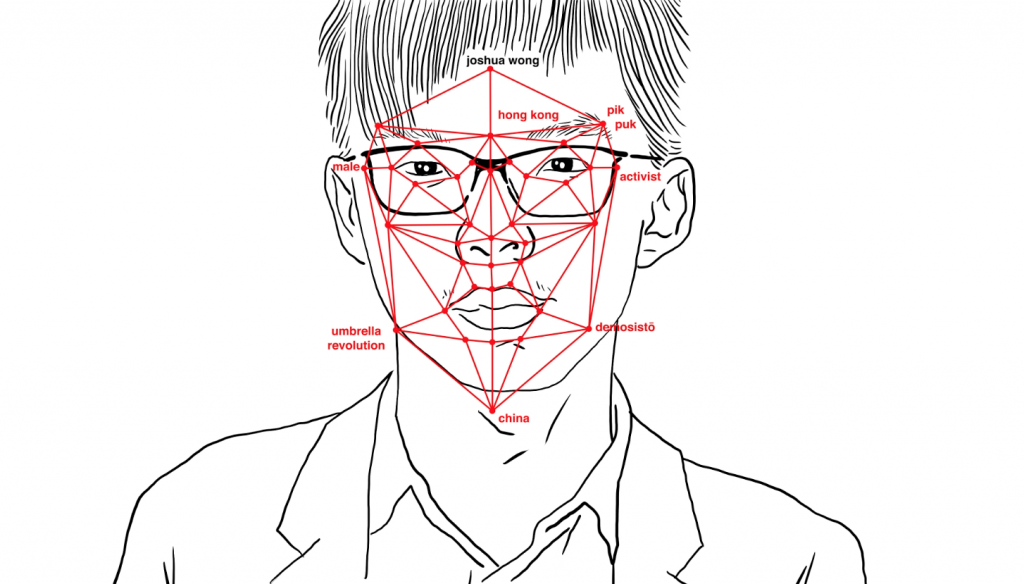
Wong confirmed the prosecution’s account in court and entered a guilty plea. According to Reuters, several Western diplomats attended the hearing.
The offence can carry a prison sentence of between three and ten years and, if judged to be “of a grave nature”, up to life imprisonment. His guilty plea may reduce the eventual sentence. Judge William Tam said the sentence would be delivered as soon as possible, but no date has yet been announced.
The case is particularly significant because Wong is already serving a sentence of four years and eight months for conspiracy to commit subversion in the so-called “Hong Kong 47” case, the largest prosecution brought under the National Security Law.
That case concerned an unofficial primary election organised by the democratic opposition in July 2020. The aim was to coordinate candidates for elections to Hong Kong’s Legislative Council. Authorities argued that the strategy amounted to an attempt to undermine the government.

In November 2024, 45 pro-democracy politicians and activists were sentenced to terms ranging from four years and two months to ten years. Human Rights Watch strongly criticised the sentences and the use of national security legislation against peaceful political activity.
Wong had been expected to complete his current sentence in January 2027. But while he was still in prison, in June 2025, authorities brought the new charge of collusion with foreign forces against him.
Amnesty International argued at the time that the new prosecution appeared designed to prolong his imprisonment and described “collusion with foreign forces” as a vague and sweeping offence being used against freedom of expression and association.
The Hong Kong government rejects this interpretation. It maintains that national security prosecutions are based on evidence and law rather than political views, and has repeatedly accused foreign governments and human rights organisations of interfering in Hong Kong’s judicial affairs.
To understand why Joshua Wong remains such a powerful symbol for the authorities and for Hong Kong’s democracy movement, it is necessary to go back more than a decade.
Wong was born in Hong Kong in 1996. He entered political activism when he was still a schoolboy.
In 2011, at the age of 14, he helped establish Scholarism, a student movement that opposed plans to introduce “Moral and National Education” into Hong Kong schools. Critics feared that the curriculum would promote an uncritical view of the Chinese Communist Party and weaken the political autonomy of Hong Kong’s education system.
Thousands of students and citizens joined the campaign. Demonstrators occupied the area outside government headquarters, and in 2012 the Hong Kong government eventually shelved plans to make the curriculum compulsory.
Wong had become a political figure before he was old enough to vote.
Two years later, his name became known around the world.
In 2014, Beijing proposed a system for electing Hong Kong’s chief executive in which candidates would first have to be approved by a nomination committee. Pro-democracy groups argued that this did not constitute genuine universal suffrage.


The protests that followed became known as the Umbrella Movement.
For 79 days, tens of thousands of people occupied major roads and public spaces in Hong Kong. Umbrellas, initially used to protect demonstrators from police pepper spray, became the movement’s international symbol.
Joshua Wong, still a teenager, became one of its most recognisable faces.
He was arrested, prosecuted and later imprisoned for his participation in the protests. But the movement also transformed him from a student activist into an international representative of a new generation of Hong Kong democracy campaigners.

Related book
Xi Jinping, L’Empereur du silence
The graphic biography by Éric Meyer and Gianluca Costantini traces Xi Jinping’s life and rise to power while examining the transformation of modern China.
PEN America has documented the prosecutions of Wong and fellow student leaders Nathan Law and Alex Chow and the restrictions imposed on their freedom of expression and assembly.
The Umbrella Movement did not achieve the electoral reform protesters demanded. But it profoundly changed Hong Kong’s political landscape.
In 2016, Wong, Nathan Law, Agnes Chow and other young activists founded Demosistō. The organisation advocated democratic self-determination for Hong Kong and argued that the city’s population should have a say in its political future after 2047, when the guarantees established under the “one country, two systems” framework were due to reach their original fifty-year limit.

Wong attempted to enter institutional politics, but his candidacy for Hong Kong’s Legislative Council was disqualified in 2020.
By then Hong Kong had already entered another, much larger period of political upheaval.
In 2019, a proposed extradition law that could have allowed suspects to be transferred from Hong Kong to mainland China triggered enormous demonstrations. What began as opposition to one piece of legislation expanded into a broad movement demanding democratic reforms, accountability for police conduct and protection of Hong Kong’s freedoms.
More than a million people participated in some demonstrations. Human Rights Watch later reported that more than 10,000 people were arrested in connection with the 2019 protests.
Wong was not the leader of the 2019 movement. Unlike the Umbrella Movement, the protests were deliberately decentralised and often described by participants as “leaderless”.
His role had changed.
Wong increasingly became an international advocate for Hong Kong. He travelled abroad, met politicians, spoke to international media and testified before the United States Congress. He supported the Hong Kong Human Rights and Democracy Act and called on governments outside China to respond to the erosion of Hong Kong’s autonomy.

Related book
In this beautifully illustrated and deeply philosophical graphic memoir, legendary artist Ai Weiwei explores the connection between artistic expression and intellectual freedom through the lens of the Chinese zodiac.
It is precisely this international advocacy that years later became central to the accusation of “collusion with foreign forces”.
On 30 June 2020, Beijing imposed the National Security Law on Hong Kong.
The legislation criminalised secession, subversion, terrorism and collusion with foreign forces. Chinese and Hong Kong authorities said the law was necessary to restore stability after the unrest of 2019 and to protect national security.
Human rights organisations saw something very different: a legal architecture capable of transforming political opposition, journalism, protest and international advocacy into national security crimes.
The consequences were immediate.

Demosistō dissolved on the day the law was introduced. Nathan Law eventually went into exile in Britain. Other activists left Hong Kong. Political organisations disappeared. Independent media organisations closed. Trade unions and civil society groups dissolved.
Wong stayed.
On 23 November 2020 he was taken into custody. He has not been free since.
His imprisonment has involved several different cases. He received sentences connected to demonstrations outside police headquarters, an unauthorised assembly in 2019 and participation in the banned 2020 vigil commemorating the Tiananmen Square massacre.
Then came the Hong Kong 47 prosecution.
And then, while he was already serving that sentence, came the second National Security Law case.

Amnesty International has documented the dramatic deterioration of Hong Kong’s human rights environment since the National Security Law came into force, arguing that the security framework has severely restricted freedom of expression, association and peaceful political activity.
Joshua Wong’s story therefore extends far beyond the biography of a single activist.
It follows the transformation of Hong Kong itself.
A teenager handing out leaflets against changes to his school curriculum became the face of a mass civil-disobedience movement. The student activist became a politician. The politician became an international advocate. The international advocacy then became evidence in a national security prosecution.
Activities once conducted openly — organising political campaigns, speaking to foreign journalists, meeting politicians, asking international institutions to respond to human rights violations — have progressively moved into the territory of national security law.

The same transformation can be seen elsewhere in Hong Kong.
Journalists, publishers, politicians, artists and activists have found themselves confronting a political and legal environment profoundly different from the one that existed when Britain transferred sovereignty over Hong Kong to China in 1997.
The prosecution of media entrepreneur and Apple Daily founder Jimmy Lai, the dismantling of democratic organisations and the prosecutions of activists who organised the annual Tiananmen vigils form part of the same broader history.
ChannelDraw has followed Hong Kong’s struggle through drawing for years. In 2020, my work was included in The Art of Defiance. Hong Kong: Revolution of Our Time, an exhibition in Sydney bringing together artists and photographers documenting the Hong Kong democracy movement.

The repression of political and artistic expression in Hong Kong also belongs to a wider transformation taking place in China. In August 2026, ChannelDraw documented the case of Chinese artist Gao Zhen, sentenced to three years in prison after authorities prosecuted him over artworks critical of Mao Zedong created years earlier.
In Gao Zhen’s case, artworks became evidence.
In Joshua Wong’s case, political advocacy, international meetings, media appearances and calls for sanctions became evidence.
The contexts and charges are different, but both cases raise the same fundamental question: what happens when actions that were once part of the public sphere are reclassified through the language of national security?
It is a question that extends beyond Hong Kong and China. ChannelDraw has documented similar mechanisms in other contexts, including my own experience in Turkey, where one of my drawings and my online activity were accused of promoting terrorism.

Human rights organisations argue that Wong should not be imprisoned for peaceful political advocacy. Amnesty International has called for the charges to be dropped and for people imprisoned solely for exercising their human rights to be released. Human Rights Watch has similarly condemned the repeated prosecutions of Hong Kong’s pro-democracy activists.
The Hong Kong government insists that freedoms remain protected but are not absolute, that national security offences are prosecuted according to law, and that criticism from foreign governments and organisations misrepresents legitimate law enforcement.
These two interpretations of Hong Kong are now almost irreconcilable.
One describes the restoration of stability after years of political unrest.
The other describes the dismantling of a democratic movement.
Joshua Wong’s life traces the distance between them.
When he first became an activist, he was fourteen years old and fighting over what children in Hong Kong would be taught in school.

When he became one of the faces of the Umbrella Movement, he was seventeen.
Today he is twenty-nine.
He has spent much of his twenties behind bars.
At the hearing on 2 September, Wong’s lawyer Derek Chan asked the court for a sentence that would still allow his client to have hope for the future. He said Wong had spent his years in prison reading hundreds of books, studying and reflecting on his life, and that he hoped eventually to be released and care for his ageing parents.
The judge did not announce when Wong will be sentenced.
Before the new prosecution, he was approaching the end of his existing prison term.
Now he faces the possibility that January 2027 will pass and the prison gates will remain closed.
For more than a decade, Joshua Wong has been one of the most visible faces of Hong Kong’s struggle over democracy, autonomy and political freedom.
The boy who began by challenging a school curriculum has become a prisoner of the national security system that now defines political life in the city.
His next sentence will determine how many more years that story will be written from inside a prison.
ChannelDraw is independent and reader-supported. Your support helps us continue documenting artists, journalists and activists whose voices are threatened or censored.
Other ways to support ChannelDraw
You can also support our independent work by joining us on Patreon or Substack, or by purchasing a ChannelDraw Yearbook. Every contribution helps us keep ChannelDraw independent and continue documenting stories that need to be seen.


