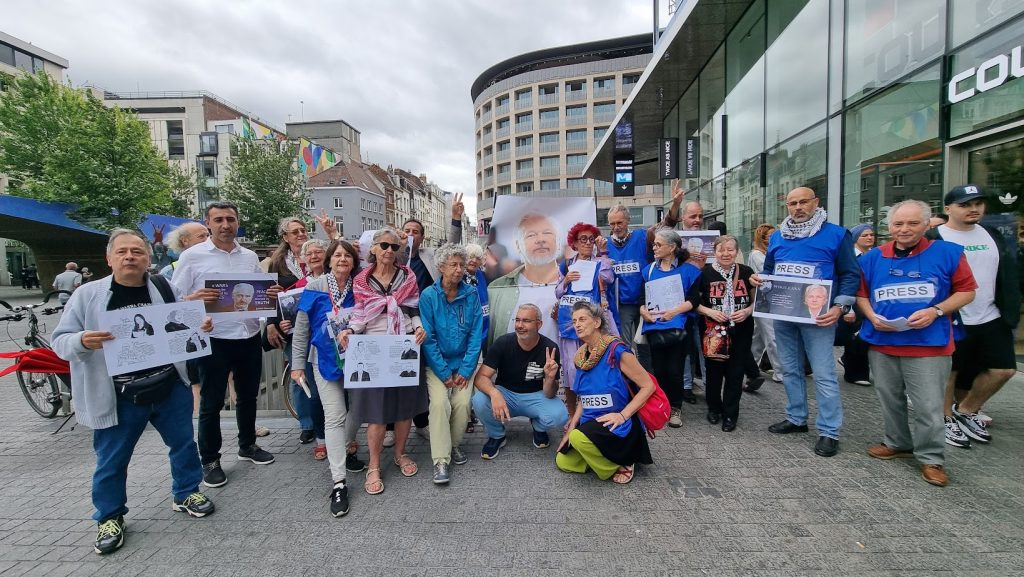
The Free.Assange.Belgium committee, together with Mariefrance Deprez, Luk Vervaet, Monique Lermusiaux, Christine Pierard, Ali Aarrass, and numerous activists, gathered at Place de la Monnaie in Brussels to commemorate the first anniversary of Julian Assange’s release. As they have done for the past five years, the aim of the gathering was to reaffirm the importance of freedom of information, with protest slogans, a leaflet distributed to passersby, and the firm conviction that the fight against the criminalization of journalism is far from over.
In the leaflet, they strongly remind people that Assange regained his freedom after 273 weeks of constant mobilization. It emphasizes how the United States persecuted him for exposing uncomfortable truths, turning the work of journalism into an alleged act of espionage by misusing the Espionage Act. It recalls that Assange publicly highlighted this contradiction, and that many in the US are working to change these laws so that such tools can no longer be used to intimidate journalists or whistleblowers.
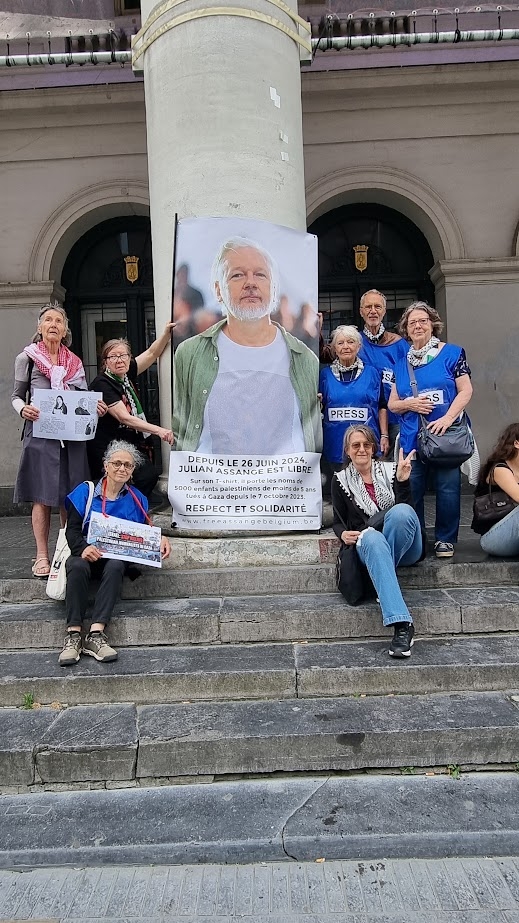
The leaflet mentions two key events from his first year of freedom: his testimony at the Council of Europe (October 2024), which recognized him as a political prisoner, and his participation in the Cannes Film Festival (May 2025), where he wore a T-shirt bearing the names of 4,986 children killed in Gaza.
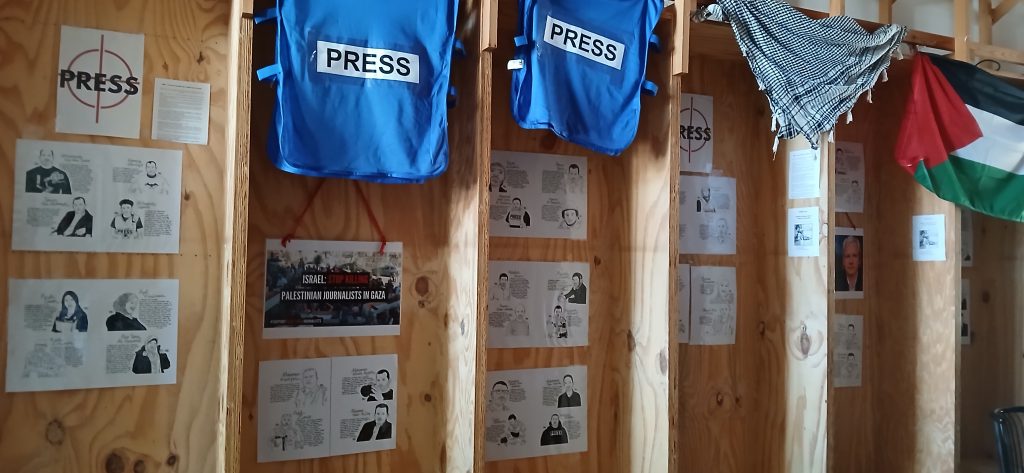
The article dedicated to press freedom strongly connects with current events: the deep concern for journalists working in Gaza and the West Bank, forced to wear helmets and vests that, while symbolizing their role, also make them targets. The gathering affirms that by targeting those wearing the word “Press,” Israel shows its “terrorist” face and seeks to control the flow of information by excluding independent outlets.

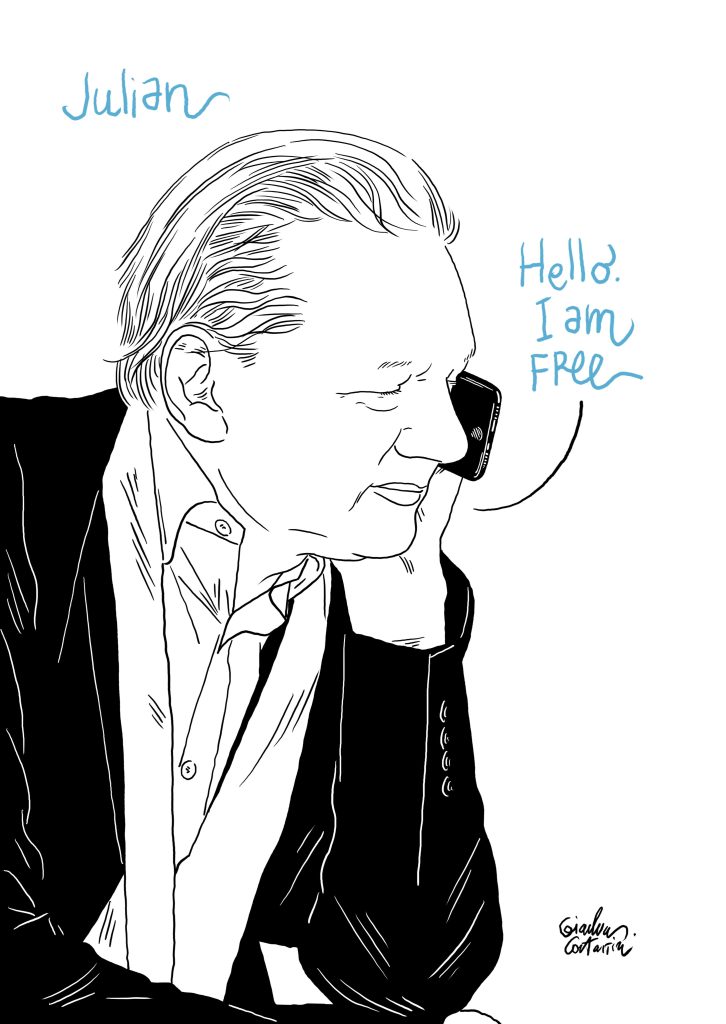


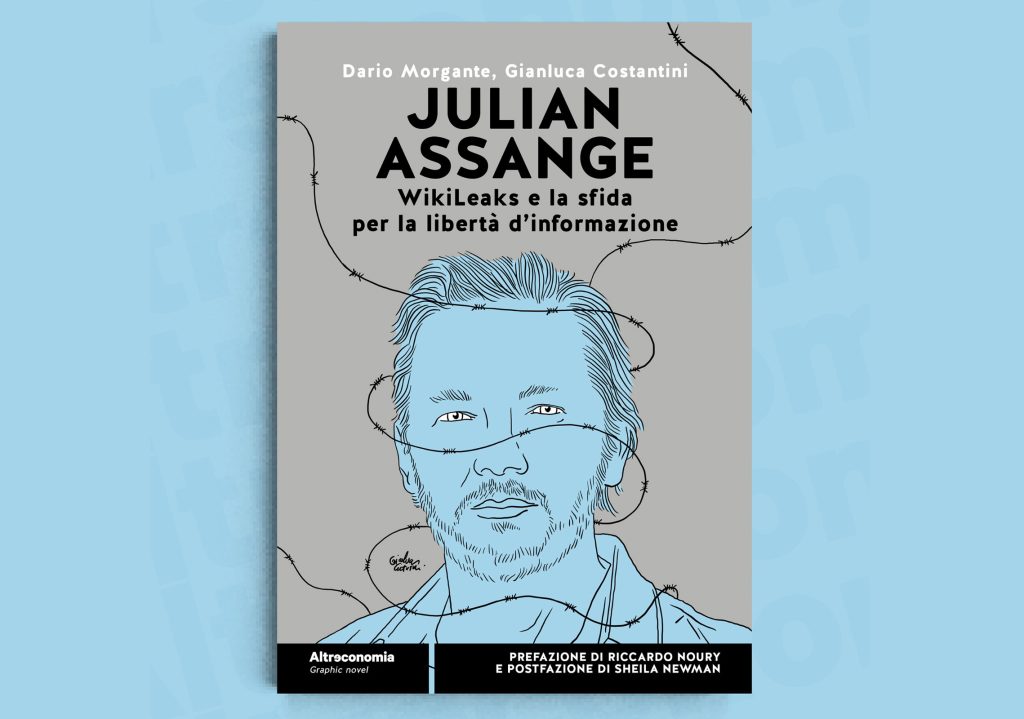


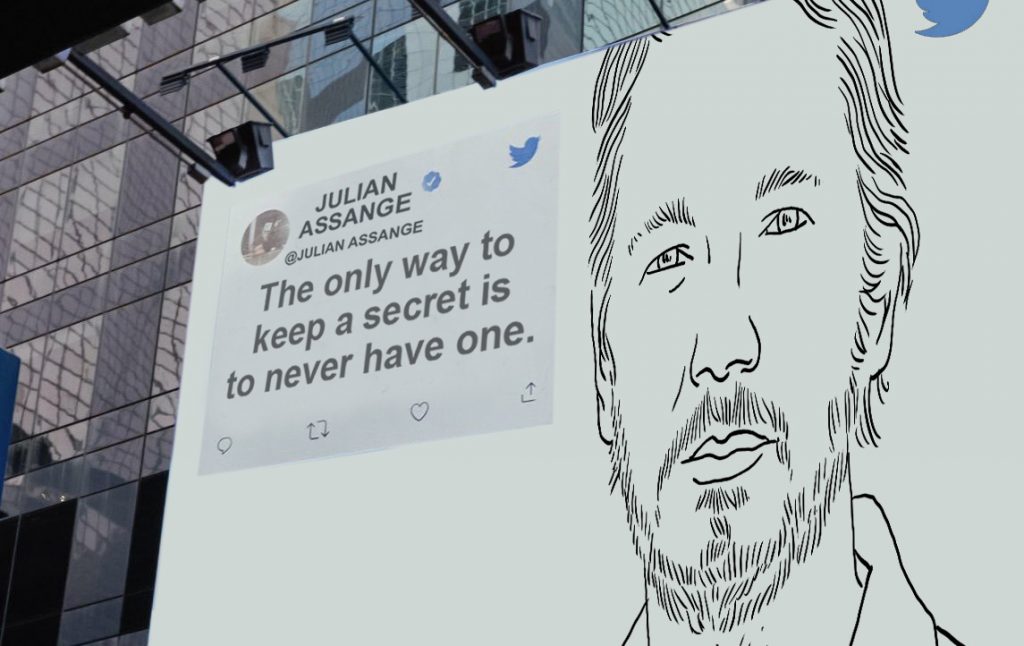


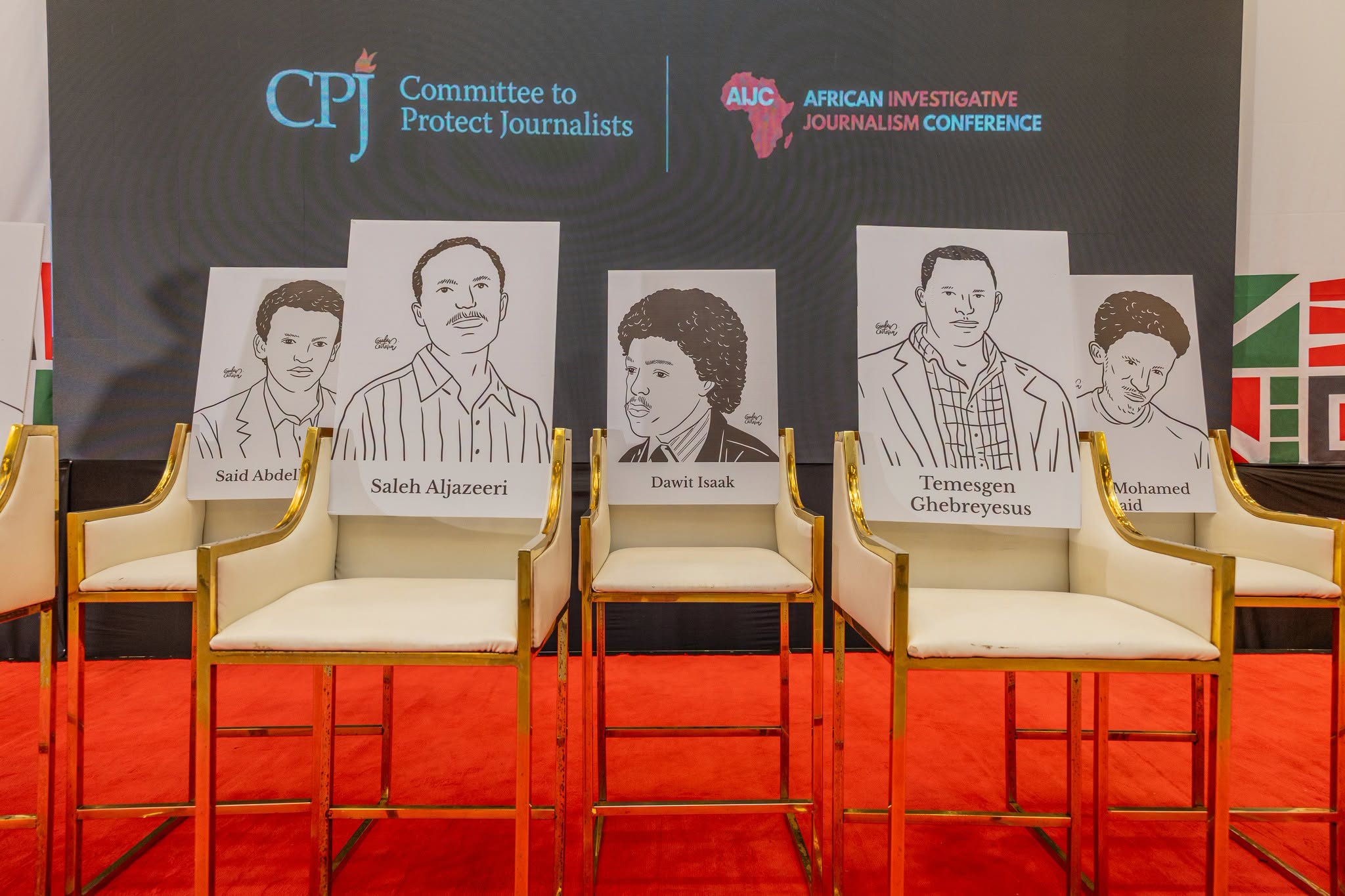
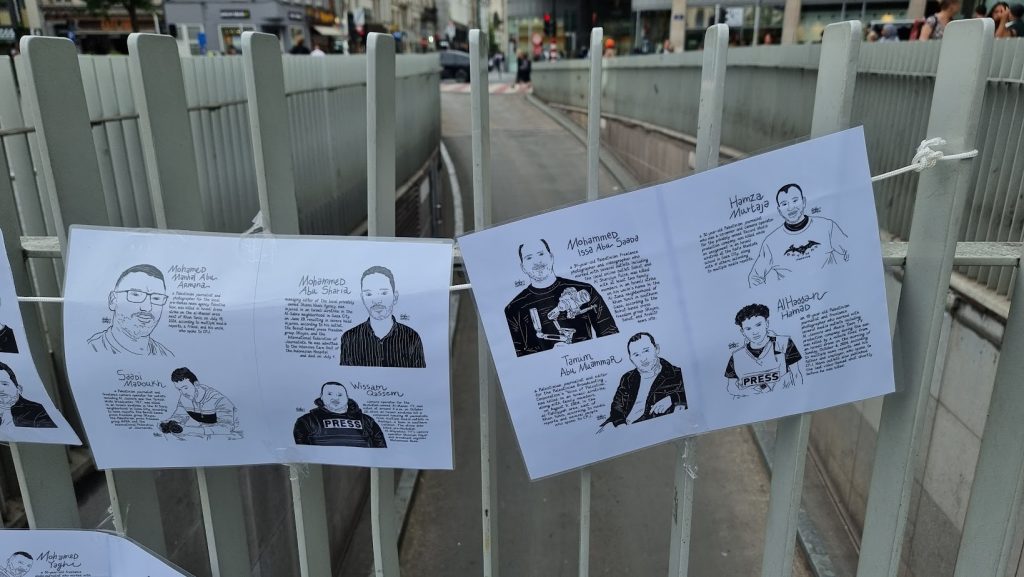
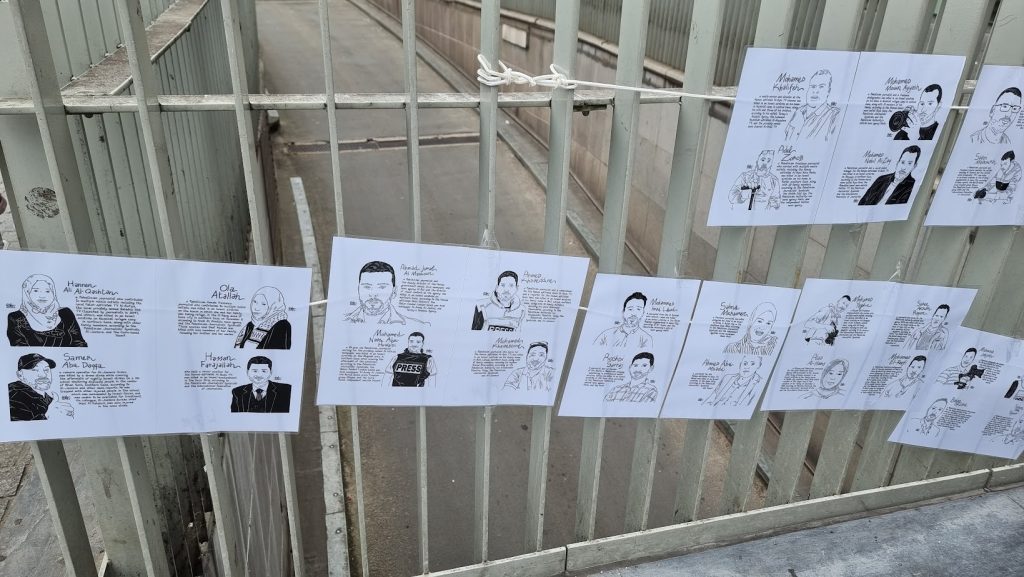
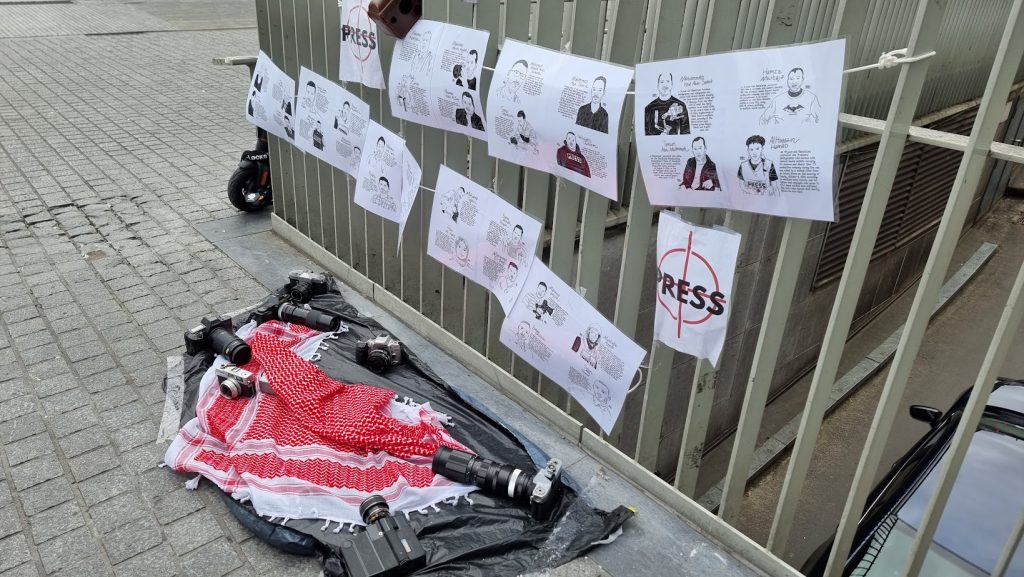
Alongside civic commitment, artist and activist Gianluca Costantini has used drawing as a new frontier of memorial and protest. Since October 7, 2023, following the start of the bombings in Gaza, Costantini has created a series of digital portraits—later displayed in large format—of journalists killed during the conflict. This visual gallery, developed in collaboration with the Committee to Protect Journalists in New York, serves to keep alive the memory of those who lost their lives reporting on the war.
In Bologna, from June 12 to 22, 2024, at Squadro Stamperia d’Arte, the exhibition “In the Crosshairs of Memory – Portraits of Journalists Killed in Palestine” opened. Sixty to eighty digital portraits, four large-format original drawings, and an intense dialogue between sociologists and Amnesty International representatives created a collective visual memorial. It is a ritual of care: each face becomes an “ultimate gesture of gratitude,” a way to ensure that oblivion does not erase the sacrifice of those who paid with their lives to make uncomfortable truths known.


Today, Costantini’s portraits have appeared in protests and international initiatives—from Atlanta to Berlin, and in Naples—and have been seen as an “explicit political warning” against the deliberate eradication of media in conflict zones.
The joint action of Free.Assange.Belgium and Gianluca Costantini offers a coordinated reading of the present. On one hand, Assange’s freedom embodies the fight for press freedom and the right to information even in the face of oppressive laws. On the other, the faces traced through art remind us that many, today, are paying with their lives for their role as narrators of reality.
The gathering in Brussels, enriched by the symbolic power of the artistic project, sends a strong message: freedom of information is a non-negotiable right. And if journalism has become a “crime” in the eyes of some leaders, drawing and civic organization respond that it will “never be a crime” to ask questions, to document, to preserve memory.
A user on r/oknotizie wrote in July 2024, regarding the raids and the killing of journalists:
“The list of slaughtered journalists keeps growing… It has now risen to at least 158 media workers killed… journalists ‘have become actual targets.’”
This comment demonstrates how, in the Gaza conflict, journalism is not seen as collateral damage but as a deliberate objective.
The Brussels gathering is not just an anniversary; it is a step in a path that connects press freedom, international justice, and the right to truth. Costantini’s portraits are the visual testimony of a massacre with no identified culprits—and they become an invitation not to look away.
Together, art and civic action remind us that the fight for truth is always active. And in defense of the right to inform and the humanity of those who do it, every word, every drawing, every gathering carries weight and value.