Abed Shaat, Anas Ghnaim, and Mohamed Qeshta were documenting the humanitarian crisis when their vehicle was struck on January 21, 2026
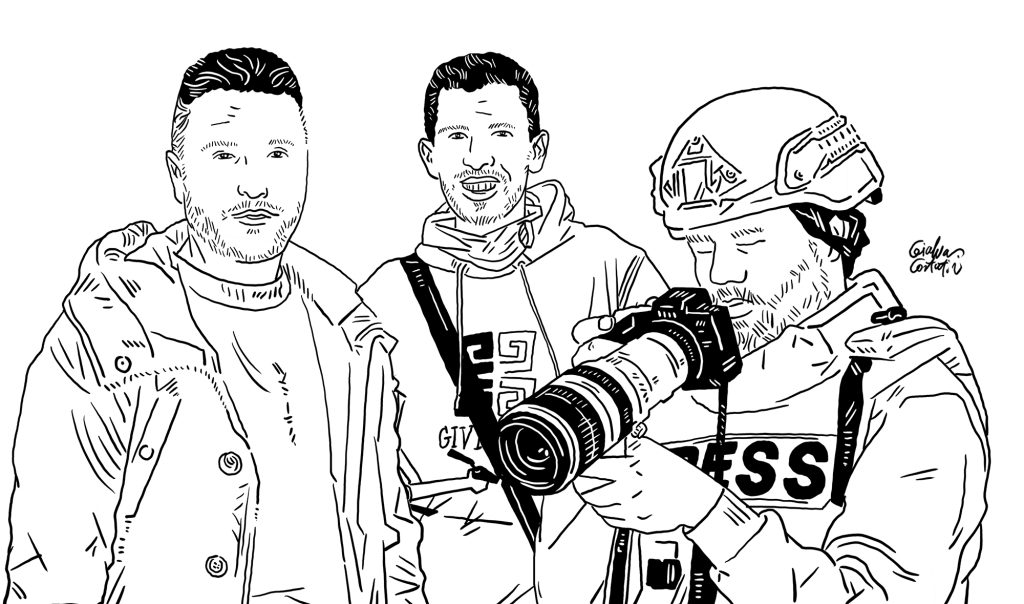
On January 21, 2026, three Palestinian journalists were killed in the Gaza Strip while carrying out their work. The victims were Abed (Abdul Raouf) Shaat, Anas Ghnaim, and Mohamed Salah Qeshta, all of whom were engaged in documenting the ongoing humanitarian crisis in the territory.
According to available accounts, the three were traveling in a clearly identifiable civilian vehicle when it was struck by an air attack in central Gaza. They were covering a humanitarian mission and producing journalistic material — photographs, videos, and news updates — for local and international media outlets.
Abed Shaat was a freelance photographer and video journalist, known for his collaborations with international news agencies and for his frontline reporting during the most intense phases of the conflict.

Anas Ghnaim, a photographer and drone operator, documented the daily impact of bombardments on civilian life.

Mohamed Salah Qeshta worked as both a communicator and journalist, providing constant updates on relief operations and humanitarian conditions.

Israeli military authorities stated that the strike targeted alleged hostile activity in the area. However, press freedom organizations dispute this account, emphasizing that the three men were clearly identifiable journalists and were not involved in any military activity. Calls have been made for an independent investigation to clarify the circumstances and assign responsibility for the attack.
The killing of Shaat, Ghnaim, and Qeshta is part of an increasingly dire situation for Palestinian journalism. Since the start of the war, Gaza has become one of the most dangerous places in the world for reporters. Journalists, photographers, and media workers continue to operate under extreme conditions, often without adequate protection and under constant threat.
Their deaths are not only a personal and familial tragedy, but also a serious blow to the right to information. Without independent witnesses, war becomes more opaque and harder to understand and assess. For this reason, the killing of journalists in conflict zones is never collateral damage — it is a direct attack on the ability to document reality itself.


