Art, Literature, and Resistance Amid Systematic Repression in 2025
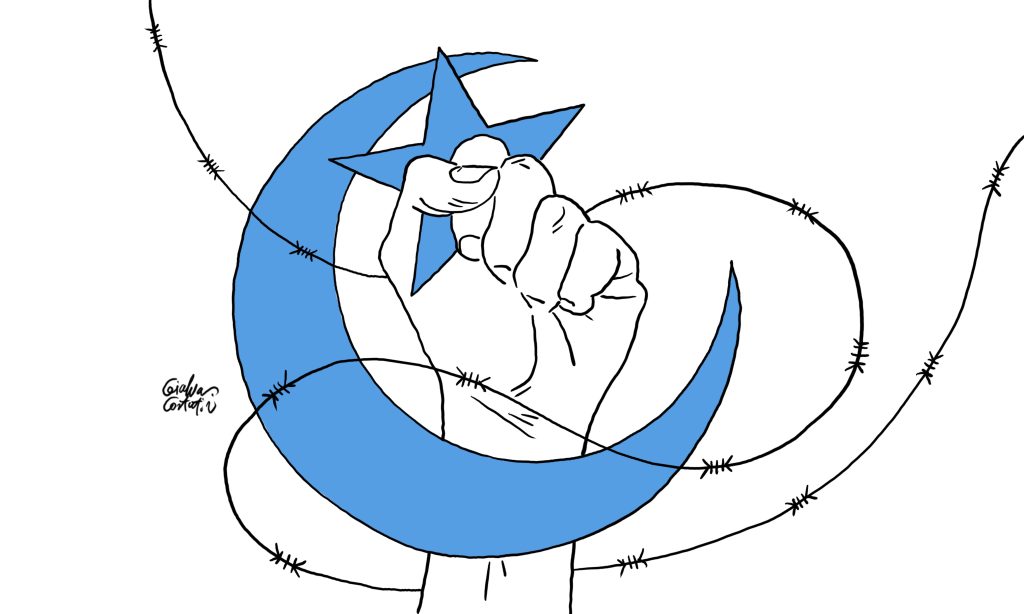
In 2025, the condition of the Uyghur population in China remains extremely dire. In the Xinjiang region, systematic repression continues: mass arbitrary detentions, torture, forced labor, pervasive surveillance through advanced technological systems, and severe restrictions on religious and cultural freedoms. Despite official statements claiming the closure of “re-education” camps, hundreds of thousands of people still risk imprisonment on charges of “extremism,” while millions live under constant control.
The Uyghur birth rate has drastically declined in recent years, and many children are separated from their families to be placed in state institutions aimed at cultural assimilation. Over three hundred new detention facilities have been documented since 2017, and hundreds of thousands of minors are entrusted to the state because their parents are detained or forced into exile.

Restrictions extend beyond daily life to mobility: those wishing to travel must undergo strict checks, provide guarantees, and accept conditions that prevent any contact with organizations or individuals critical of the government. Families often remain hostages of the authorities, facing the threat of retaliation in case of dissent.
Forced labor continues to be a primary tool of control, disguised as “poverty alleviation” programs. Entire industrial sectors—from solar panel production to clothing and mineral extraction—are linked to these practices. Many products from Xinjiang are blocked at the borders of some countries, while other markets continue to import them, despite international denunciations.
The international community reacts in contradictory ways. Some states have imposed trade restrictions and sanctions, while others have repatriated Uyghurs to China, exposing them to the risk of persecution. Meanwhile, major hotel chains and foreign companies continue to invest in Xinjiang, effectively normalizing a situation that human rights organizations describe as a crime against humanity.

A prominent case of this repression is that of the Uyghur writer Perhat Tursun, one of the most innovative voices in contemporary Uyghur literature. Arrested in 2018 and sentenced to 16 years in prison, he remained without contact with the outside world for years. The charges against him were vague and politically motivated, related to the alleged dissemination of “separatist” ideas. His novel The Backstreets, translated into English and published in the United States, made the impact of his literary voice and the violence of his silent disappearance even clearer. In 2025, information about his health and fate remains fragmentary, but international campaigns for his release continue to highlight how his case embodies the Chinese government’s desire to suppress any form of independent artistic and intellectual expression.
You are not alone – Uyghur poets > Podcast, by ABC Radio National

Alongside Tursun, another prominent persecuted Uyghur intellectual is Ilham Tohti, an economist and activist arrested in 2014 and sentenced to life imprisonment on charges of “separatism.” Tohti is known for his studies on Uyghur society and economy and for his efforts to promote coexistence between ethnic groups in China. His detention drew international condemnation and made him a symbol of the repression targeting intellectuals who attempt to critique state policies. Like Tursun, Tohti represents the silenced voice of those who try to analyze government policies critically without compromise, embodying the struggle for freedom of thought and expression.

Another central figure in contemporary Uyghur literature is the poet Aynur Qaram, whose works provide a direct testimony of the Uyghur people’s condition. Her poetry, often published clandestinely or via foreign digital platforms, explores themes of memory, identity, loss, and resilience, documenting daily life under surveillance and repression.
Qaram uses poetry as a form of cultural resistance: her verses denounce arbitrary detention, the separation of children from their families, and the imposition of rules aimed at forced assimilation. Through a language rich in symbolism and images of traditional Uyghur life, her compositions preserve the connection to her community’s culture and history, defying state restrictions.


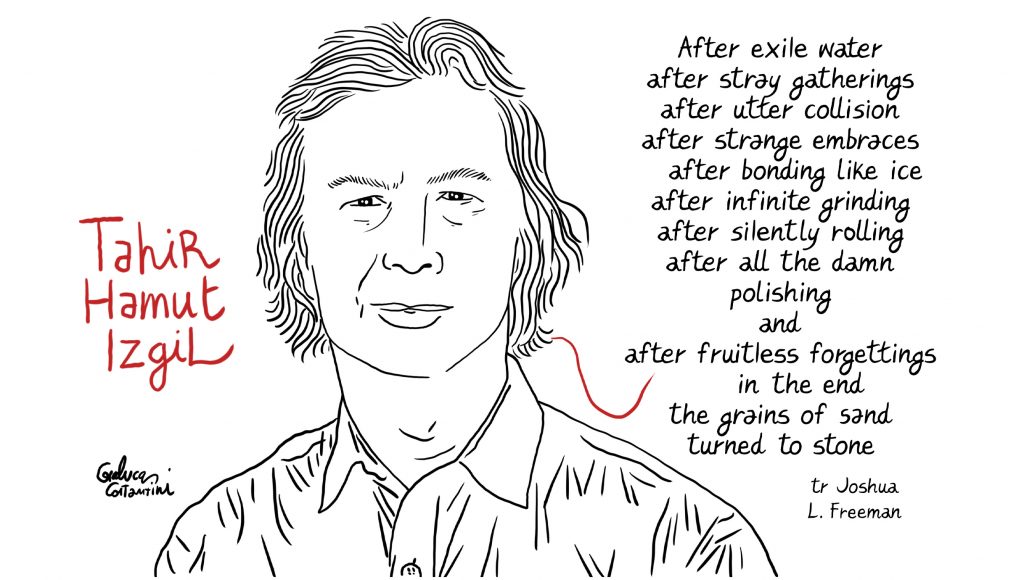
The poet herself has faced repeated threats and pressure from authorities. In 2023, after publishing several poetry collections online, she was forced to suspend public activities and relocate under precarious security conditions, but she continues to write and transmit her works abroad through trusted contacts. Translations of her poetry into multiple languages have enabled international dissemination, raising global awareness of the situation in Xinjiang.
Aynur Qaram, together with Perhat Tursun and Ilham Tohti, represents a symbol of Uyghur cultural resistance: through poetic and intellectual expression, they preserve the identity of a community under attack, demonstrating how art and critical reflection can become fundamental tools to safeguard memory and dignity under extreme circumstances.
In summary, life for Uyghurs in 2025 remains marked by repression, forced assimilation, and economic exploitation, with prospects for change still distant. Yet the voices of writers, poets, and intellectuals continue to testify to the strength and resilience of an entire community.
The poems are translated by Joshua L. Freeman.


