Detained for a year in Hungary after a controversial extradition, the German non-binary activist faces a trial that challenges the very freedom of dissent in today’s Europe.
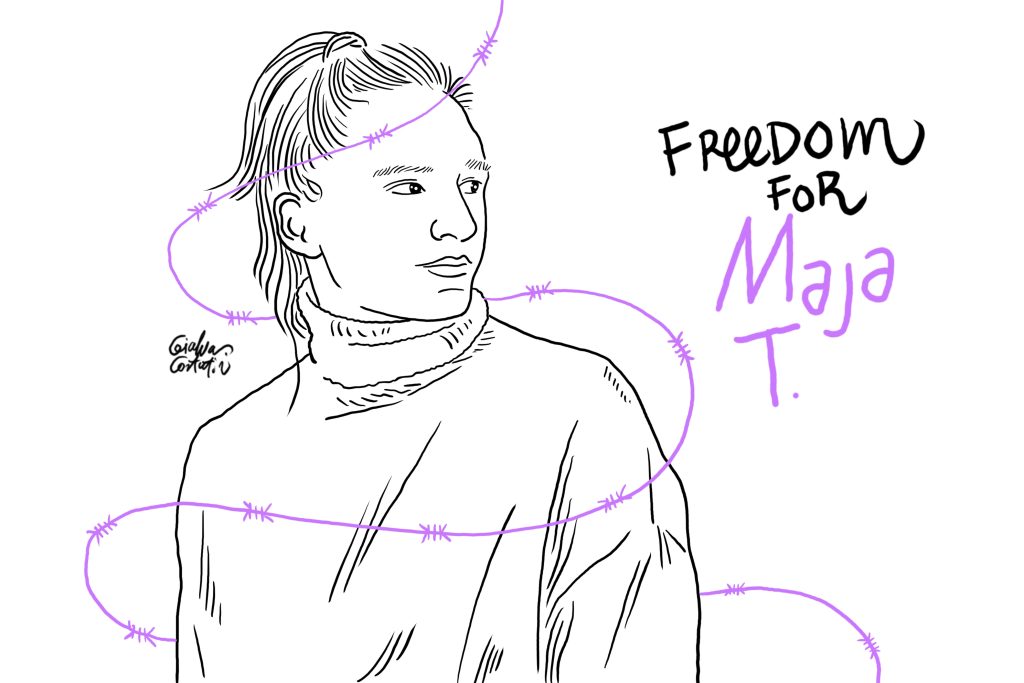
Maja T., a 24-year-old German antifascist activist who identifies as non-binary, has been held in detention in Hungary for a year following a controversial extradition from Germany. They are now facing decisive court hearings that could result in a sentence of up to 24 years in prison — charges that many consider politically motivated.
The case dates back to February 11, 2023, during the Becsület Napja (“Day of Honour”) rally in Budapest, an event that annually gathers far-right militants from across Europe to commemorate the Hungarian troops and Waffen-SS who fought against the Soviet siege in 1945. According to the prosecution, a group of antifascists, including Maja, allegedly organized attacks against participants. The charges include aggravated assault and membership in a criminal organization. The defense, however, argues that the evidence is weak, the injuries reported are minor, and the accusations are disproportionate.
Maja was arrested in Berlin in December 2023 under a European arrest warrant and extradited to Budapest on June 29, 2024. The extradition took place despite the German Constitutional Court’s prohibition — the ruling from Karlsruhe arrived just minutes too late. This episode raised serious concerns about European judicial cooperation and the protection of individual rights in politically sensitive cases.
While held in Budapest’s Gyorskocsi utca prison, Maja has denounced extremely harsh conditions: isolation, cells without light, poor food, limited family visits, inadequate medical care, and the impossibility of studying or working. They were brought into court shackled, escorted by masked guards, and have reported invasive body searches and humiliating treatment.
On June 5, 2025, Maja began a hunger strike to protest against the detention and what they consider an illegal extradition, hoping to obtain more humane conditions and possibly a transfer to Germany. The strike lasted just over five weeks. According to supporters, Maja lost around 14 kilograms, with their heart rate reportedly dropping to as low as 30 beats per minute. Doctors feared fainting spells, cardiac arrest, or irreversible organ damage. On July 1, Maja was transferred from the Budapest detention center to a prison hospital in the southeast of the country, where they complained of isolation and sleep deprivation due to hourly checks.
German Foreign Minister Johann Wadephul stated that he would advocate for better conditions for Maja in talks with the Hungarian government, while also emphasizing that the activist faces serious charges and that similar proceedings would have taken place even in Germany.
The trial is unfolding in a political climate marked by Viktor Orbán’s authoritarian government, which has turned Hungary into an “illiberal democracy” hostile to civil rights, LGBTQI+ people, and antifascist movements. Maja’s non-binary identity further increases their vulnerability and the discrimination they experience in a prison system that fails to recognize gender diversity.
The October hearings are crucial for Maja’s future. If convicted, the case could set a troubling precedent for the criminalization of political activism in Europe. Maja T. has become a symbol of antifascist resistance, freedom of expression, and LGBTQI+ rights. The trial against them is not only about one individual, but about the very boundary between justice and political persecution.


