A journey through history, cartography, and graphic novels, exploring Saint-Dié-des-Vosges and its renowned geography festival.

I left at dawn, ready for a long and complex journey: train, taxi, two planes, and a car with a driver would take me to Saint-Dié-des-Vosges in the French Grand Est region. This trip was special: I was attending the International Geography Festival with my graphic novel about Xi Jinping.
Saint-Dié-des-Vosges is a city of striking features, where people’s faces seem sculpted and their gazes penetrating. Small and completely rebuilt after being razed by the Nazis, the town still carries the marks of its harsh history. Christian, the driver who picked us up from Basel airport, was an extraordinary guide: he spoke Italian, shared stories about his land, and conveyed a deep love for the imposing and fascinating nature surrounding the city.

This corner of France hosts a geography festival because, on April 25, 1507, Saint-Dié saw the publication of Cosmographiae Introductio by Martin Waldseemüller and Matthias Ringmann, the first modern atlas in which the name “America” appeared for the first time. The work marked a turning point in cartography, combining the classical heritage of Ptolemy with the latest geographical discoveries, offering the world an updated vision of the Earth.
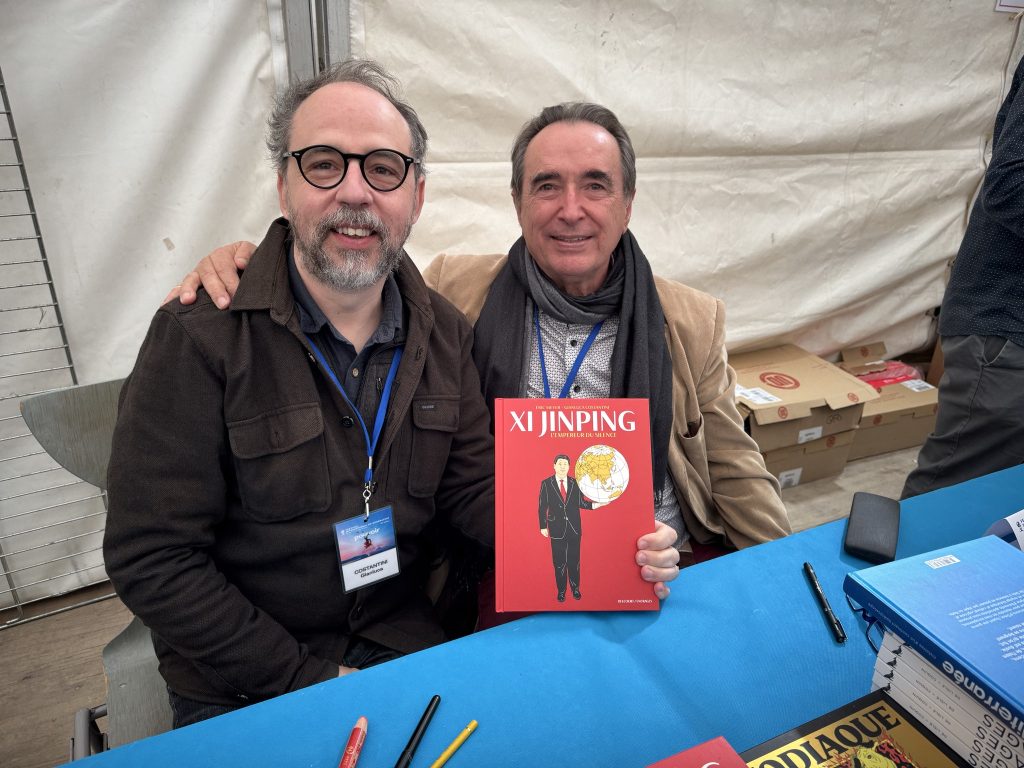
At a small hotel on the outskirts of town, Éric Meyer, the French journalist who wrote the book that inspired our graphic novel, was waiting for me. We had collaborated for years, but it had been a long time since we last met. Meyer spent over thirty years in China as an independent correspondent, observing its transformations up close and becoming one of France’s leading experts on contemporary China. He founded the newsletter Le Vent de la Chine and wrote books such as Sois riche et tais-toi! and Robinson à Pékin, providing deep, detailed insights into the country.

The next day, we headed to the stand of Librairie L’Octopus: Bande Dessinée & Mondes imaginaires to sign and dedicate copies of Xi Jinping, l’Empereur du silence, nominated for the Prix de la BD Géographique. The award ultimately went to Méditerranée. Histoires d’un continent kaléidoscope by Aurel, but the other nominees included Bloom by Julia Billet and Jérôme Ruillier, On a mangé la mer by Maxime de Lisle and Martin Oliver, Chroniques de Tunisie by Anna Chronique, and Rébétissa (L’antidote) by David Prudhomme.
The festival was lively: many people stopped by the stand, browsed the book, and bought copies. In the afternoon, we went to the Médiathèque “La Boussole” for a public talk, but first we made a detour to Saint-Dié Cathedral and the museum to see the reproduction of the Cosmographiae Introductio.
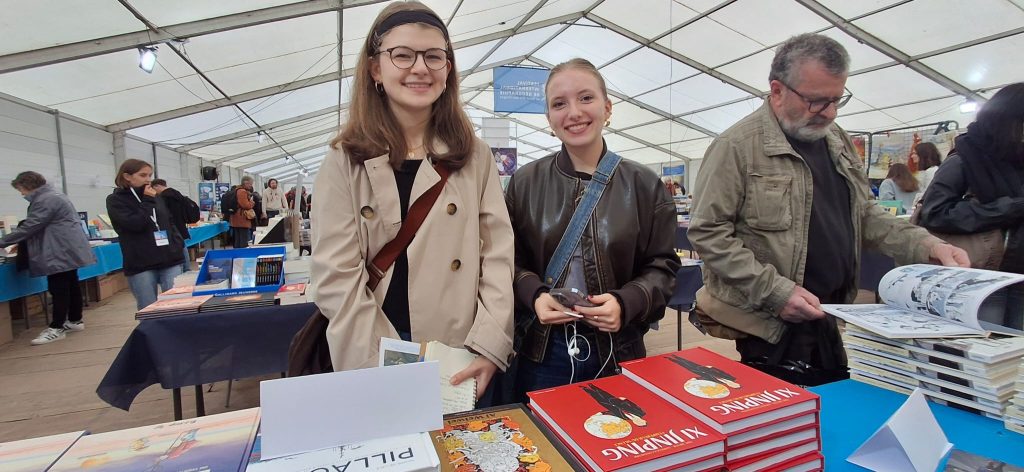
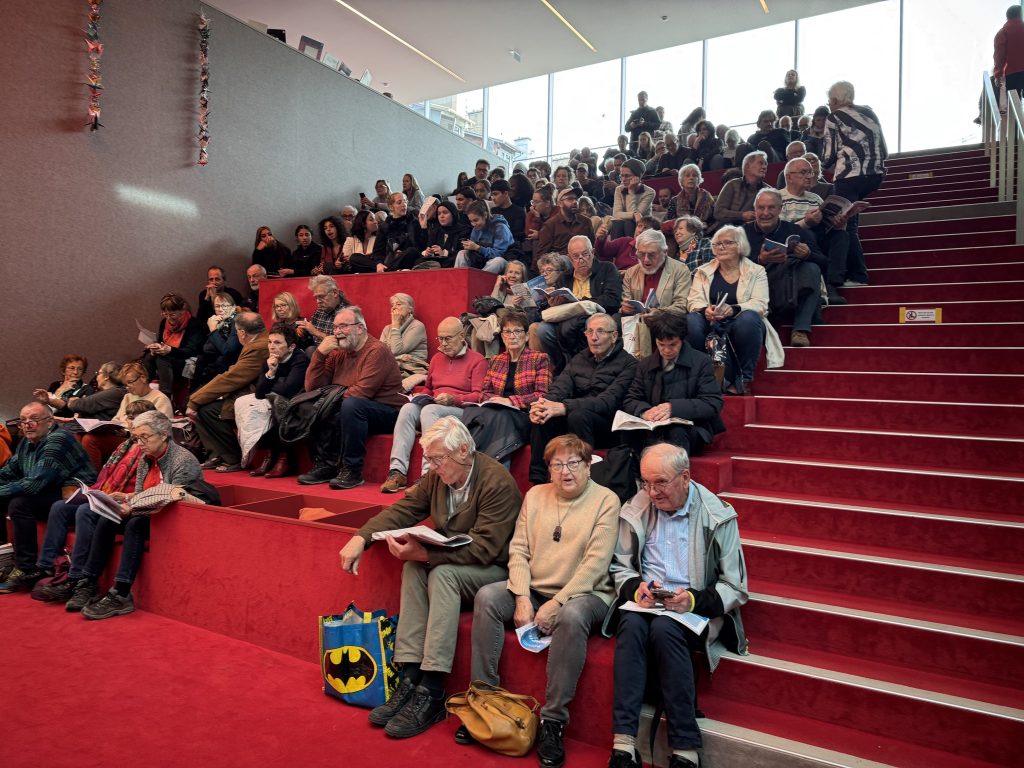
The session was engaging: Nashidil Rouiai asked insightful questions, and the energy from the audience was palpable. It’s remarkable that such an important festival takes place in such a small town; this was its 36th edition.
Two days flew by in a flash. The next day, about thirteen hours of travel awaited me, but it was worth it. I discovered a wild, authentic, and surprising France, full of history, geography, and faces carved by time.