Frozen to death in Gaza, a symbol of childhood destroyed by war
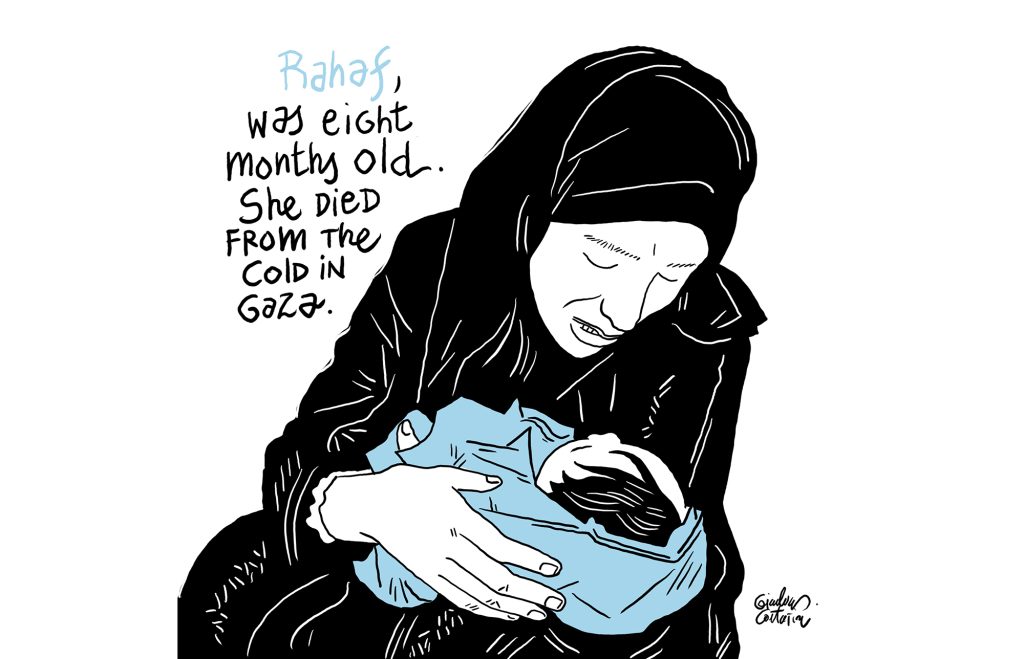
Rahaf was eight months old. She died from the cold in the Gaza Strip, while living with her mother in a makeshift tent, without adequate protection from winter weather. Her death came during days of rain, wind, and low temperatures that hit displacement camps hard, turning temporary shelters into deadly traps for the youngest.
Rahaf was not an isolated case. After her, other children died from hypothermia, in a context where thousands of families are forced to live outdoors or in damaged tents, often flooded, without blankets, warm clothing, or heating. Newborns and infants, the most vulnerable, are unable to withstand the cold nights, made worse by dampness and the lack of proper medical care.
The war has destroyed homes, hospitals, and essential infrastructure, leaving an already exhausted population without safe shelter. Fuel shortages prevent heating and the functioning of medical facilities, while humanitarian aid entering the area remains far below what is needed. Under these conditions, even a winter that is not exceptionally harsh becomes lethal.

Humanitarian organizations describe these deaths as preventable. Insulated tents, thermal blankets, adequate clothing, and basic medical assistance would be enough. But in Gaza everything is scarce, and children pay the highest price, dying not only from bombs but also from cold, hunger, and disease.
Rahaf’s story is the face of a broader tragedy, often buried beneath numbers and war reports. It is the story of a denied childhood, of a life cut short before it could begin, and of a humanitarian crisis that continues to unfold in silence.


