Visual Journalism and Storytelling That Reflect Our Times
by Gianluca Costantini

The world of comics is not just entertainment: more and more often, graphic novels have become powerful tools for visual journalism, reportage, and reflection on contemporary reality. On ChannelDraw, I have selected ten essential titles that demonstrate how the language of comics can tell true stories, address social and political issues, and give voice to experiences often ignored by traditional media.
From on-the-ground investigations like The Once and Future Riot by Joe Sacco, to dystopian and resistance narratives such as You Must Take Part in Revolution by Badiucao and Melissa Chan, to manuals that teach how to turn real events into graphic storytelling with Making Nonfiction Comics by Shay Sarah Mirk and Eleri Harris, these books explore the boundary between reality and visual art.
Among collective testimonies like Wie geht es Dir? – 60 gezeichnete Gespräche nach dem 7. Oktober 2023 and political anthologies like The Right to Live in Peace, and works blending memory and introspection (Black Arms to Hold You Up by Ben Passmore, On ne parle pas de ces choses-là by Marine Courtade & Alexandra Petit), each volume offers a unique perspective on the world. There are also works combining thriller, history, and satire, like Dr. Werthless by Harold Schechter and Eric Powell, reflections on catastrophic events like Super‑GAU by Bea Davies, and lighter, poetic accounts of urban life, like This Beautiful, Ridiculous City by Kay Sohini.
These ten titles represent a reference point for anyone who wants to discover how comics can inform, move, and provoke reflection, proving that reality, told through comics, can be as powerful as any traditional journalistic reportage.
- Making Nonfiction Comics by Shay Sarah Mirk and Eleri Harris

Making Nonfiction Comics by Shay Sarah Mirk and Eleri Harris is an essential guide for anyone looking to explore reportage and nonfiction in comics with both rigor and creativity. The authors clearly address the challenges of journalistic research, conducting interviews, and translating facts into visual storytelling, providing practical examples and tools. The book’s strength lies in its balance of ethical accuracy and expressive experimentation, emphasizing that fidelity to facts and narrative engagement can coexist. However, some sections can feel overly didactic, especially for readers already experienced in the field. The inclusion of contributions from various creators enriches the book, though at times the tone and style feel inconsistent. Visually, it is well-designed and inspiring, even if the abundance of examples occasionally distracts from the main critical thread. Overall, it serves as an excellent starting point for aspiring visual storytellers, though more experienced readers might wish for deeper analyses of extreme or controversial cases. Nevertheless, it remains an important contribution to understanding how reality can be conveyed through comics. Link
- 2. The Once and Future Riot di Joe Sacco

The Once and Future Riot by Joe Sacco is a masterful piece of graphic journalism that delves into the 2013 Muzaffarnagar riots in India with extraordinary depth and sensitivity. Sacco’s immersive reporting brings him into the heart of villages and communities, where his interviews and observations reveal the complex interplay of fear, rumor, and political forces that fueled the violence. His detailed black‑and‑white art vividly conveys both the chaos of the riots and the quieter, human moments that linger in their aftermath. The narrative avoids easy answers, instead exposing how competing memories and identities shape people’s understanding of the same events. At times the sheer density of information can feel overwhelming, but this complexity is also the book’s strength, reflecting the tangled realities of communal conflict. Sacco balances historical context with intimate personal stories, creating a narrative that is both informative and emotionally resonant. His work exemplifies the power of nonfiction comics to tackle difficult subjects with nuance and empathy. The Once and Future Riot stands as a compelling testament to the potential of graphic reportage to illuminate the deepest fractures in society and the enduring consequences of violence. Link
- 3. You Must Take Part in Revolution by Badiucao and Melissa Chan

You Must Take Part in Revolution by Badiucao and Melissa Chan is a striking and provocative graphic novel that merges dystopian fiction with urgent political commentary. Set in a near-future world shaped by authoritarian surveillance and geopolitical tensions, it follows three young protagonists connected to the 2019 Hong Kong protests as their lives and choices unfold toward 2035. Badiucao’s artwork, mainly in black and white with bold red and yellow accents, creates a visually powerful atmosphere reflecting both the brutality of the world and sparks of hope. The story blends political speculation, repressive technology, and moral dilemmas, showing characters wrestling with ideals of freedom and the consequences of resistance. Dialogues and conflicts explore questions about the effectiveness of nonviolent protest, the ethics of force, and the personal costs of activism. Melissa Chan’s journalistic insight adds authenticity and weight to the historical and geopolitical backdrop. While some readers may find the narrative dark and morally ambiguous, this complexity is part of its strength. The novel serves as both a warning and a reflection on the fragility of democracy and rising authoritarianism. It challenges readers to consider ethical choices and forms of resistance in difficult times. Overall, it is an ambitious work that combines art, journalism, and speculative storytelling to offer a compelling meditation on activism, power, and responsibility. link
- 4. The Right to Live in Peace curated by World War 3 illustrated

The Right to Live in Peace, curated for World War 3 Illustrated, is a powerful anthology that uses comics as a form of political resistance and solidarity. The collection brings together international artists to confront themes of occupation, liberation, and social justice with bold and urgent visual storytelling. Contributors from Palestine and other regions offer pieces that give a human face to geopolitical struggles, blending personal testimony with broader political critique. The anthology’s diverse artistic styles — from stark, documentary‑like panels to more symbolic, expressive work — demonstrate the range of comics as a medium for dissent. Including established voices alongside emerging artists enriches the conversation and creates a dynamic, multilayered narrative. Some stories strike with raw emotional force, while others engage more conceptually with ideas of resistance and community. The relatively concise format makes the book accessible yet dense with meaning, encouraging reflection long after reading. Editorially, the volume ties individual experiences into a global vision of struggle and rights, positioning the work within ongoing liberation movements. While its explicit political focus may not appeal to every reader, it undeniably showcases the potential of illustrated work to challenge dominant narratives. Overall, The Right to Live in Peace is a vivid testament to how comics can amplify marginalized voices and inspire critical engagement with the world. Link
- 5. Black Arms to Hold You Up by Ben Passmore
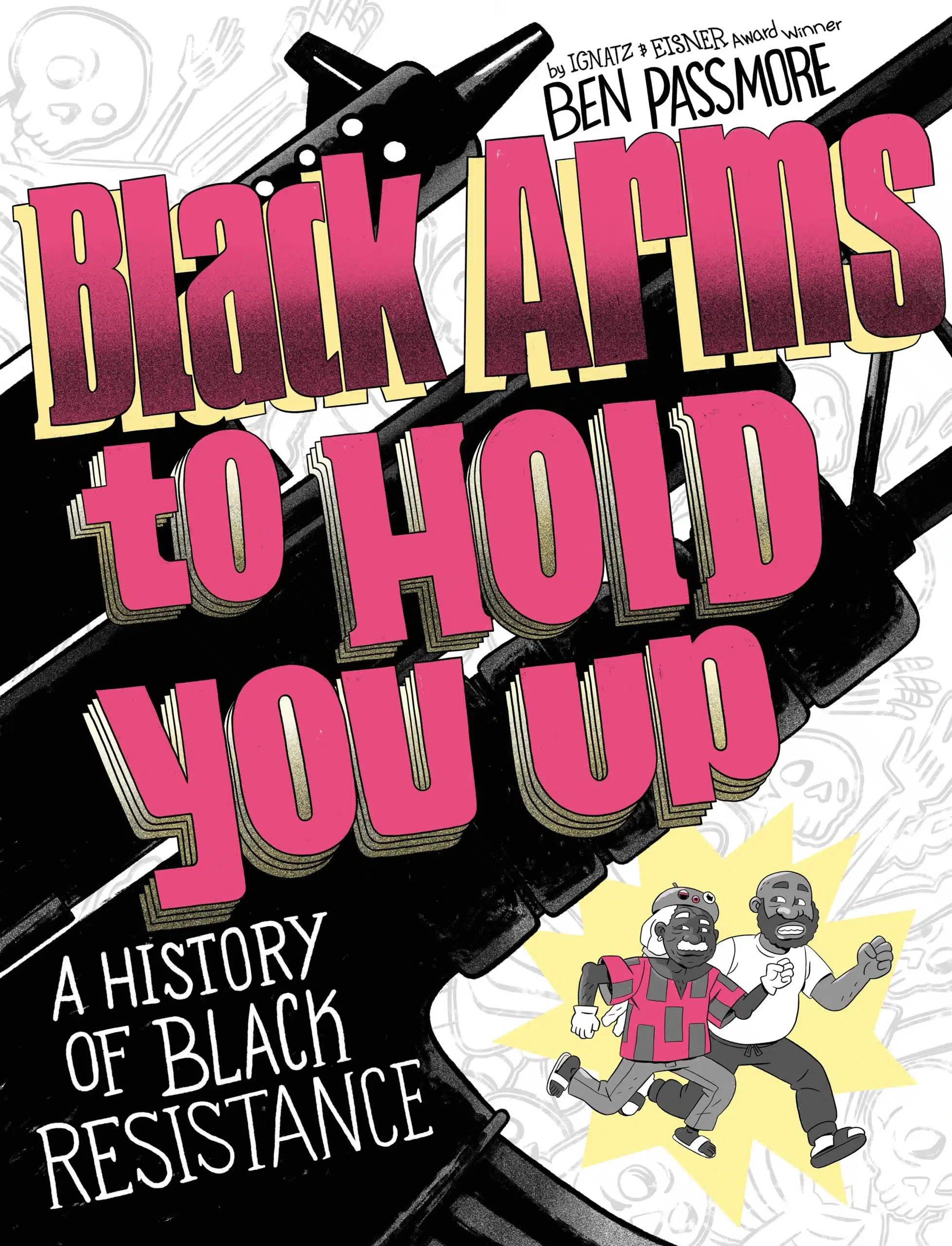
Black Arms to Hold You Up by Ben Passmore is a fierce and inventive graphic narrative that blends memoir, social critique, and surreal imagery to examine Black life, resistance, and emotional survival. Passmore’s art is bold and expressive, using stark contrasts and fluid transitions between realistic scenes and symbolic abstraction to reflect internal and external struggles. The book moves beyond conventional storytelling, inviting readers into layers of identity, trauma, resilience, and community care with a voice that is both candid and poetic. Passmore’s sharp humor and incisive cultural commentary give the work a unique rhythm, making heavy themes feel alive and urgent without ever feeling didactic. The narrative structure — non‑linear and associative — challenges readers to engage actively, unpacking meanings that resonate long after the final page. Moments of vulnerability are balanced with bursts of anger and hope, creating a complex emotional landscape that mirrors contemporary Black experience. While its unconventional form may confound some readers at first, it ultimately rewards patience with rich, layered insights. Black Arms to Hold You Up stands out as a deeply personal yet universally poignant exploration of endurance, care, and collective imagination. This is a work that redefines what political and affective storytelling can look like in comics, offering both provocation and comfort in equal measure. Link
- 6. On ne parle pas de ces choses-là (We Don’t Talk About These Things), by Marine Courtade & Alexandra Petit

On ne parle pas de ces choses-là by Marine Courtade & Alexandra Petit is an intense and reflective work that tackles usually unspoken themes with great sensitivity and depth. The visual storytelling moves between personal memories and social issues, revealing how silence and unspoken matters shape relationships and identity. The artwork is elegant yet striking, capturing both emotional nuances and the harsher moments of the narrative. The authors skillfully balance introspection with observations of the outside world, creating a space for empathy and reflection. The pacing encourages readers to pause and contemplate what is often ignored or avoided in conversation. Certain scenes are deeply evocative, leaving a lasting impression beyond the reading experience. The work does not offer easy answers but instead raises questions about vulnerability, memory, and communication. The interplay of text and image acts as an invitation to break taboos and give voice to what has been silenced. Overall, it is a poignant and thoughtful graphic novel that speaks to complex topics with sensitivity. On ne parle pas de ces choses-là is a valuable read for those seeking comics that go beyond entertainment toward a profound reflection on human experience. Link
- 7. This Beautiful, Ridiculous City by Kay Sohini

This Beautiful, Ridiculous City by Kay Sohini is a vibrant and affectionate graphic memoir that captures the chaotic energy and hidden poetry of urban life. Through richly detailed panels, Sohini portrays the city as a living, breathing character — alive with noise, color, contradictions, and the small dramas of everyday people. Her art balances whimsy with precision, turning mundane moments into scenes of cinematic beauty and emotional resonance. The narrative flows like a stroll through crowded streets, inviting readers to discover joy, frustration, humor, and resilience in equal measure. Sohini’s keen eye for detail and her warm, curious voice make even the city’s absurdities feel meaningful and human. The book doesn’t shy away from complexity — it embraces the messiness of urban existence without romanticizing it. What emerges is a love letter to a place that is both “beautiful” and “ridiculous,” full of contradictions that define its unique spirit. This work stands out for its emotional honesty, capturing not just the geography of a city but the soul of its people. It’s a compelling blend of memoir, social observation, and visual poetry that will resonate with urban dwellers and dreamers alike. This Beautiful, Ridiculous City reminds us why we are drawn to places that challenge and inspire us in equal measure. link
- 8. Dr. Werthless by Harold Schechter and Eric Powell

Dr. Werthless by Harold Schechter and Eric Powell is a darkly inventive and disturbingly compelling graphic novel that blends true‑crime horror with satirical edge. The story follows a deranged psychiatrist whose unethical practices and warped worldview spiral into violence and chaos, offering a chilling look at the abuse of power behind the veneer of professionalism. Schechter’s narrative, grounded in his deep knowledge of criminal pathology, gives the plot a sense of grim plausibility, while Powell’s gritty, exaggerated art amplifies both the grotesque and the absurd. The pacing is taut, with each chapter peeling back layers of the protagonist’s psyche and exposing the corrosive effects of unchecked ego and delusion. What could be mere shock value becomes, in their hands, a study of moral decay and societal blind spots. The interplay of grotesque imagery and sharply observed character moments creates a tension that keeps readers engaged and unsettled. Dr. Werthless does not flinch from the darkest corners of human behavior, yet it also finds moments of grim humor and absurdity that puncture the horror. While its subject matter may be unsettling for some, the work succeeds as both a psychological thriller and a critique of systems that enable harm. It’s a bold, provocative piece of graphic storytelling that lingers long after the final page. Overall, Dr. Werthless stands out for its fearless exploration of madness, manipulation, and the thin line between healer and predator. Link
- 9. Super‑GAU by Bea Davies

Super‑GAU by Bea Davies is an intense and reflective graphic novel that explores the human and environmental consequences of the Fukushima nuclear disaster with remarkable visual sensitivity. Davies weaves together the stories of multiple characters whose lives were profoundly altered by the incident, creating a narrative mosaic that examines trauma, memory, and resilience. The artwork is vivid and detailed, capturing both the lyrical beauty of landscapes and the anguish of lived experiences. The narrative alternates between moments of deep introspection and emotionally powerful sequences, giving voice to perspectives often overlooked in traditional media accounts. Super‑GAU goes beyond documenting events, inviting readers to reflect on the relationship between technology, nature, and collective responsibility. The character development is rich and nuanced, authentically portraying doubts, hopes, and lingering wounds. The pacing maintains engagement while allowing pauses for contemplation. The book stands out for blending reportage, memoir, and visual symbolism, offering a reading experience that is both informative and poetic. Despite its heavy subject matter, Davies imbues the work with a sense of humanity and compassion that resonates deeply. Super‑GAU is a significant read for those seeking graphic novels that tackle complex, real-world issues with depth and elegance, exemplifying how the medium can narratively shape the wounds of history. Link
- 10. Wie geht es Dir? – 60 gezeichnete Gespräche nach dem 7. Oktober 2023 by by Hannah Brinkmann, Nathalie Frank, Michael Jordan, Julia Kleinbeck, Moritz Stetter, Birgit Weyhe and Barbara Yelin

Wie geht es Dir? – 60 gezeichnete Gespräche nach dem 7. Oktober 2023 is a powerful and moving anthology of visual narratives that responds to the events of October 7, 2023 with empathy and urgency. Through 60 drawn conversations, the book presents a mosaic of voices — artists, witnesses, and everyday people — reflecting on trauma, loss, resilience, and the search for understanding in the aftermath of conflict. The contributors’ diverse artistic styles create a dynamic reading experience, ranging from stark, documentary sketches to more expressive, emotional imagery. What unifies the work is its deep commitment to listening and to making space for individual experiences that are too often overlooked. The graphic dialogues are intimate and raw, capturing fleeting moments of vulnerability, solidarity, and reflection with remarkable clarity. The pacing across the conversations allows readers to move between personal testimony and broader social resonance without ever feeling overwhelming. The anthology neither simplifies nor sensationalizes the complexities of human suffering; instead, it invites contemplation and connection. The editorial vision brings together voices that challenge, comfort, unsettle, and ultimately expand our empathy. Wie geht es Dir? stands as a testament to the capacity of comics to bear witness and to foster dialogue in times of crisis. It is an indispensable work for anyone interested in the intersection of art, memory, and human experience. Link