Between artistic research and political activism, the Irish artist’s work and arrest during the protest at Shannon Airport
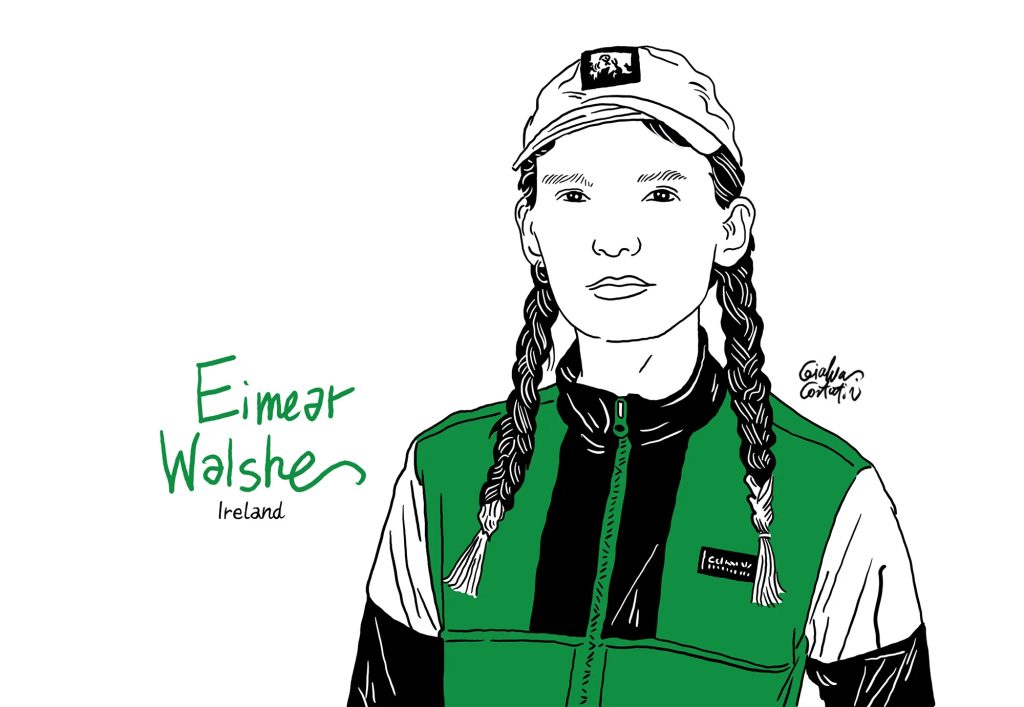
Eimear Walshe is an Irish artist and writer considered one of the most compelling voices in the contemporary European art scene. Their practice spans video, performance, and writing, and explores themes such as land ownership, sexuality, inheritance, and the social transformations of modern Ireland. In 2024 Walshe gained international visibility representing Ireland at the Biennale di Venezia 2024, while in the same year they also became the focus of public debate following their arrest during a protest against the military use of Shannon Airport.
Walshe’s artistic research develops at the intersection of visual art, political theory, and autobiographical narrative. Their works examine the social and cultural structures that have shaped Ireland, focusing particularly on questions of land, property, and forms of economic and symbolic inheritance. Many of their projects also address sexuality and intimate relationships as elements deeply intertwined with the social and political history of the country. The artist often employs speculative storytelling and romantic or utopian imaginaries to question the relationship between territory, identity, and community.
Among their most recognized works is The Land Question (2020), a film created for EVA International that combines archival material and contemporary narration to examine the history of land ownership in Ireland and its connections to colonialism, inheritance, and sexuality.
In 2024 Walshe was selected to represent Ireland at the Venice Biennale with the project Romantic Ireland, presented in the national pavilion at the Arsenale. The work imagines alternative social relations while reflecting on the cultural construction of Irish identity, intertwining myth, politics, and history.
On 30 March 2024 the artist was arrested together with two other activists after taking part in a protest at Shannon Airport in Ireland. The group had crossed the airport fence and approached the runway to denounce the use of the airport by the United States military. The activists approached a military aircraft displaying a Palestinian flag and a banner reading “US military out of Shannon,” calling for an end to the airport’s role as a transit point for military operations.
The action temporarily disrupted airport activity, and the three participants were charged with trespass and interference with airport operations. The case attracted attention from civil rights organizations and parts of the international art community.
The episode highlights the strong connection between Walshe’s artistic practice and political engagement. In their work, the analysis of land, property, and social structures is often accompanied by a reflection on ethical responsibility and international solidarity. The arrest has therefore reinforced the perception of Walshe as an artist for whom cultural production and activism are not separate domains, but part of the same critical inquiry.