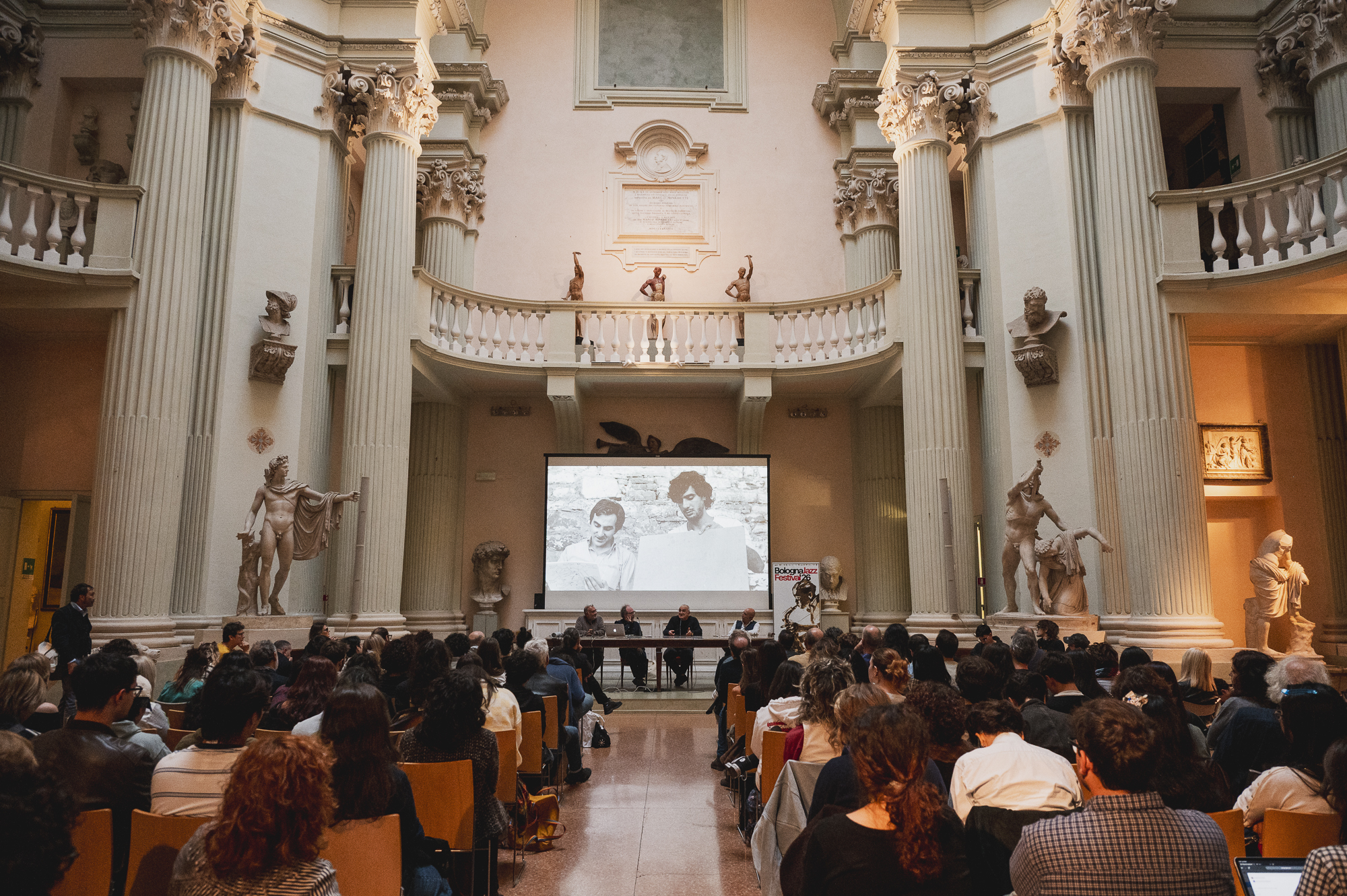
An exploration of the cultural connections between Italy and the United States through illustration and visual storytelling.
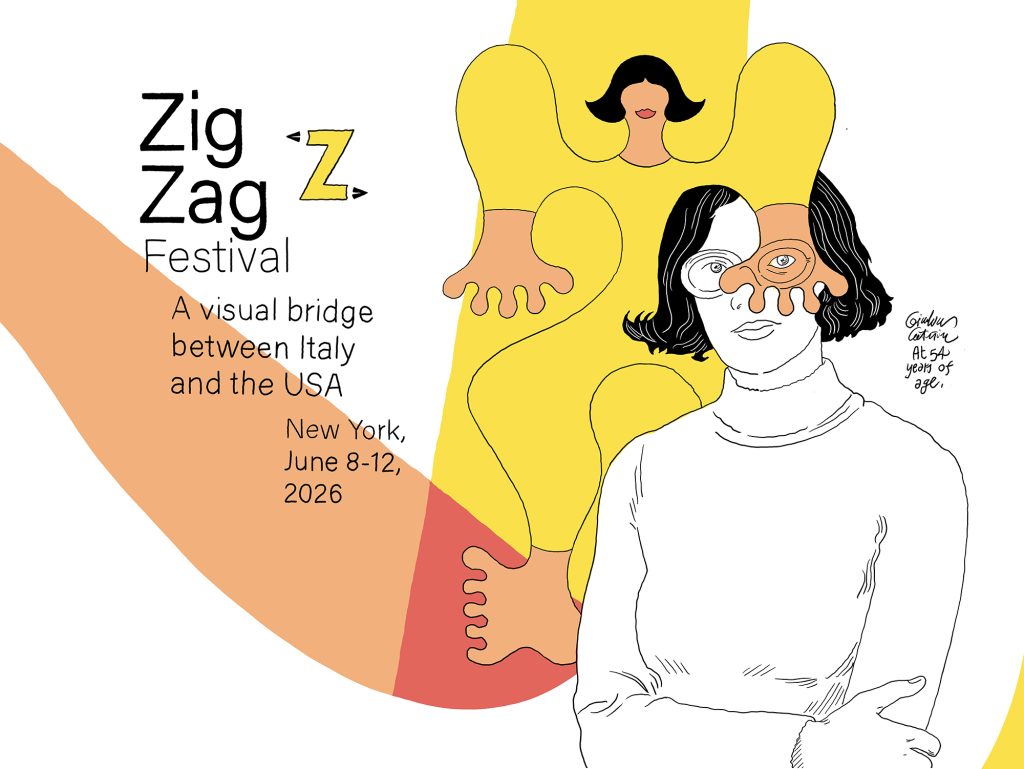
For the opening of “250 Years of Friendship – A Visual Bridge Between Italy and the USA”, I created portraits of the invited guests for the inaugural conversation held at the Italian Cultural Institute of New York.
The event is part of “Zig Zag: A Visual Bridge Between Italy and the USA”, a festival entirely dedicated to illustration and to the exchange and experimentation of visual languages between Italy and the United States. From June 8 to June 12, 2026, New York City hosts some of the most compelling voices in contemporary Italian illustration through a program of talks, conversations, and events taking place across several symbolic venues in the city.
Curated by Steven Guarnaccia and Hamelin, in collaboration with the Bologna Children’s Book Fair and promoted by the Italian Cultural Institute of New York, the festival was conceived to strengthen cultural dialogue between the two countries and to open new perspectives on contemporary visual storytelling.
Opening remarks by Claudio Pagliara.


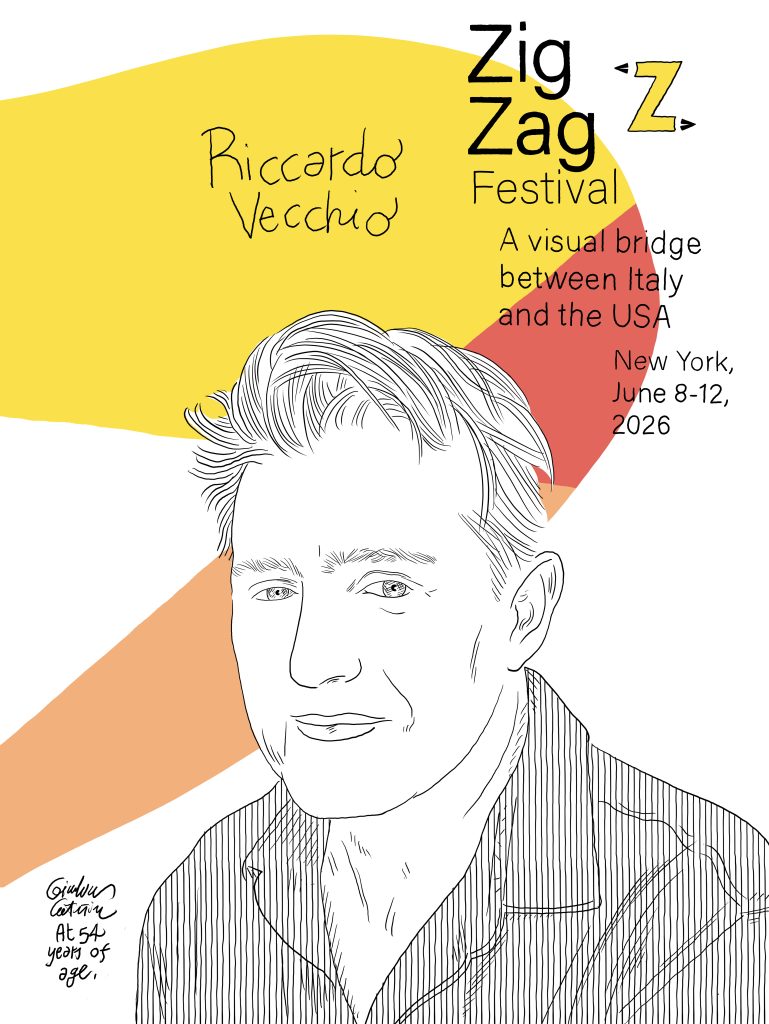
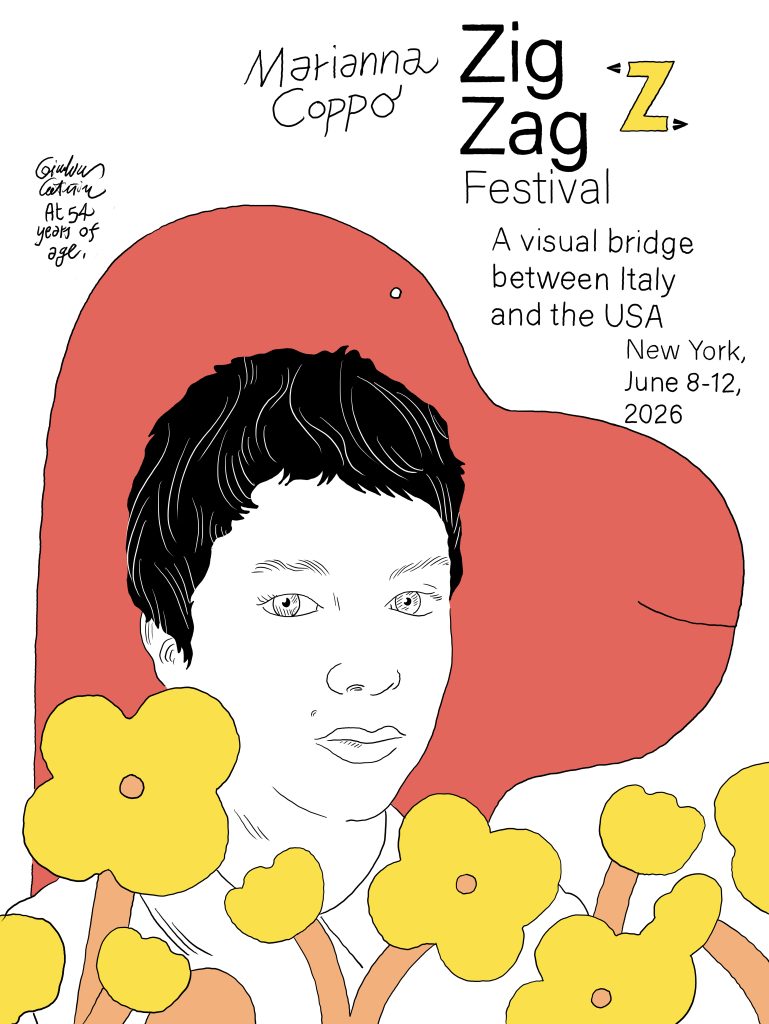

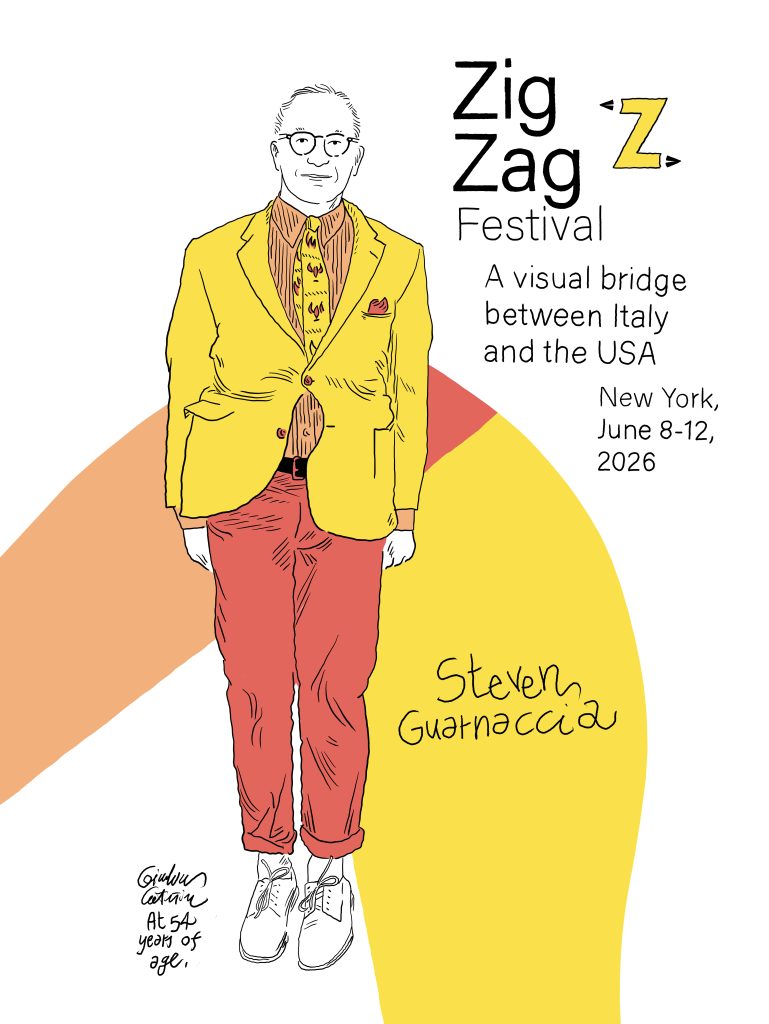

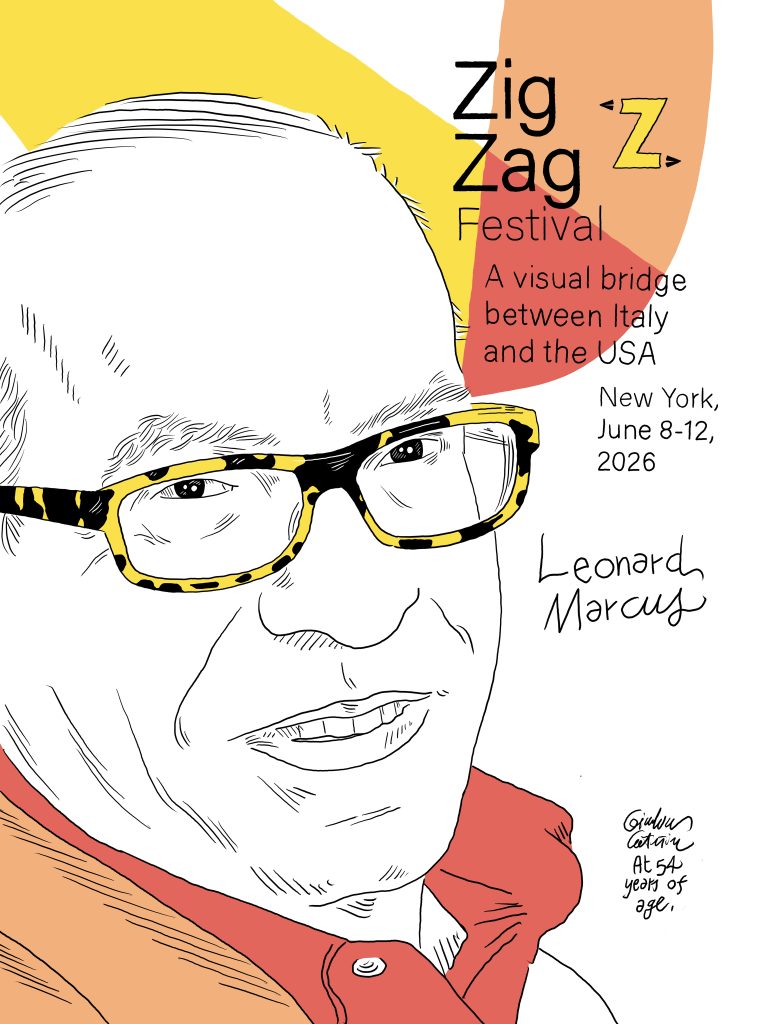

Portraiture of authors and illustrators is a way of approaching their imagination. Each face carries books, ideas, influences, and distinct creative paths. Through drawing, I tried to convey not only likeness, but also something of the energy and sensitivity that characterize each of their practices.
The portraits accompany the encounter between Mac Barnett, Marianna Coppo, Felicita Sala, Riccardo Vecchio, and Olimpia Zagnoli, who take part in a reflection on the cultural ties connecting Italy and the United States over the past 250 years, and on the role of images in building bridges between people, stories, and worldviews. The conversation is moderated by Ilaria Tontardini.
To draw is to observe. And to observe is often the first step toward forming a connection.
Claudio Pagliara is an Italian journalist and cultural director, currently serving as Director of the Italian Cultural Institute in New York. His career has been deeply rooted in international reporting, with a long trajectory as a correspondent for RAI, where he covered major global developments from key geopolitical centers including the United States and the Middle East. His work has consistently focused on interpreting complex political and cultural dynamics for an Italian audience, combining field reporting with a strong analytical perspective. Over the years, Pagliara has developed a journalistic approach attentive not only to events, but also to the broader cultural and historical frameworks in which they unfold. This sensitivity to context has shaped his way of understanding international relations as narratives shaped by both power and perception. His experience in different regions of the world has contributed to a nuanced view of global interconnections, particularly between Europe and the United States. In his current role at the Italian Cultural Institute in New York, he works at the intersection of culture, diplomacy, and public engagement. He oversees programs that promote Italian cultural production abroad and encourage dialogue between artists, institutions, and audiences. His direction reflects a vision of culture as an active space of exchange rather than a static representation of identity.
Through his dual background in journalism and cultural management, Pagliara brings together storytelling, institutional strategy, and international perspective.
Steven Guarnaccia is an American illustrator, designer, and educator based in New York, whose work moves between illustration, editorial projects, and visual storytelling. His visual language is known for its clarity, wit, and a subtle but precise sense of irony, often used to reinterpret cultural and historical references through a contemporary lens. A central aspect of his practice is the ability to translate complex visual ideas into simple, effective compositions, where drawing becomes both communication and interpretation. This approach is reflected in his long teaching career at Parsons School of Design, where he has influenced generations of illustrators and designers, fostering a way of thinking that connects structure, narrative, and visual intelligence.Alongside his work as an illustrator and educator, he has developed a curatorial practice focused on illustration and visual culture, helping to position illustration as a contemporary language in dialogue with design and art. His work often sits at the intersection of tradition and contemporary culture, reworking familiar forms into new visual narratives. Through this layered practice, Guarnaccia has contributed to expanding the understanding of illustration as a space of cultural exchange and storytelling.
Mac Barnett is an American author of children’s books whose work has redefined contemporary picture book storytelling through playfulness, irony, and a constant dialogue with the reader. His narratives often break the fourth wall and question the very act of telling a story, turning reading into an active and surprising experience. He is widely known for his long-standing collaboration with illustrator Jon Klassen, with whom he created some of the most influential picture books of recent years. His books explore imagination as a space of freedom and contradiction, where humor and philosophical depth coexist. Barnett’s writing is characterized by precision and economy, yet it opens up unexpected narrative layers. His work has been translated internationally and has received numerous awards in the field of children’s literature. He is also active in promoting literacy and reading culture among young audiences. Across his production, he maintains a strong focus on the relationship between author, story, and reader. His books are often structured as puzzles that invite interpretation rather than offering fixed meanings. He is considered one of the most innovative voices in contemporary children’s literature.
Marianna Coppo is an Italian illustrator and author working mainly in the field of picture books. Her practice is distinguished by a refined visual simplicity that carries a strong poetic and emotional resonance. She constructs narratives in which everyday elements often become protagonists, transforming ordinary objects and situations into spaces of imagination. Her drawing style is minimal yet expressive, with a careful balance between emptiness and presence. She develops stories that frequently reflect on identity, change, and the act of observing the world. Coppo’s books have been published internationally and translated into several languages, reaching a wide audience of young readers. Her work often plays with subtle humor and gentle irony. She belongs to a contemporary generation of illustrators who combine visual clarity with conceptual depth. Her narratives are structured in a way that leaves space for silence and interpretation. She is recognized for her ability to create intimate, contemplative picture books that speak to both children and adults.
Felicita Sala is an Italian-Australian illustrator whose work is known for its warmth, richness of detail, and strong narrative sensitivity. Raised between Italy and Australia, she has developed a visual language shaped by multiple cultural influences. Her illustrations often depict domestic scenes, food, shared rituals, and everyday gestures, turning them into moments of quiet storytelling. She works extensively in children’s publishing, collaborating with authors from different countries and backgrounds. Her drawings are carefully composed, combining traditional techniques with a contemporary sensibility. There is a strong attention to atmosphere in her work, where light, texture, and color contribute to the narrative. She often focuses on the small scale of human experience, revealing its emotional depth. Her books have been widely published and translated internationally. She is appreciated for her ability to make the ordinary feel meaningful and universally relatable. She lives and works in Rome, continuing to develop a practice rooted in observation and storytelling.
Riccardo Vecchio is an Italian illustrator whose work moves between editorial illustration, visual research, and narrative drawing. His practice is grounded in a strong interest in how images construct meaning and how visual storytelling can operate beyond literal representation. He often works at the intersection of illustration and conceptual design, developing images that are both clear and layered. His approach is attentive to structure, rhythm, and the relationship between text and image. Vecchio has collaborated with publishing houses and cultural institutions, contributing to books, magazines, and visual projects. His style tends to be graphic and controlled, yet open to experimentation. He is part of a contemporary Italian illustration scene that explores new forms of visual narration. His work reflects a balance between analytical thinking and expressive gesture. He often engages with themes related to communication, perception, and narrative construction. Through his practice, he investigates how illustration can function as both language and interpretation.
Olimpia Zagnoli is an Italian illustrator recognized internationally for a bold and instantly recognizable visual language. Her work is defined by strong graphic synthesis, vibrant colors, and a clear modernist influence. She operates across illustration, editorial design, posters, and visual communication projects, often moving fluidly between cultural and commercial contexts. Her images frequently combine irony with elegance, creating compositions that are both immediate and conceptually sharp. She has collaborated with major newspapers, magazines, and global brands. Her visual vocabulary draws from 20th-century design, pop culture, and contemporary visual culture. Zagnoli’s work often reduces complex ideas to essential forms without losing expressive force. She is attentive to rhythm, composition, and the communicative power of simplicity. Her illustrations are widely exhibited and published internationally. She is considered one of the most distinctive voices in contemporary European illustration.
Leonard Marcus is an American historian, critic, and writer specializing in children’s literature and illustration. His work focuses on the history, cultural impact, and evolution of picture books and storytelling for young readers, with a particular attention to the relationship between text and image. He has written extensively on the development of children’s publishing in the United States and internationally, documenting key authors, illustrators, and editorial movements that have shaped the field. His books and essays are widely used as reference points in the study of children’s literature and visual narrative. Marcus is also known for his curatorial and editorial work, including exhibitions and projects that highlight the artistic and cultural value of picture books. Through lectures, essays, and public conversations, he has contributed to bringing children’s literature into broader critical and cultural discourse. His approach combines historical research with narrative sensitivity, treating picture books not only as educational tools but as complex cultural artifacts. He has played a significant role in framing illustration and children’s publishing as serious fields of artistic and literary study.
Ilaria Tontardini is an Italian curator and researcher working with Hamelin in Bologna, an association dedicated to comics, illustration, and children’s literature. Her work focuses on illustration as a cultural and educational language, and on how images circulate between publishing, exhibitions, and pedagogical contexts. She develops curatorial projects, exhibitions, and public programs that connect artists, publishers, schools, and cultural institutions, with a strong attention to visual storytelling and its contemporary forms. A key aspect of her practice is the study of how illustration communicates across different audiences and contexts, from children’s books to experimental visual narratives. Over the years she has collaborated with international festivals and cultural organizations, contributing to projects that promote dialogue between Italian illustration and the wider international scene. Her approach combines research and curatorial practice, with a focus on interpretation and cultural exchange. Within Hamelin, she plays an active role in supporting new generations of illustrators and in shaping critical reflection on illustration today.
Zig Zag Festival
New York, June 8-12, 2026
Some of the best Italian and American illustrators gather in New York for a visual dialog that spans and unites both sides of the Atlantic.
A program of talks on illustration and comics celebrating the 250th anniversary of the United States.
Organized by the Italian Cultural Institute
Curated by Hamelin and Steven Guarnaccia,
in collaboration with the Bologna Children’s Book Fair
Partners: Society of Illustrators, Rizzoli Bookstore, Salotto, Sullaluna Bookshop & Bistrot, SVA School of Visual Arts