The Italian-Equatoguinean engineer, sentenced to more than 58 years in prison after a deeply flawed trial in Equatorial Guinea, has been granted a presidential pardon. After almost eight years behind bars, including detention in the notorious Black Beach prison, Fulgencio Obiang Esono is finally free
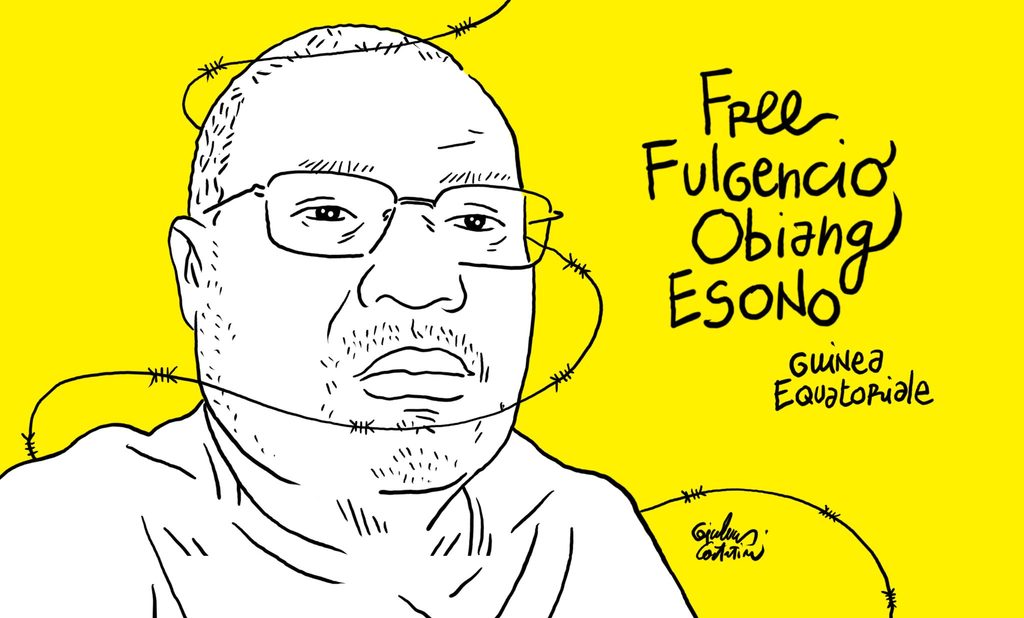
After almost eight years in prison, Fulgencio Obiang Esono is free.
The Italian-Equatoguinean engineer, who had been serving a sentence of more than 58 years in Equatorial Guinea, was granted a presidential pardon by President Teodoro Obiang Nguema Mbasogo through Decree No. 96, signed on August 24, 2026.
On August 27, the government of Equatorial Guinea officially informed Italy and the Vatican of the decision. The decree was handed to Natalia Sanginiti, Italy’s ambassador accredited to Equatorial Guinea and based in Cameroon, and to a representative of the Vatican.
Obiang Esono was subsequently transferred to Cameroon, where he was received by the Italian embassy and prepared for his return to Italy.
His release brings to an end a case that began on September 18, 2018.

AMNESTY INTERNATIONAL ITALIA · 27 JULY 2023
The Story of the Italian Engineer Who Disappeared in Equatorial Guinea
Amnesty International documented the case of Fulgencio Obiang Esono, the Italian-Equatoguinean engineer who disappeared in 2018 and was later sentenced to nearly 60 years in prison after a mass trial in Equatorial Guinea.
Read Amnesty’s story →Obiang Esono, an engineer who had lived in Pisa since 1988 and graduated in civil engineering from the University of Pisa in 2003, travelled from Rome to Togo with his friend Francisco Micha for what they believed was a business opportunity.
Then they disappeared.
According to the reconstruction subsequently reported by Amnesty International Italy, the two men were detained and eventually transferred to Equatorial Guinea. For a period, their families did not even know where they were being held.
They were eventually located in the notorious Black Beach prison in Malabo.
Black Beach has long been associated with allegations of torture, ill-treatment and extremely harsh detention conditions. Amnesty International described the prison through the testimony of a former detainee as an extremely humid place where torture was routine.

Written by Riccardo Noury,
illustrated by Gianluca Costantini
Publication date: 13 January 2023
ISBN: 9788833142531
Format: 25 × 25 cm
Pages: 144
Hardcover, full colour
€24.00
In 2019, Obiang Esono and Micha were brought before a court in Bata together with more than one hundred other defendants. They were accused of involvement in an alleged attempt to overthrow President Teodoro Obiang Nguema Mbasogo in December 2017.
The trial raised serious concerns.
Amnesty International documented numerous irregularities in the proceedings, noting that some defendants had spent more than a year in detention without even knowing the accusations against them.
On May 31, 2019, Obiang Esono was sentenced to more than 58 years in prison.
For his family in Italy, the following years were marked not only by the length of the sentence but by uncertainty about his conditions and, at times, whether he was even still alive.
His sister described that uncertainty to Amnesty International in devastating terms: not knowing whether her brother was alive or dead had become an agony for the entire family.




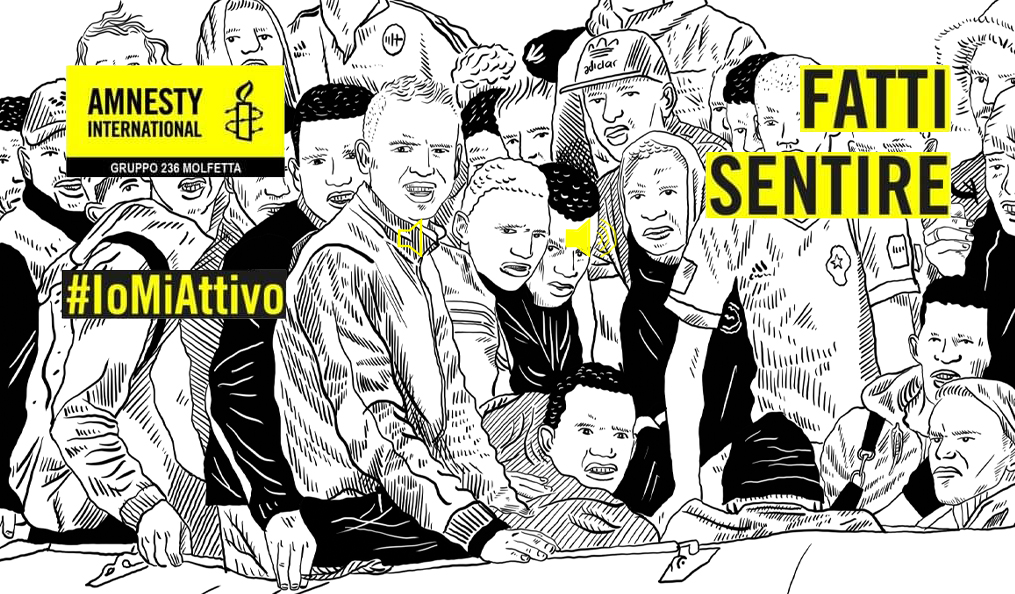
For years, access to him remained extremely limited. According to information subsequently provided by the Italian government to Parliament, the first consular visit by an Italian ambassador did not take place until November 15, 2023, more than five years after his detention began.
The case gradually attracted greater attention in Italy. His family, lawyers, human rights organizations, local institutions in Pisa and Italian politicians continued to call for his release.
Amnesty International Italy repeatedly drew attention to his imprisonment. His face also became part of that campaign: in 2023, I drew Fulgencio Obiang Esono for Amnesty, at a time when even basic information about his condition was extraordinarily difficult to obtain.
The portrait was an attempt to make visible someone who had effectively disappeared behind prison walls.
Three years later, that same face can finally accompany a different kind of story.
On August 24, 2026, President Obiang signed the decree granting him a pardon. Three days later, the decision was formally communicated to Italian and Vatican representatives.
PRESSENZA · SEPTEMBER 2026
Pardoned After Eight Years: Italian Engineer Esono Is Free
Pressenza reports on the release of Fulgencio Obiang Esono after nearly eight years in prison in Equatorial Guinea, retracing the long campaign that led to his presidential pardon.
Read the Pressenza article →The Equatorial Guinean government presented the decision as an act of clemency. Its foreign ministry continues to describe the crimes attributed to Obiang Esono as acts of treason and terrorism against the head of state.
That official account, however, does not erase the serious questions surrounding his detention, transfer to Equatorial Guinea, trial and extraordinarily long sentence.
The pardon does not overturn the conviction. Nor does it constitute a judicial finding that the proceedings against him were unjust.
It does something much more immediate: it gives Fulgencio Obiang Esono his freedom back.
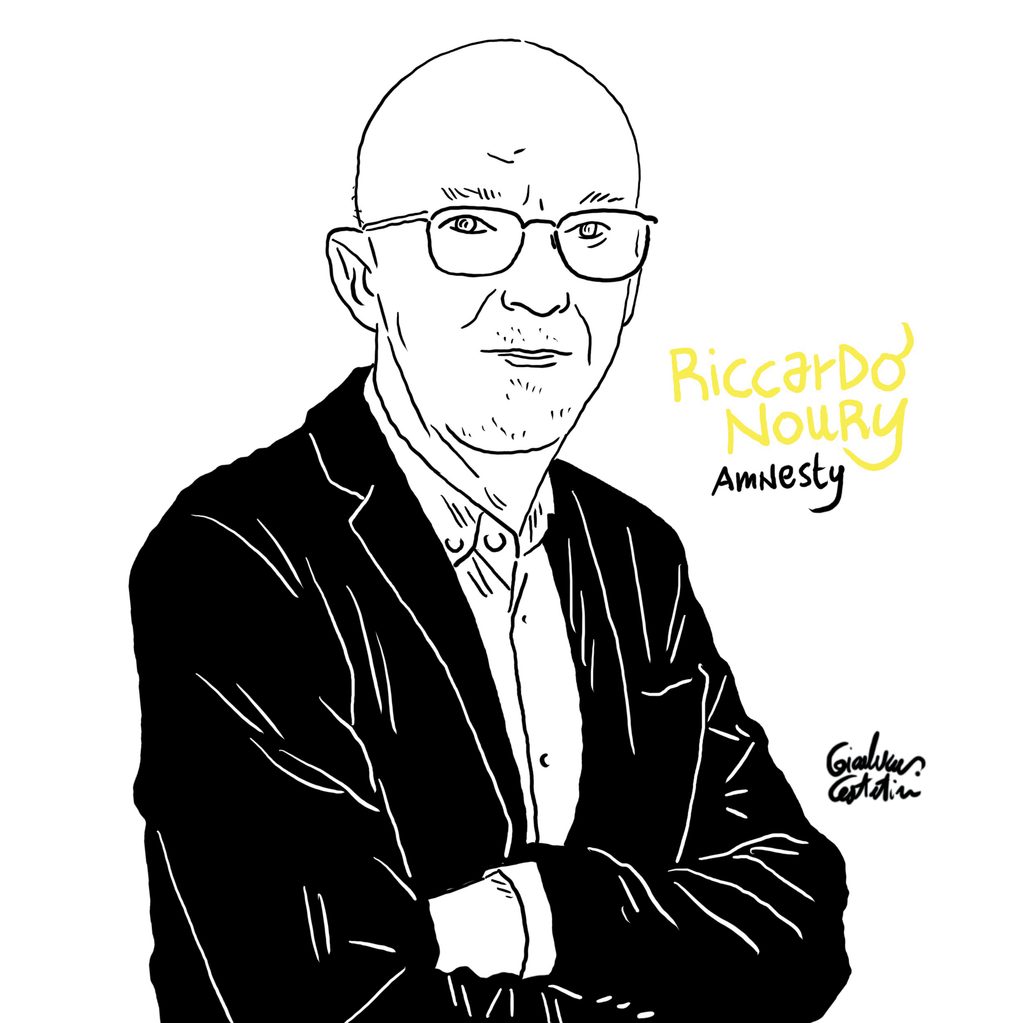
According to Riccardo Noury of Amnesty International Italy, writing for Pressenza, the release came after years of work involving Obiang Esono’s legal defence, journalists, Italian institutions, Amnesty International and diplomatic efforts. Noury also pointed to the recent visit of Pope Leo XIV to Equatorial Guinea as part of the context surrounding the final diplomatic push.
The precise role played by each diplomatic channel in securing the pardon is not yet fully public. What is certain is that both the Italian government and the Vatican were formally involved in the final stages: representatives of both received copies of the presidential decree announcing the pardon.
For ChannelDraw, this story also carries a particular meaning.
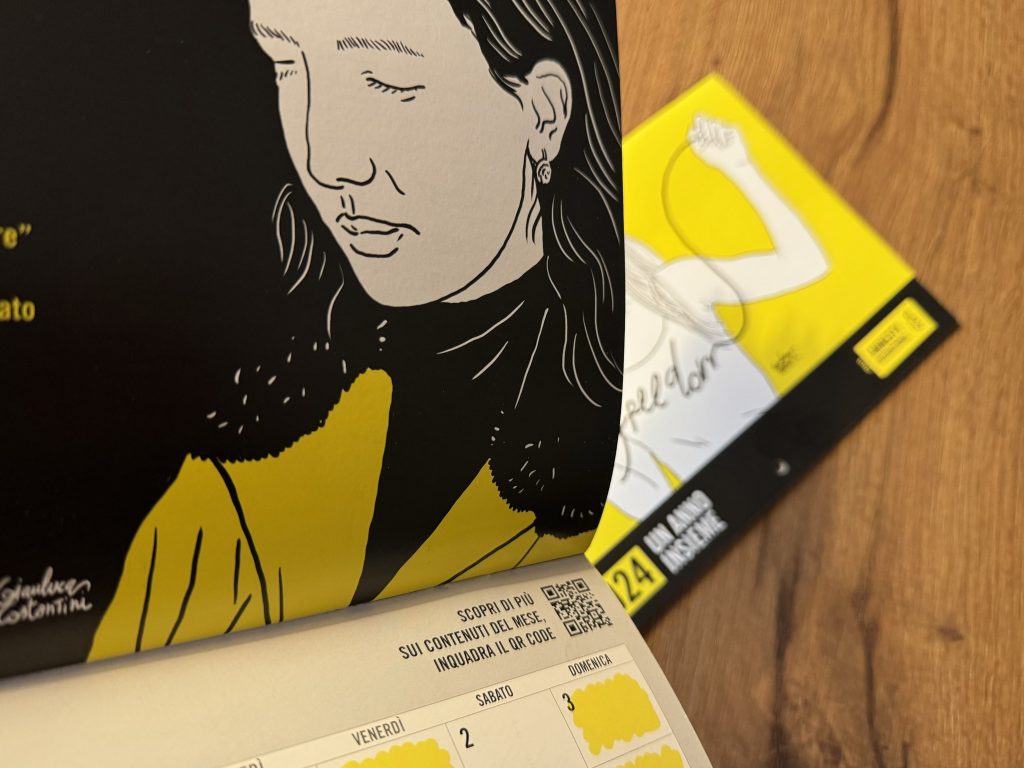
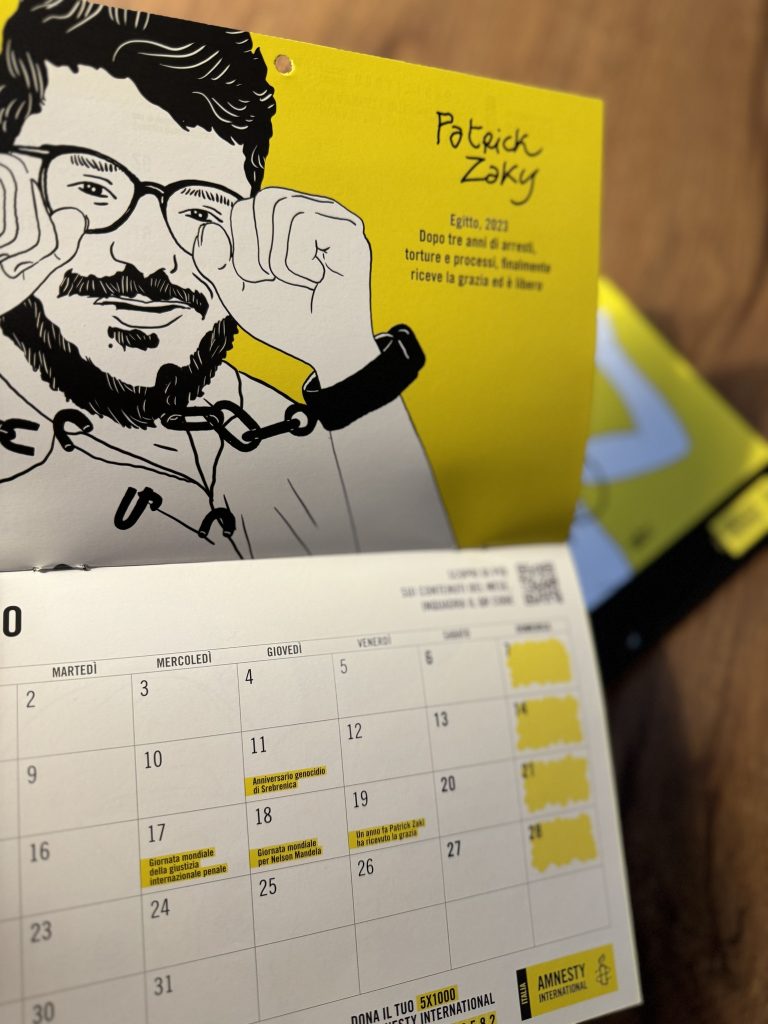
Many of the people I draw are prisoners, activists, journalists or human rights defenders whose portraits are created at a moment when their future is uncertain. The drawings circulate while the people themselves cannot.
Sometimes years pass.
Sometimes there is no good news.
But sometimes a portrait that was created to demand freedom can eventually be used to celebrate it.
Fulgencio Obiang Esono is free.
After almost eight years in prison and a sentence that could have kept him behind bars for most of the rest of his life, he can finally return home.