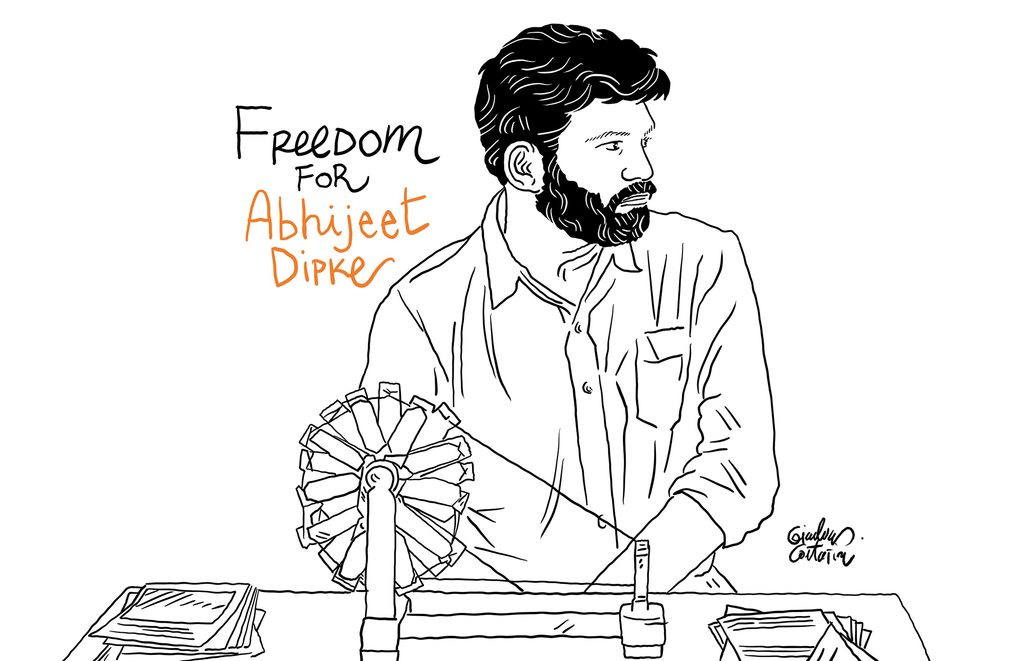
From political satire to mass demonstrations: the story of Abhijeet Dipke, the Dalit activist behind India’s Cockroach Janta Party, detained during a crackdown on protests over voting rights and electoral transparency.
Update — October 19, 2026: renewed detention, conditional release and continuing protests
Since this article was published, Abhijeet Dipke and the Cockroach Janta Party (CJP) have faced further police action in New Delhi. On October 16, Dipke was detained again ahead of the movement’s Lehra Do Tiranga march at Connaught Place. He was released on conditional bail on October 17 after being required to sign another peace bond. Police also registered cases connected to the demonstration, citing alleged violations of prohibitory orders and obstruction of public officials. The Indian Express
The renewed confrontation followed restrictions on access to Jantar Mantar, a longstanding gathering place for political demonstrations. CJP leaders Saurav Das and Ashutosh Ranka were detained separately after entering the site during a protest and were subsequently placed in custody. Police accused them of trespassing and defying restrictions on gatherings. Associated Press
According to reporting published on October 19, Das and Ranka remained in custody ahead of a scheduled court appearance that day. Dipke published an open letter calling for their return and acknowledging their central role in building the movement. CJP representatives alleged that delays in proceedings and the handling of bail sureties were prolonging their detention; these remain allegations attributed to the movement. The Indian Express
These developments extend the questions explored below: the space available for peaceful protest, the use of preventive detention, and the relationship between political expression and democratic participation. Dipke’s conditional release should be distinguished from the separate proceedings involving Das and Ranka.
The original profile follows, providing background on Dipke, the movement’s origins and the October 10 detentions.
On October 10, 2026, Indian police reportedly detained Abhijeet Dipke, a 31-year-old Dalit activist who has emerged as one of the recognizable figures of India’s youth protest movement.
Dipke was travelling from Mumbai to New Delhi to participate in a demonstration at Jantar Mantar, a historic gathering place for political protests in the Indian capital. According to Reuters, he was detained alongside two other prominent members of the Cockroach Janta Party (CJP), Saurav Das and Ashutosh Ranka.
The detention was part of a broader police operation surrounding demonstrations over electoral transparency and voting rights. Authorities introduced restrictions on gatherings and movement in parts of the capital, while protesters accused the government of attempting to suppress political dissent.
Abhijeet Dipke belongs to India’s Dalit community, historically subjected to discrimination and exclusion under the country’s caste system. His political identity has been influenced by the legacy of B. R. Ambedkar, the jurist, social reformer and principal architect of India’s Constitution, whose struggle against caste discrimination continues to inspire generations of activists.
Dipke’s political journey began long before the demonstrations that brought him national attention. In 2020, he joined the social media team of the Aam Aadmi Party, developing an approach to political communication based on humour, memes and satire. In 2023, he moved to the United States to pursue a master’s degree in public relations in Boston.
From abroad, he continued to follow Indian politics, particularly the growing frustration among young people facing unemployment, educational inequality and limited economic opportunities. His transformation into a nationally recognized activist began with an unexpected act of political satire, as described in a Reuters profile published in July 2026.
The Cockroach Janta Party emerged from an online satirical campaign. Its provocative name, meaning approximately the People’s Cockroach Party, transformed an insulting comparison into a symbol of collective identity. What began as a joke gradually developed into a political movement.
A satirical website announced the formation of the fictional party, attracting attention among younger generations. The movement expanded beyond social media, bringing together students, activists and citizens frustrated by unemployment, irregularities in public examinations and political institutions.


CHANNELDRAW STUDIO · INDEPENDENT PUBLISHING
Active Art Yearbook
A year of drawings, stories and civic engagement. Discover the Channeldraw annual volumes.
Explore the yearbooks →Although the Cockroach Janta Party is not a conventional registered political party, its supporters have demonstrated an ability to organize protests and attract national attention. Its emergence illustrates how contemporary political movements can develop outside traditional party structures, using satire, digital communication and collective frustration to build a recognizable identity.
The October 10 demonstrations focused on allegations concerning India’s electoral registration system. Opposition parties and civil society organizations have criticized the Election Commission’s Special Intensive Revision (SIR), a process intended to update electoral rolls.
Critics allege that the revision has resulted in the removal of millions of names, potentially affecting eligible voters, particularly members of vulnerable communities. Some opposition figures have claimed that approximately 130 million names were removed from electoral registers, although this figure should not be interpreted as a verified count of eligible citizens unlawfully deprived of voting rights.
The Election Commission and government representatives reject allegations that the revision is designed to manipulate elections, maintaining that electoral lists must be updated to remove ineligible, duplicate or outdated entries.
Protesters have demanded the resignation of Chief Election Commissioner Gyanesh Kumar and greater transparency in the revision process. The controversy connects electoral rights with broader questions of democratic accountability and political representation.
Ahead of the planned demonstration, authorities introduced extensive security measures across parts of New Delhi. Police restricted access to protest locations, deployed thousands of officers and intercepted demonstrators attempting to reach Jantar Mantar.
Students, political activists, opposition representatives and other participants were detained. Reports differed on the total number of people taken into custody.
The authorities defended their actions by referring to restrictions on the planned gathering and concerns about public order. Civil liberties advocates and opposition representatives criticized the measures as excessive restrictions on peaceful political expression.
The events also prompted demonstrations and solidarity actions outside New Delhi, including in Mumbai, as reported by Al Jazeera.
Following the police operation, Dipke and his associates Saurav Das and Ashutosh Ranka were reportedly released. According to The Indian Express, the three signed a peace bond committing them to maintain peace for one year.
Their release did not resolve the political controversy surrounding the protests or the electoral revision process. The Cockroach Janta Party has indicated that it intends to continue its mobilization.
The movement’s development remains closely connected to the question of whether India’s younger generations can translate digital political engagement into sustained civic participation.
The story of Abhijeet Dipke is also a story about political imagery. A satirical name became a collective identity. An online joke became a recognizable movement. A young activist became a public face of political dissent.
His experience belongs to a broader history of people who have used creativity, communication and public protest to challenge political authority. It also raises questions about the relationship between freedom of expression, political satire and the right to peaceful assembly.
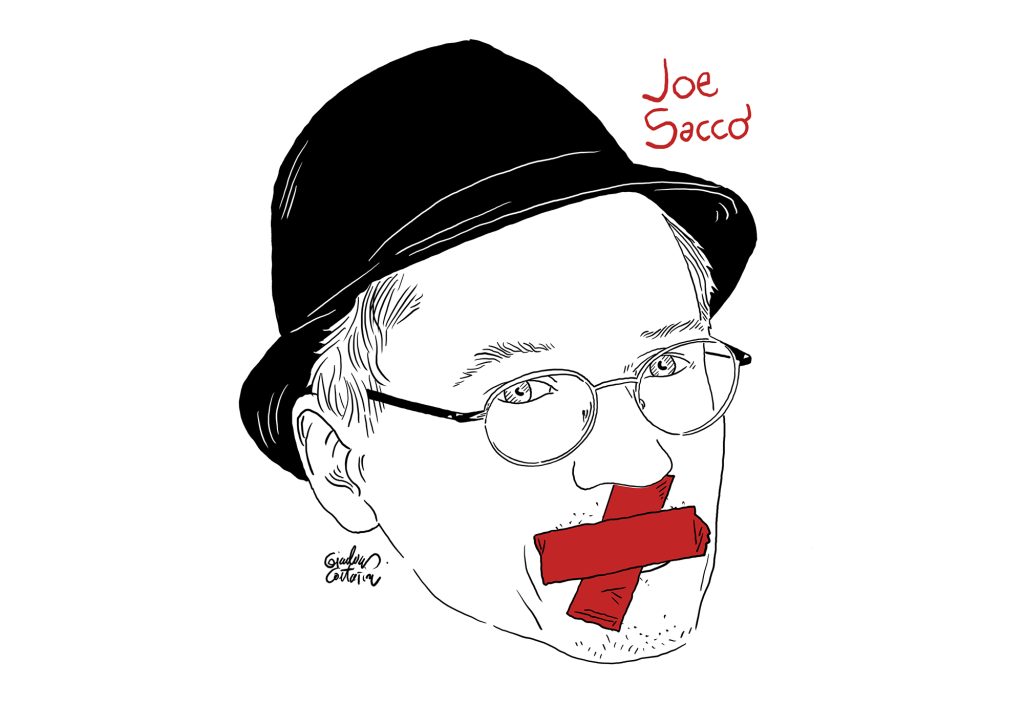
The debate over political expression in India extends beyond street demonstrations. As previously documented by ChannelDraw in The Unpublished Truth: Joe Sacco, Muzaffarnagar, and the Politics of Editorial Silence, the withdrawal of a graphic reportage from distribution raised serious questions about censorship, editorial independence and the freedom to document political violence. Although Dipke’s case concerns a different form of expression, both controversies reveal the tensions surrounding political criticism in contemporary India.
These questions are central to the work documented by ChannelDraw, where drawing and political portraiture become tools for remembering individuals whose experiences illuminate contemporary struggles for human rights.

From the imprisonment of Narges Mohammadi, the Iranian Nobel Peace Prize laureate and women’s rights defender, to the persecution of journalists and human rights activists, political portraits can help preserve the identities of people whose stories might otherwise disappear from public attention.
Dipke’s experience also recalls the importance of documenting the faces of those who challenge restrictions on civil liberties. In Uganda, for example, the case of Praise Aloikin Opoloje illustrates how participation in political protest can lead to detention and criminal prosecution.
Although the political contexts are different, these stories share a fundamental question: what happens when citizens attempt to exercise their right to dissent?
Abhijeet Dipke’s story is still unfolding. What began as satire has become part of a national debate about the right to protest, the integrity of elections and the political future of India’s younger generations.
His face now represents one of the emerging expressions of youth political activism in India, where humour, social media and public demonstrations increasingly intersect with longstanding struggles over caste, representation and democratic rights.
ChannelDraw is independent and reader-supported. Your support helps us continue documenting artists, journalists and activists whose voices are threatened or censored.
Other ways to support ChannelDraw
You can also support our independent work by joining us on Patreon or Substack, or by purchasing a ChannelDraw Yearbook. Every contribution helps us keep ChannelDraw independent and continue documenting stories that need to be seen.


