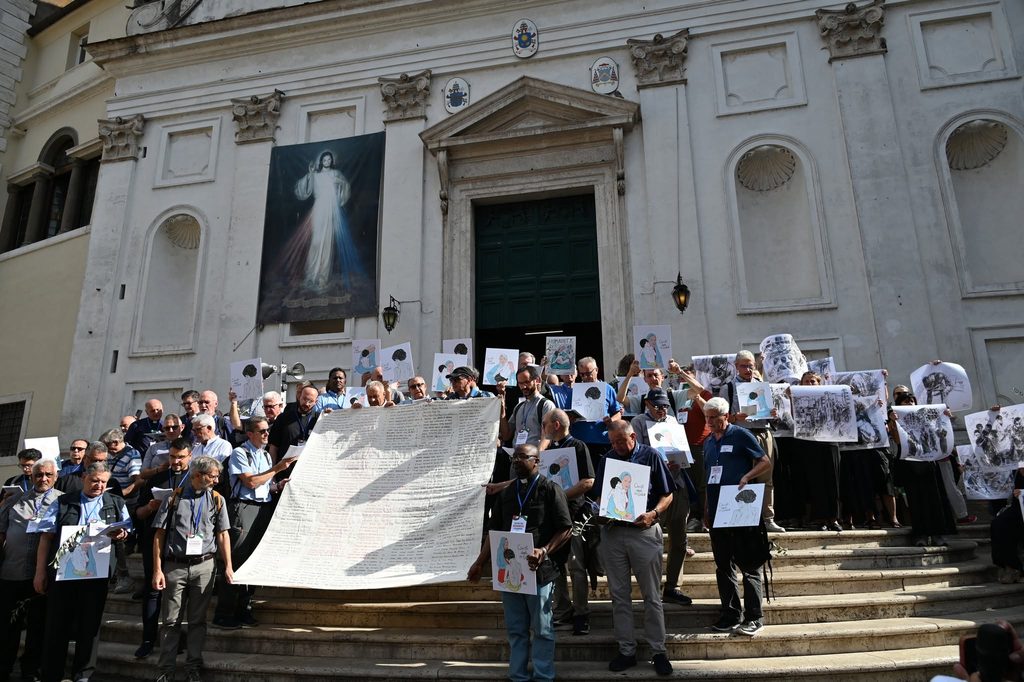
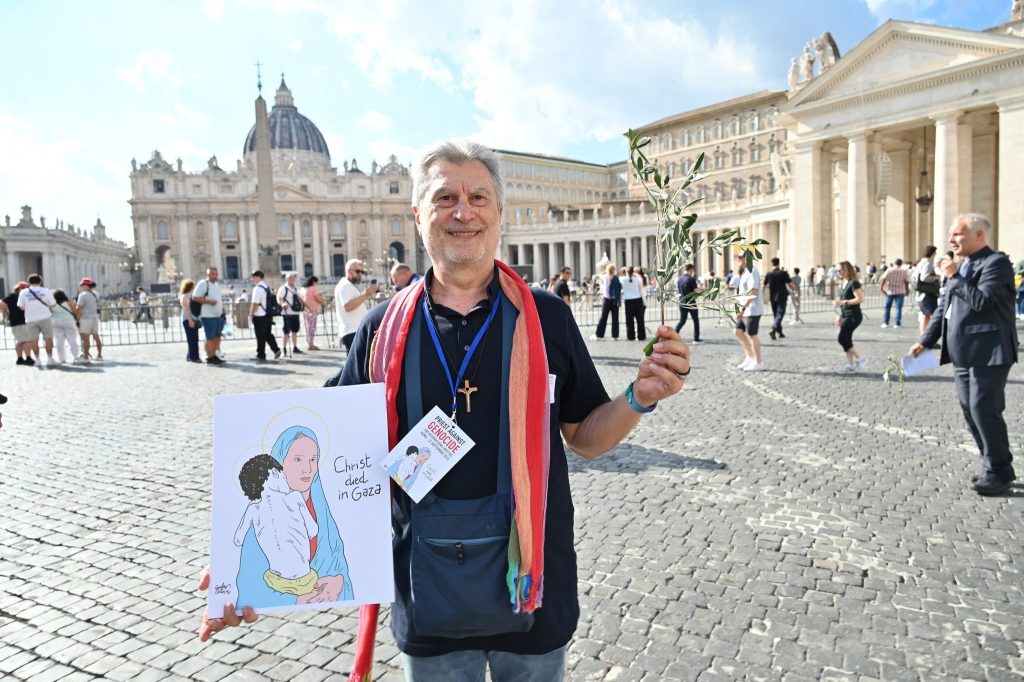
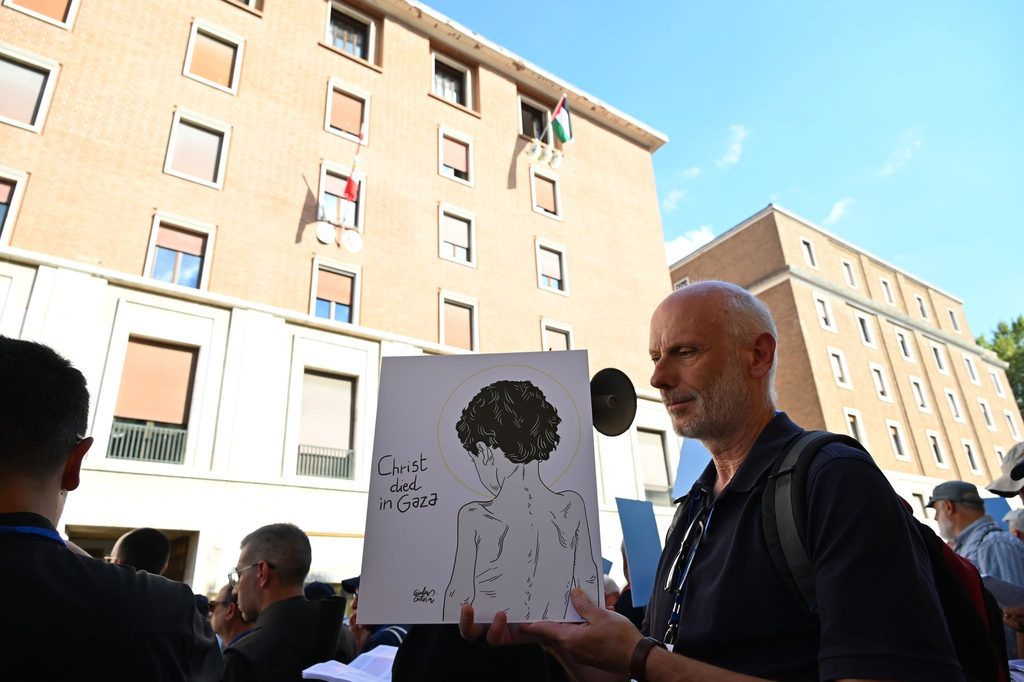
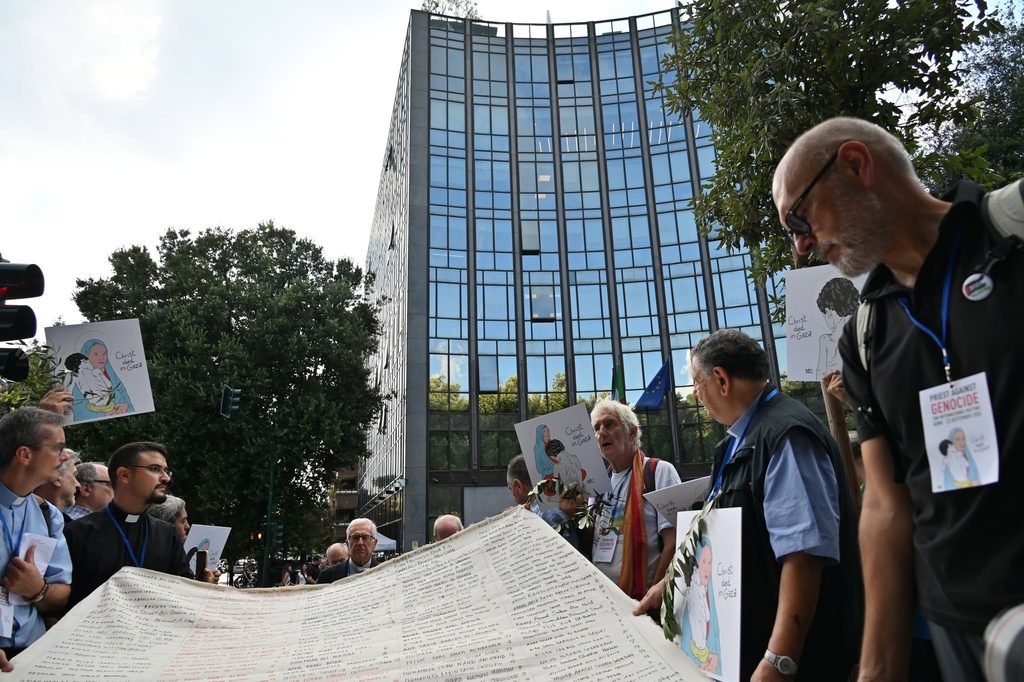
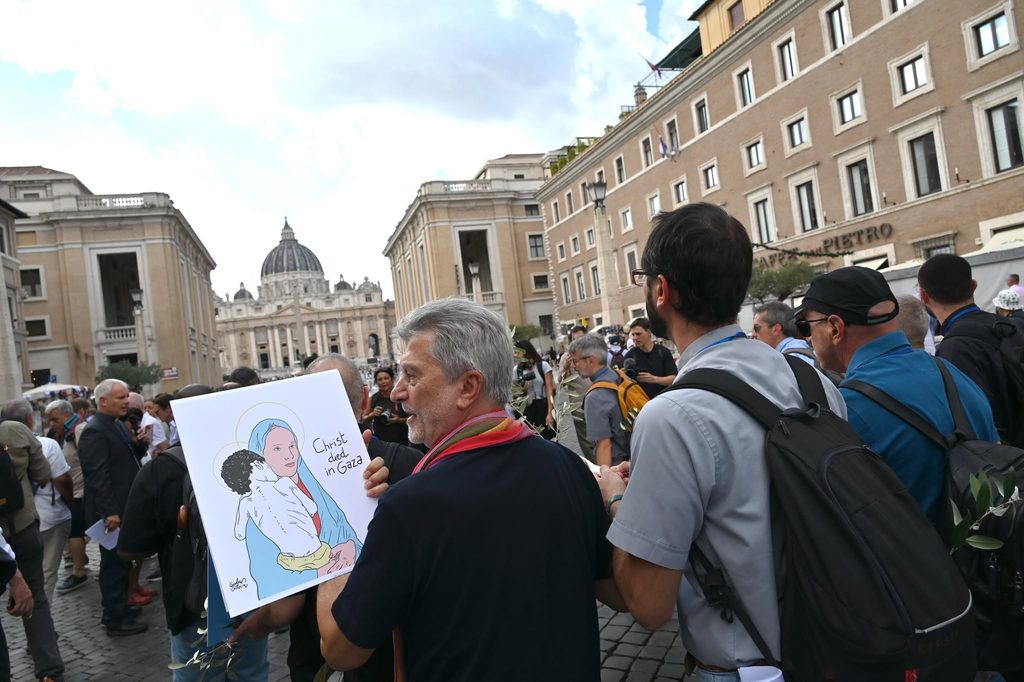
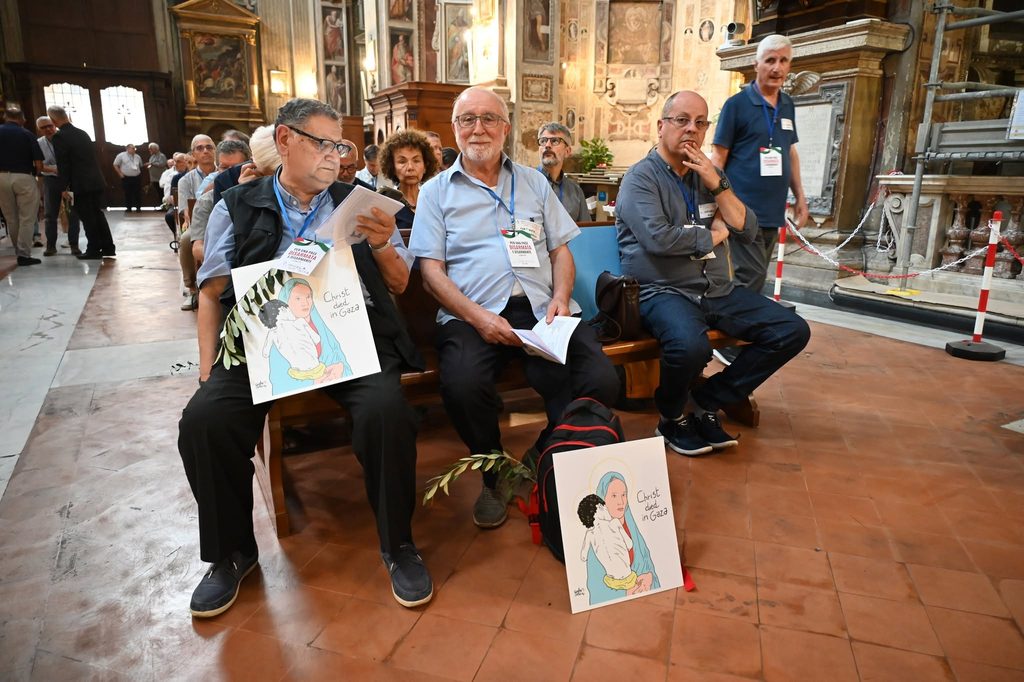
On September 22, 2026, the international network Priests Against Genocide marched through Rome to call for an end to the war in Gaza. During the demonstration, priests carried drawings from Gianluca Costantini’s series “Christ Died in Gaza,” transforming the images into instruments of public testimony.

On September 22, 2026, the streets of Rome became the setting for a distinctive form of religious and civic testimony. Priests, members of religious orders, and representatives from several countries participated in a march organized by Priests Against Genocide, an international network established in 2025 to draw attention to the situation of the Palestinian population and demand concrete action to end the war in Gaza.
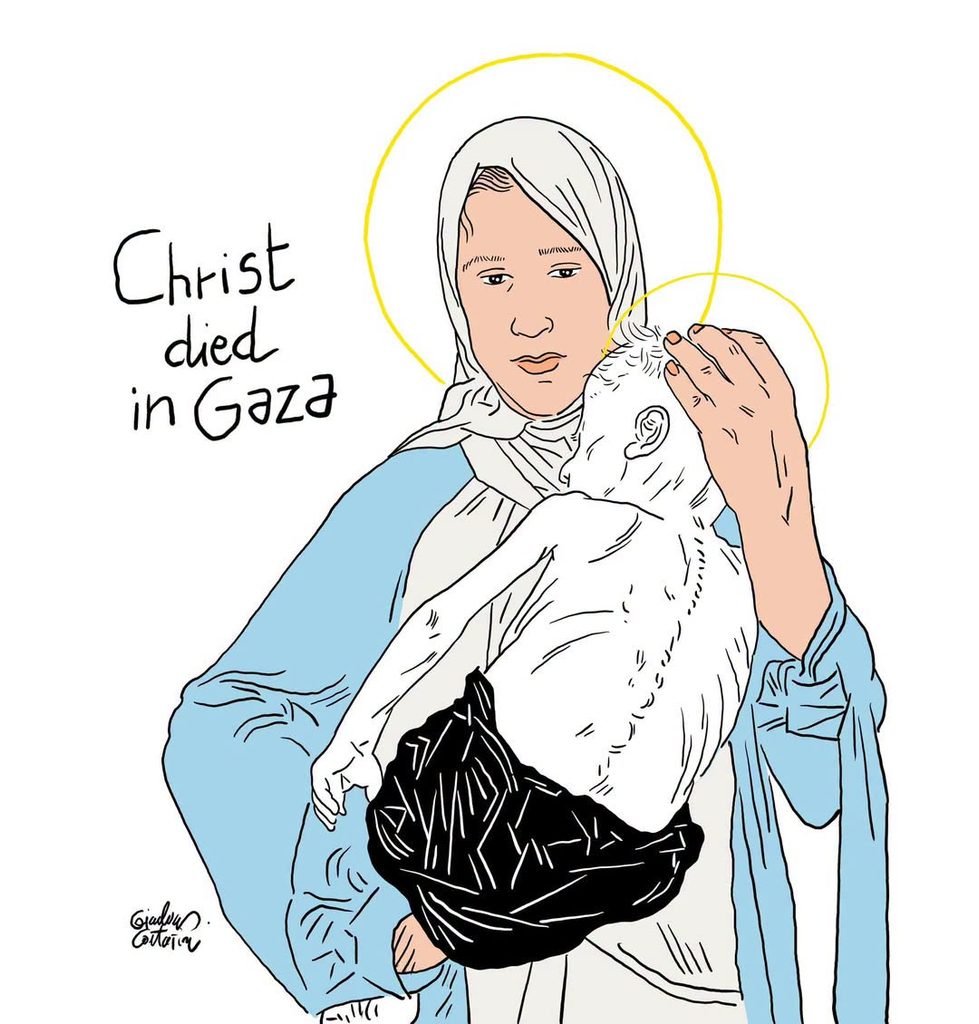
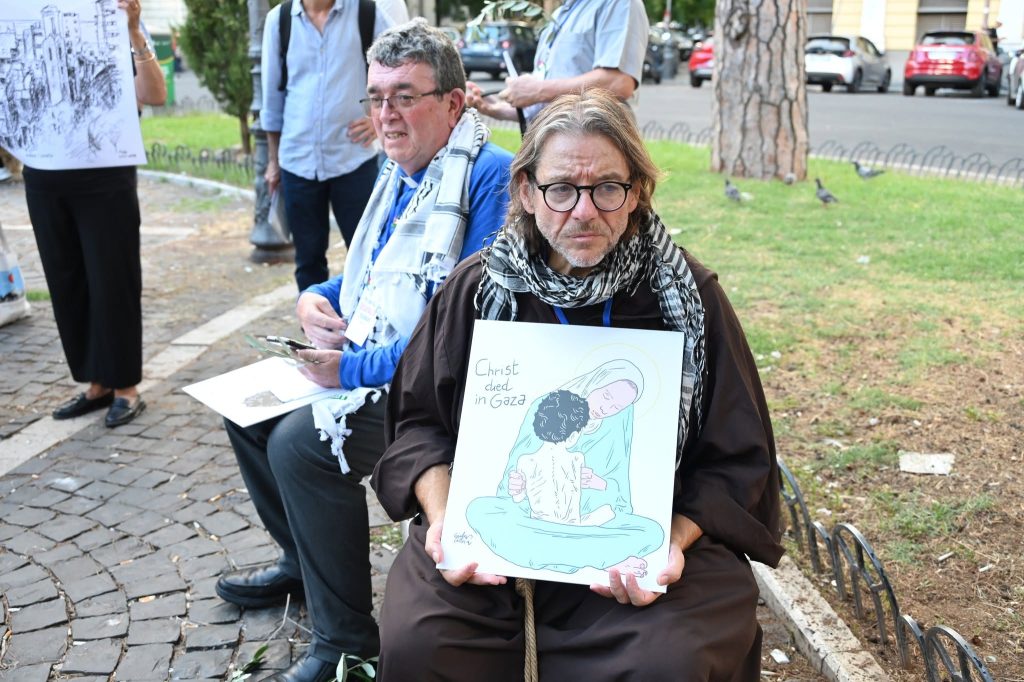
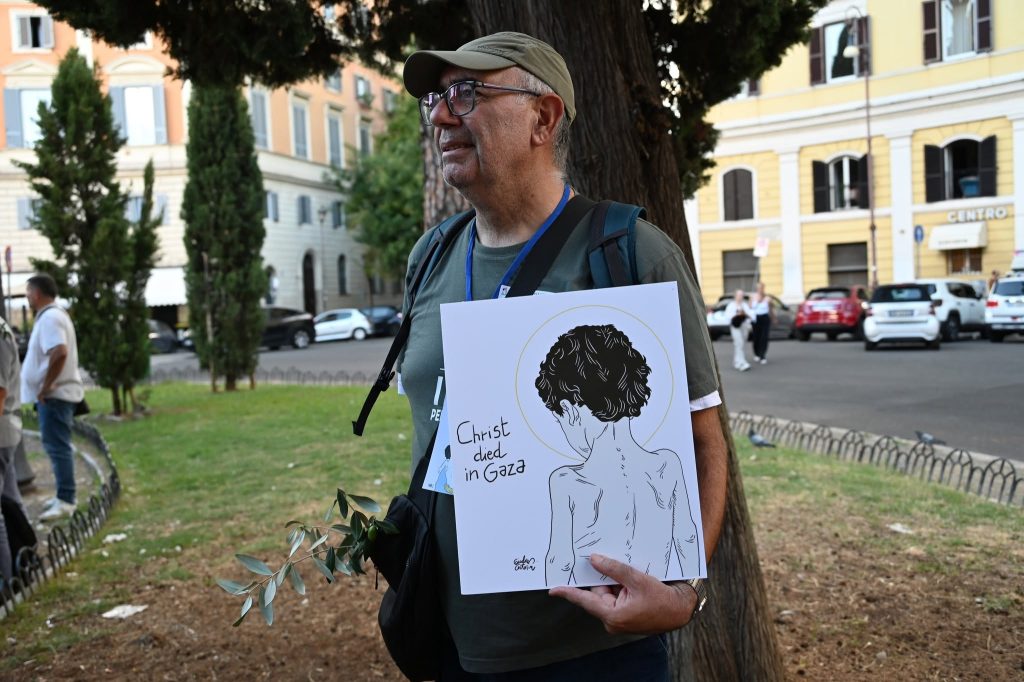
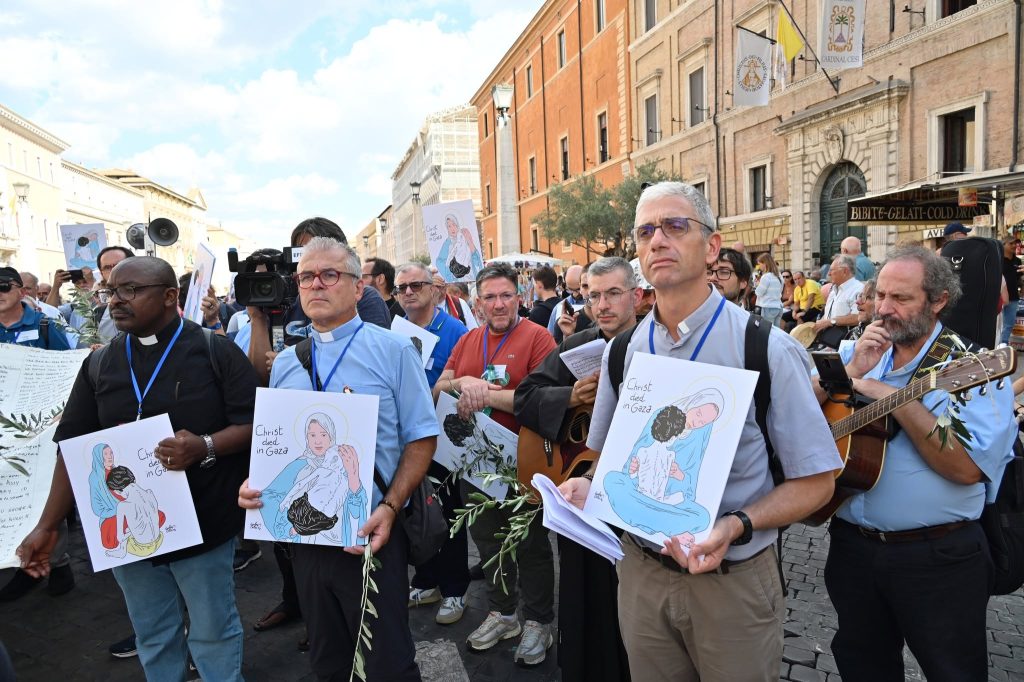
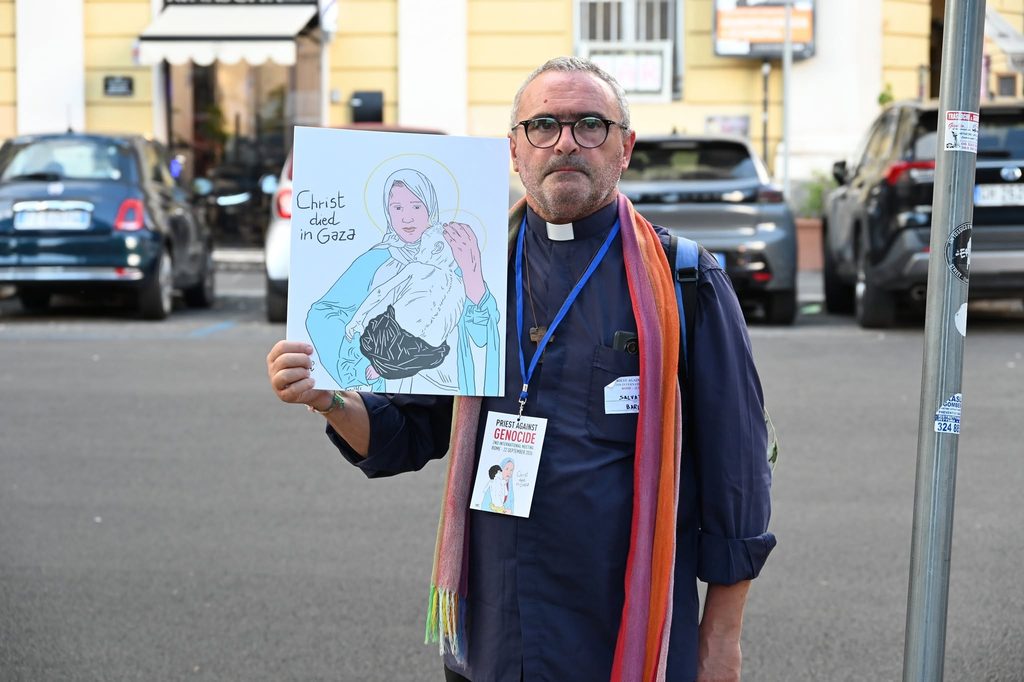
Among the symbols of the demonstration were drawings by Gianluca Costantini from his project Christ Died in Gaza. The priests carried these images through the streets, bringing political illustration into a demonstration that combined prayer, public protest, and calls for peace.
This was not the first time Costantini’s drawings had accompanied the network’s initiatives. Their collaboration has developed through meetings, theological reflections, and public events in which drawing has become a means of exploring the relationship between faith, responsibility, and human suffering.
One significant example is documented in the ChannelDraw article Where Is Jesus? David Neuhaus on Gaza and the Image of a Dead Child in His Mother’s Arms, published in September 2026. During an online meeting organized by Priests Against Genocide, Jesuit priest David Neuhaus reflected on a drawing Costantini had created for the network: a Palestinian mother holding the lifeless body of her child. The image inevitably evokes the Pietà, one of the most recognizable representations in Christian artistic tradition.
Neuhaus interpreted the child depicted in the drawing as a contemporary representation of Christ, raising a fundamental question: where is Jesus today? His reflection invited viewers to recognize Christ in the suffering of those who are persecuted, hungry, imprisoned, and deprived of their dignity, shifting attention away from abstract political categories and toward individual human lives.
During the march in Rome, this reflection acquired a physical dimension. The images were no longer displayed on gallery walls or reproduced in newspapers. Instead, they were carried by priests walking through the streets of the Italian capital. Drawing became part of a collective action, entering into dialogue with the bodies, words, and gestures of the participants.

The demonstration began near the Vatican with a collective moment of prayer before proceeding through the streets of Rome and concluding outside the headquarters of Leonardo, an Italian company operating in the aerospace, defense, and security sectors. Through this choice, the organizers also sought to draw attention to the production and international trade of weapons.
The demonstrators carried a long shroud bearing the names of Palestinian and Lebanese children who, according to the organizers, had been killed following the respective ceasefire declarations. Alongside the shroud, olive branches, keffiyehs, and religious images accompanied a procession marked by prayers, songs, and public speeches.
The demonstration was documented by several Italian media outlets, including ANSA and Vatican News. La Stampa also published a video report on the march, using the phrase Christ Died in Gaza in its headline.
The presence of Costantini’s drawings introduced another dimension to the demonstration’s symbolic language. The title Christ Died in Gaza connects representations of Christ’s suffering with the suffering of Palestinian civilians, drawing on a central reference in Christian iconography to address a contemporary tragedy.
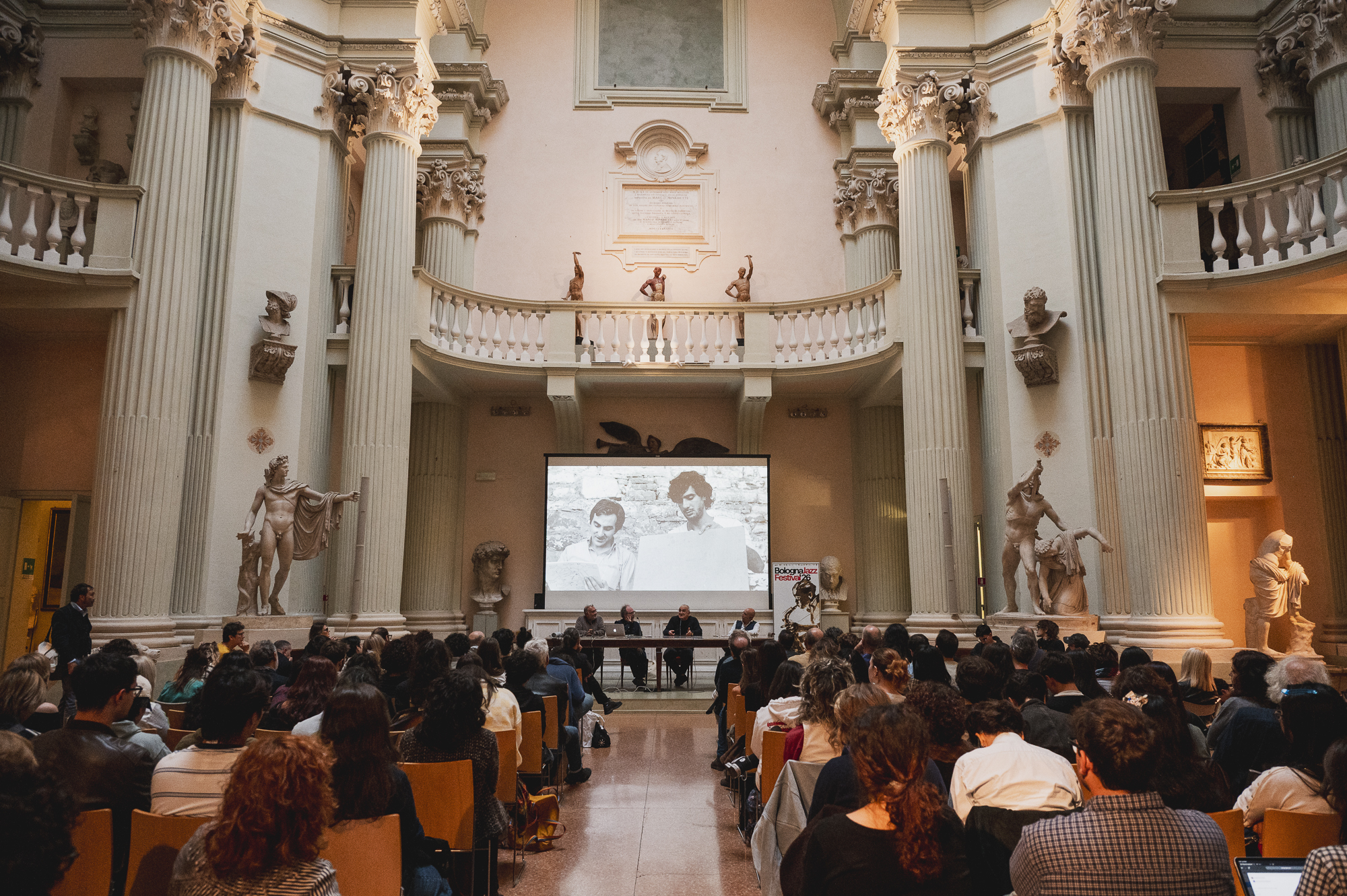
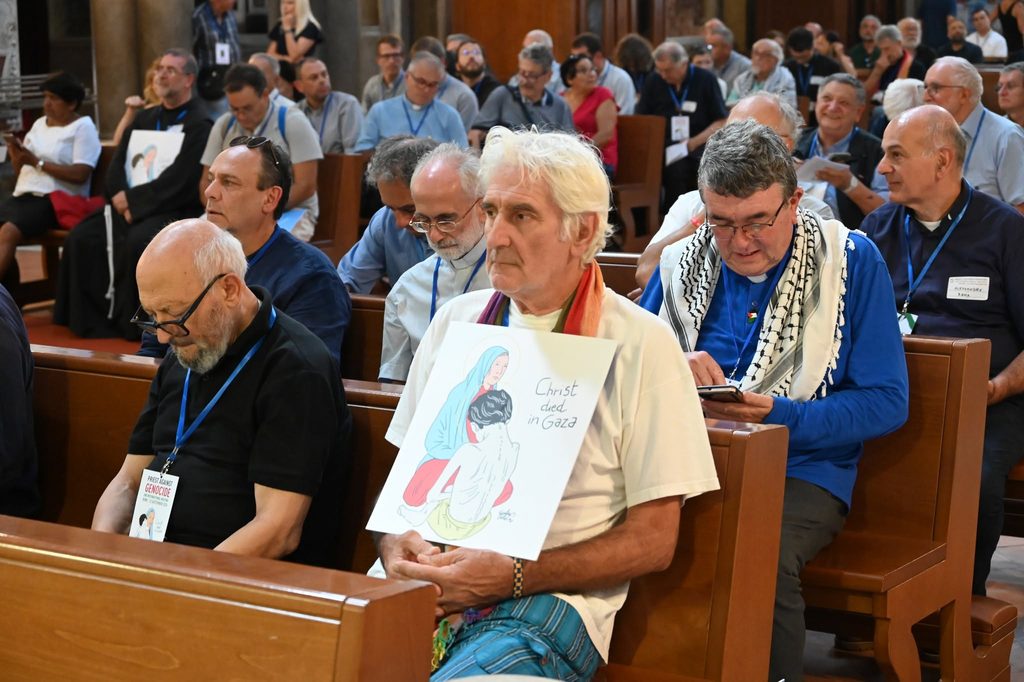
This relationship between art and spirituality had already been explored in November 2025, when the Christ Died in Gaza series was exhibited in the central nave of St. Paul’s Within the Walls, the Episcopal church in Rome. The exhibition transformed the religious space into a place of reflection on war, civilian suffering, and individual responsibility in the face of human rights violations.
That experience is documented in the ChannelDraw article From the Passion to Reality: Gianluca Costantini’s Art Meets the Voices of Mona Abuamara and Chris Hedges. During the event on November 30, 2025, art, music, and personal testimonies came together in a gathering dedicated to solidarity with the Palestinian people.
Father Andrea Caporale, a representative of Priests Against Genocide, also participated in the event, explaining the motivations behind the network and its initiatives in response to the situation in Gaza. Other participants included Palestinian Ambassador Mona Abuamara and American journalist Chris Hedges, who read his Letter to the Children of Gaza.
The ambassador’s speech is available in full on ChannelDraw in the article Mona Abuamara’s Speech at the Christ Died in Gaza Exhibition. Her words explored the significance of Christ’s image as a representation of the suffering of Palestinian children, inviting those present to reflect on the relationship between faith, compassion, and responsibility.
The September 22 march therefore represents another chapter in an ongoing collaboration. Images previously displayed inside a church returned to public space, this time in the hands of priests who had chosen to demonstrate publicly.


CHANNELDRAW STUDIO · INDEPENDENT PUBLISHING
Active Art Yearbook
A year of drawings, stories and civic engagement. Discover the Channeldraw annual volumes.
Explore the yearbooks →The Priests Against Genocide network brings together priests and members of the clergy from different countries. Through public initiatives, meetings, and collective prayer, its members call for respect for international law, the protection of civilians, and diplomatic solutions to the conflict.
The demonstration in Rome coincided with the general debate of the United Nations General Assembly in New York. The organizers sought to address their message not only to Christian communities but also to international political institutions.
The decision to conclude the march outside Leonardo’s headquarters also placed the economic and political responsibilities associated with weapons production at the center of the demonstration. Participants recalled papal appeals for disarmament, emphasizing the need to accompany declarations of peace with concrete decisions.
For Gianluca Costantini, the presence of his drawings during the march offers another example of how illustration can circulate beyond traditional artistic and editorial spaces. Images originally created to document, narrate, or interpret an event can be adopted by movements, associations, and communities that use them to express their demands publicly.
This approach runs throughout the work of ChannelDraw. A drawing is not necessarily a finished object whose meaning is fixed at the moment of publication. It can continue to exist through new forms of participation. Once shared, an image can enter different contexts, acquire additional meanings, and contribute to the construction of collective memory.
In the case of Christ Died in Gaza, the reference to Christian iconography found a new context in the hands of the priests marching through Rome. The relationship between images and collective participation became particularly evident: the drawing was no longer simply an artwork to be observed, but an active element of public testimony.
On September 22, in the streets of Rome, the drawings from Christ Died in Gaza acquired a new dimension: images carried by people, moving beyond printed pages and exhibition walls to become part of collective action.
ChannelDraw is independent and reader-supported. Your support helps us continue documenting artists, journalists and activists whose voices are threatened or censored.
Other ways to support ChannelDraw
You can also support our independent work by joining us on Patreon or Substack, or by purchasing a ChannelDraw Yearbook. Every contribution helps us keep ChannelDraw independent and continue documenting stories that need to be seen.