Distrustful. Democracy and Communicative Disorder in the Exposed Society
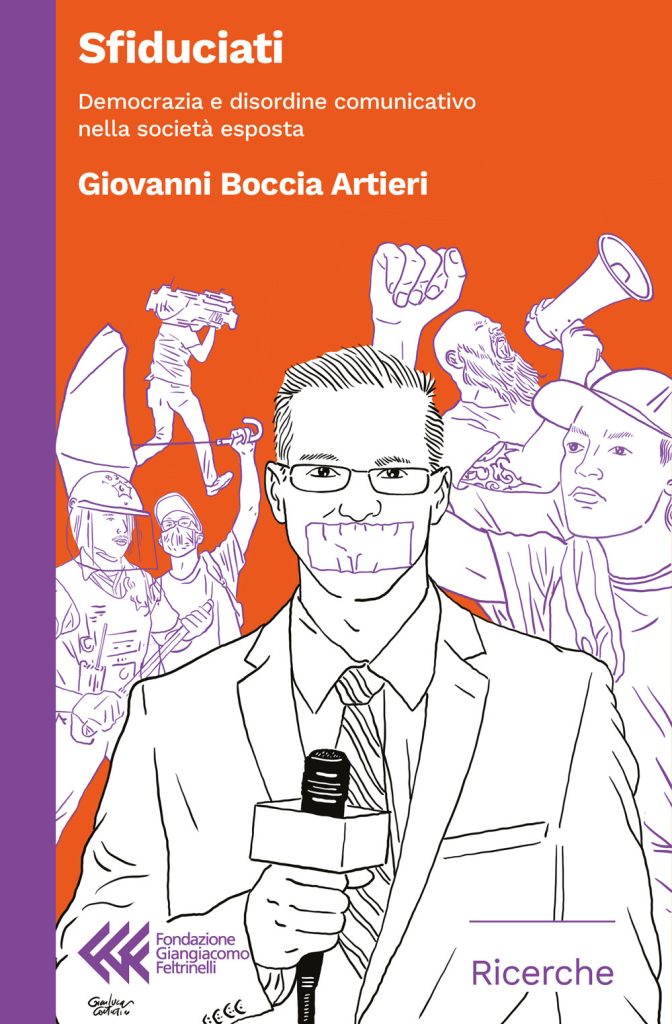
by Giovanni Boccia Artieri (Author), Feltrinelli, 2025 – Cover by Gianluca Costantini
An ex-doctor, stripped of his license, goes live on Telegram to talk about vaccines as tools of global control, international conspiracies, and truths the media hides. Thousands listen, comment, and cite him as an alternative source to newspapers “sold to the powerful.” This isn’t a marginal episode — it’s a symptom. Every day, digital platforms amplify radical narratives, viral tensions, and communities that live in permanent suspicion. This is the “exposed society” described by Giovanni Boccia Artieri.
What struck me most is that the problem isn’t just disinformation, but the very environment in which words circulate. There is no longer an inside and an outside to public debate: everything is simultaneous, overlapping, accelerated. Opinions become identities, likes become belonging. Dissent doesn’t seek confrontation — it seeks confirmation. And so, instead of expanding, the public sphere shrinks into hostile micro-communities, impermeable to listening.
In my work as an artist, I’ve often seen how images, when shared without mediation, can become detonators. Here, it happens with words. Social platforms favor whatever performs well — and what performs, spreads, and gains traction is almost always what polarizes, simplifies, and inflames. The algorithm burns everything: complexity, doubt, ambiguity.
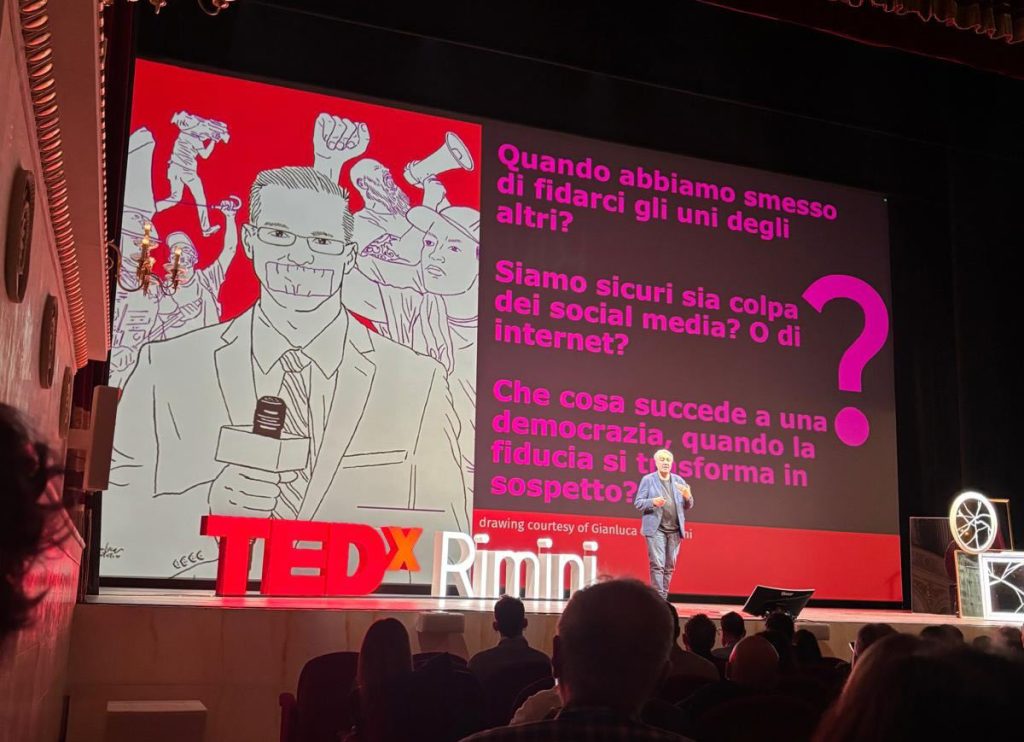
Boccia Artieri states a simple, necessary truth: democracy needs time. Time for argumentation, mediation, and building mutual recognition. But social media operate in milliseconds. It’s like putting a parliamentary debate into a pinball machine: everything bounces, nothing settles. The result is that dissent — which should be a democratic resource — becomes a social toxin.
What I appreciate about this book is that it doesn’t stop at diagnosis. It proposes practices: communication ecologies, care for public discourse, critical citizenship. Not a moralistic call to “switch everything off and go back to print,” but an invitation to design new spaces for dialogue, new pauses, new responsibilities. Paying attention is not censorship — it’s an act of care.
My cover tries to bring these tensions together. How can we visually represent a society where everything is on the surface, everything is exposed, everything vibrates with noise and suspicion? I chose lines that collide, faces that look at each other without understanding, words that fail to meet. A cover doesn’t solve anything — it creates tension: it opens questions, builds anticipation, suggests movement.
Democracy is fragile, yes. But it is not destined to succumb to communicative chaos. It can learn to live within its own vulnerability, as Boccia Artieri writes, and start again from there. Art, journalism, education, politics — we all have a role in slowing the pace and building connections that are more than just reactions. The challenge is enormous, but it is also the work of a generation.
It’s not about going back. It’s about learning to look more carefully. And above all, to listen.