From Patrick Zaki to Gaza, from Iran to Minneapolis: how drawing becomes a tool for witnessing injustice, preserving memory, and giving visibility to those whose voices are at risk.
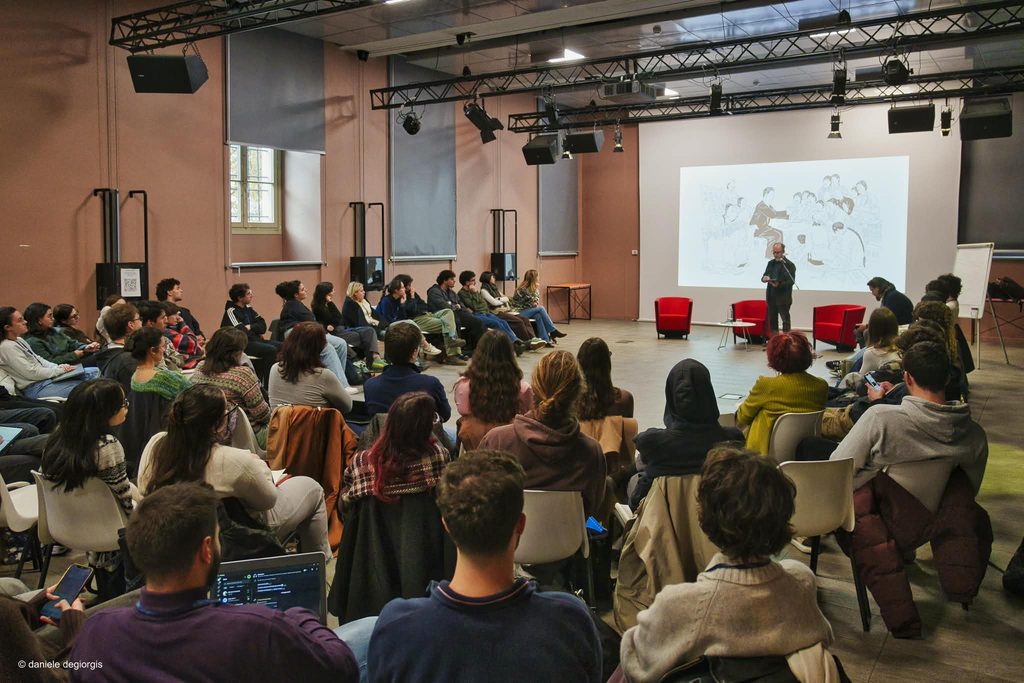
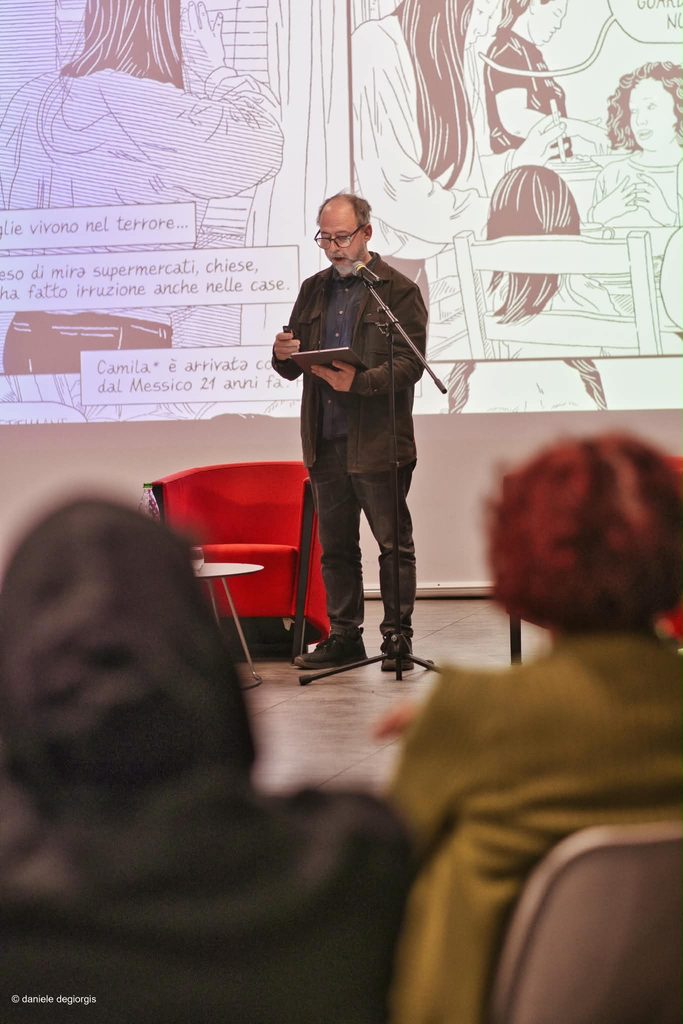
On November 11, 2026, I gave a talk entitled “Illustrating Chaos: Drawing the Contemporary World as a Political Act” at CAOS, held at the Polo del ’900 in Turin, Italy. The event was curated by Associazione Nocentini.
Through my work as an artist and activist, I explored how drawing and graphic journalism can become tools for documenting contemporary events, defending human rights, and preserving individual stories.
From Patrick Zaki and the protests in Iran to the war in Gaza and immigration enforcement operations in Minneapolis, the talk examined the relationship between images, political power, testimony, and collective participation.
What follows is the full text of my talk, reflecting on how a drawing can move beyond the page, enter public spaces, and become an instrument of memory, resistance, and political engagement.

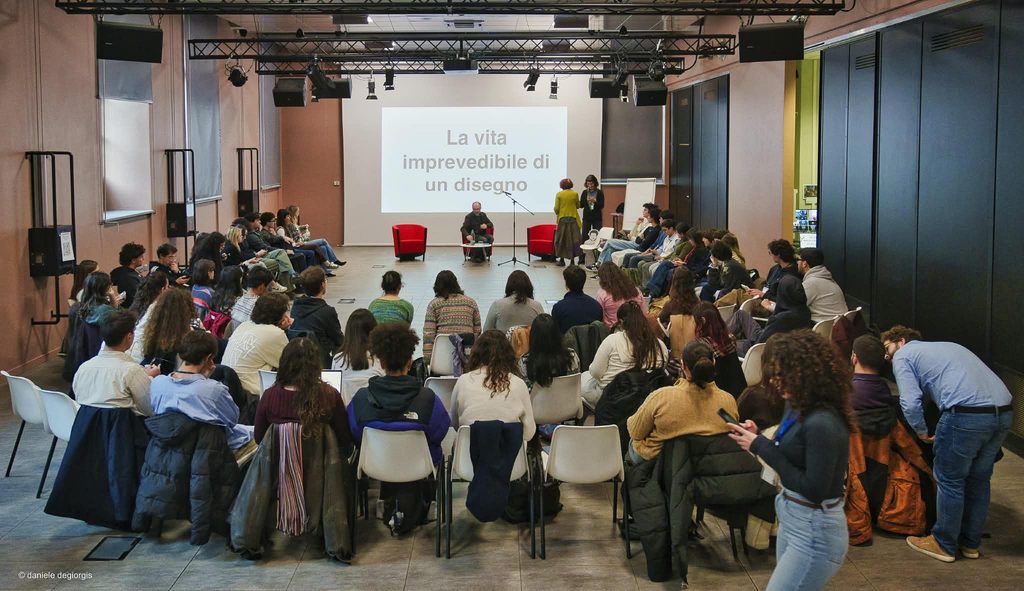
1. The Unpredictable Life of a Drawing
Imagine someone walking across Piazza Maggiore on their way to work. They pass a building they have known all their life, and that day they find a face on its façade. We will see that photograph shortly. But first, I would like to show you where the drawing began.
The face belongs to Patrick Zaki. He was studying at the University of Bologna. In February 2020, he returned to Egypt to visit his family and was arrested in Cairo. In Bologna, the news began spreading from person to person. I made a portrait and published it. At the time, I mostly imagined someone looking at it on their phone screen.
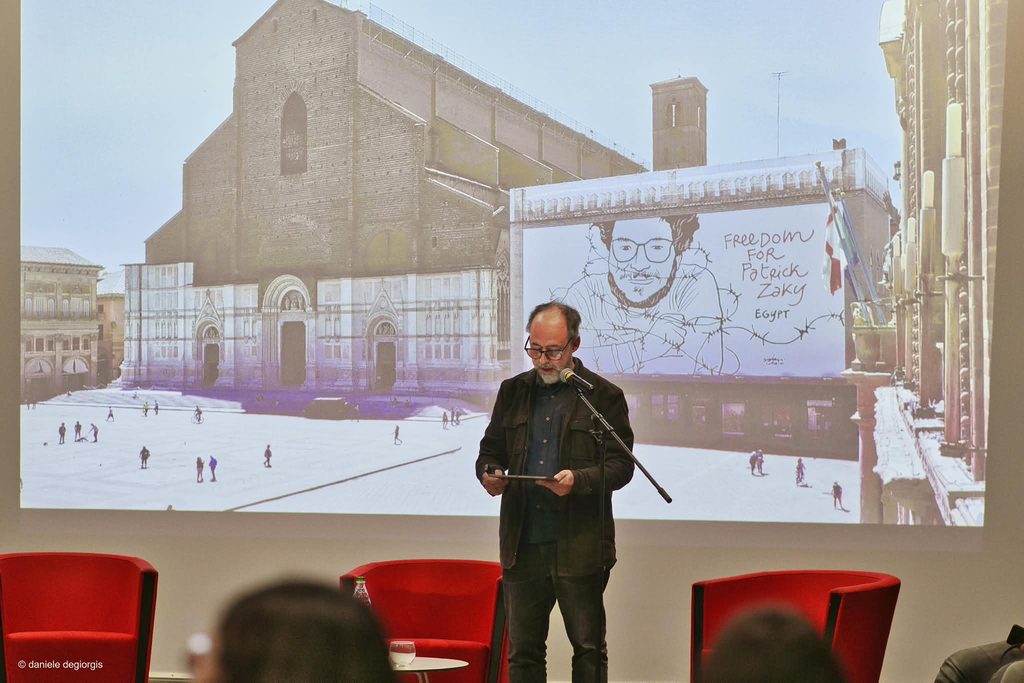
And here it is, on the façade of Palazzo dei Notai. Think about the distance from which it can be seen. On a phone, you can stop, enlarge the image, and read the name. In the square, you look up and encounter it even if your mind was on something completely different. If you are with someone, you can ask them who he is. In this way, the drawing became part of the day of people who had not left home intending to see a drawing.
When I look at that photograph again, I also think about the people who had to make a very practical decision. Where do you place an image so that it enters the field of vision of people passing by? On the façade, the portrait is encountered alongside the windows, the people, and the sounds of the square. The building was already part of everyday life in Bologna. For a while, Patrick’s face became part of it too, in a different way.

Something else happens in the library. The chairs are occupied by identical cardboard cutouts. What strikes me most are the chairs themselves. It is a place where you expect to find someone sitting, reading, or studying. Looking at these photographs, I realise that the portrait makes us think about that person through the place he could have occupied.
Here, the cutout stands among computers and desks. And in the next photograph, his face appears on a kite. When I made the portrait, none of these scenes existed in the drawing. Someone looked at the image and imagined turning it into a cutout, or sending it up into the sky.
Patrick’s release came after efforts involving his family, associations, journalists, institutions, and many other people. The portrait helped keep his face visible. In these photographs, I can also see part of the work done by others.
Later, together with Laura Cappon, we made a book, Patrick Zaki. Una storia egiziana, published by Feltrinelli Comics in 2022. At that point, we faced a different question. If everyone recognises Patrick because of what happened to him in Cairo, where do we begin telling the story of his life?

Between the portrait and the book, what I can ask of the viewer also changes. With a poster, a few seconds are enough for me to communicate a name. In a book, I can give readers the time to encounter the same person several times, at different moments. The face remains recognisable, while readers gradually discover that the name belongs to a story much longer than the one that brought him into the news.
We were able to go back, to his family, his studies, and the life Patrick had before his arrest. Someone opening the book can spend some time there. The time it takes to get to know a person is different from the time it takes to recognise their face.
And as soon as you try to tell what happened before, you have to answer very concrete questions. What do you know about that house? Who was in the room? Where does the detail you are about to draw come from?


2. The Problem of Representing a Reality We Have Not Witnessed
Imagine having to draw a room you know only through someone else’s account. As soon as you draw the floor and a door, the reader already has an idea of how much space there is. If you place a figure next to the exit, they might think that person was about to leave. All you did was decide where to place them.
This possibility interests me enormously. With just a few lines, I can convey a situation. And precisely because those lines can be so convincing, I have to ask myself which details come from a testimony and which ones I added while trying to give shape to the scene.
This is how I worked with Francesca Mannocchi on Libia, published by Mondadori in 2019. Francesca collected the stories on the ground. I drew from my desk. The distance between us became apparent every time we had to turn something someone had described into something the reader would see.
From Italy, we often encounter Libya through news reports about migrant landings or detention centres. In the book, we were able to spend more time with people, both those who lived there and those who had arrived from elsewhere. A street, a door, the way someone enters or leaves a room can reveal how much freedom that person has to make decisions about their own day.
Sometimes, in a testimony, the action comes first, and only afterwards do we understand why the person acted that way. You can preserve that order in a comic page. For a few panels, the reader simply sees someone opening a door or stopping in the street. When an explanation arrives, they can mentally return to that action and understand it differently. Comics allow you to work with the reader’s experience of time in this way.
In these pages, you can follow the transition from a face to an environment. Try imagining the same page starting from the opposite direction. If I begin with the face, I encounter a voice first and only then discover where the person is. If I begin with the street or the house, I already have an idea of the place when that voice arrives. The testimony may be exactly the same. What changes is what we know at the moment we begin listening.
With Francesca, the work on sources continued even while I was drawing. That is when you decide which questions still need to be asked and which details can be left out. I encountered a different problem when, in order to draw someone, I had a vast number of existing images at my disposal.
3. Drawing Power Also Means Breaking Away from Its Images
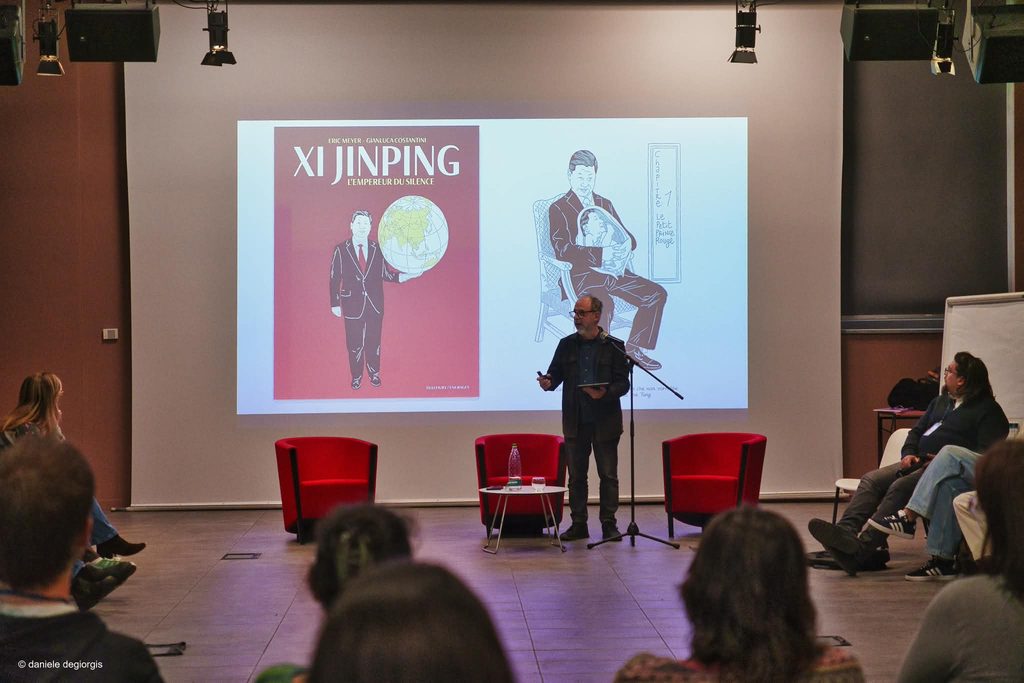
I worked with Éric Meyer on a biography of Xi Jinping. For a head of state, there are official photographs, ceremonies, and television footage. In those images, someone has already decided who stands at the centre, who stands beside him, and from what position we look at him. If I take a photograph and redraw it, all those decisions can enter my page along with the face.
Look at how many people surround Xi in this page. We can follow their gazes, see who stands close to whom, and notice how much space each person occupies. It is a way of bringing relationships between people into the biography. If I always used close-ups, those relationships would remain outside the frame.
If you cover the central figure with your hand, there is still something to read. There is a group arranged in space. Some people can move closer, while others remain further away. When I draw a political scene, these distances matter too. They help me describe a system of relationships through what bodies can do within a room.
In a page about political history, I can place an action alongside its consequences. I can move between times or places in the space of a single panel. That is why I am more interested in understanding what happens around a decision than in trying to find an explanation in the facial features of the person making it. Simply placing a face in shadow is enough to suggest something to the reader. But I am the one who put that shadow there.

With Zelensky, we faced a different kind of public imagery. We had seen him as an entertainer, then in his appearances as president, and later in his speeches during the war. His clothes, his surroundings, and the way he addressed his audience all changed. The book was written by Elettra Stamboulis. I drew it, and Chiara Raimondi coloured it.
In these pages, we are still in the period before the war. While we were working, we already knew some of the consequences of the events we were describing. The people in those pages did not know them yet. Drawing that moment meant leaving room for the decisions they faced at the time, without making everything seem as though it had been leading inevitably to the outcome we now know.
Meanwhile, outside the book, events continued to unfold. Comics have their own pace. While you are drawing a page, what the reader will know by the time they see it may change. What remains possible is to return to moments that passed quickly in the news and ask how they relate to one another.
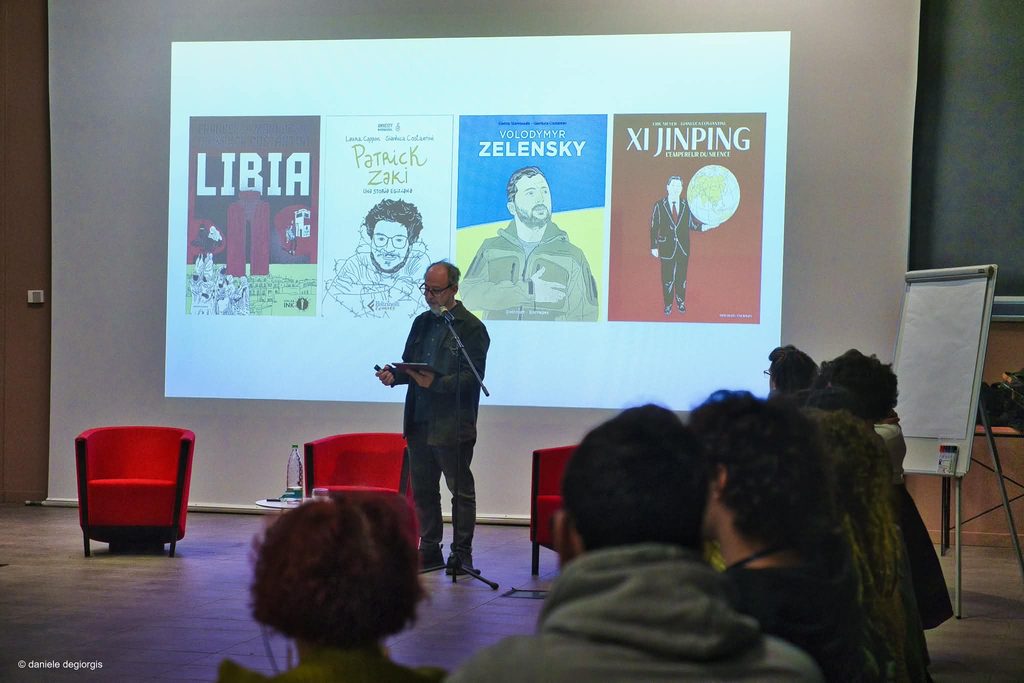
Think about the difference between describing a decision when we already know its consequences and describing it while the outcome is still uncertain. In the second case, if someone hesitates, that hesitation carries its own weight. In a biography, I can leave some room for uncertainty, even when everyone in the room already knows the president’s name and the history that follows.
These four book covers make me think again about the different materials I had on my desk. In one case, I began with people interviewed by a journalist. In another, with a face that those in power had already shown millions of times. Each time, I had to ask myself who had chosen the point of view from which we were looking. With the portraits I made for Iran, I saw people who, after receiving a drawing, also chose where and how to display it.

4. From Representation to Participation
In September 2022, I drew Mahsa Jina Amini. She was a young Iranian Kurdish woman. She died after being arrested by the morality police in Tehran. Woman, Life, Freedom became the slogan of the protests. I followed the news and drew from a distance.
While I worked, I saw photographs, videos, and other portraits circulating. My image became part of things other people were already doing. For me, the question was how to stand alongside that protest through my work while keeping the voices and demands of those leading it recognisable.
In this photograph, the portrait stands among candles. Let us stop here for a moment. People found a place for the image within an act of remembrance. What we see depends on the time they decided to spend together in that place.
Here, someone has printed the face, taken it outside, and is holding it up while walking. These are simple actions, but they change the way we encounter the portrait. On a screen, we can make it disappear with a swipe of a finger. In the street, we see it moving together with the person carrying it.
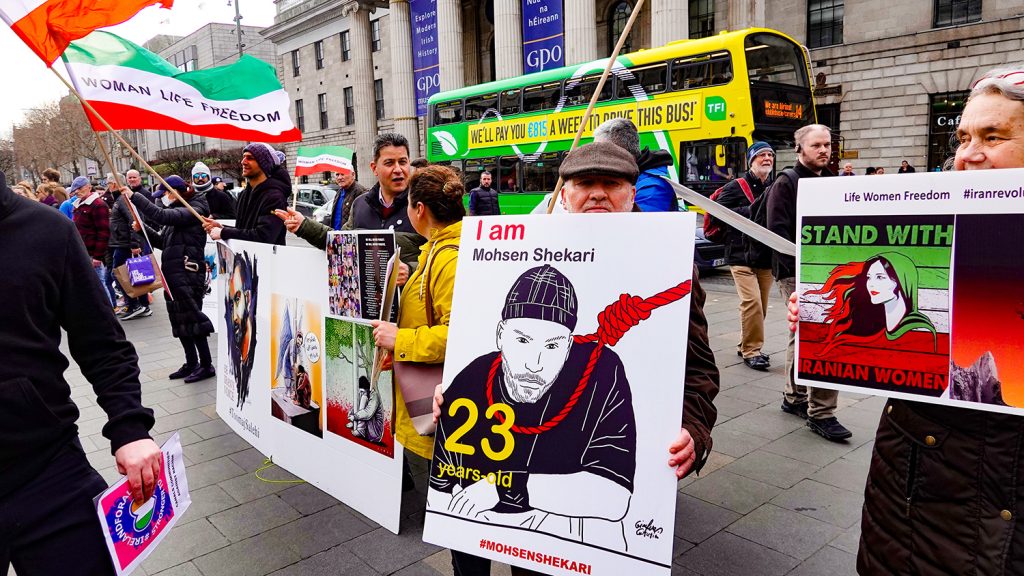
For the person holding the portrait, there is also a very concrete moment when someone asks why they are there. They can lower the sign, point to the name, and explain what they know. This is part of the image’s story that a photograph can capture only partially. To understand it, we also have to imagine the conversation that might begin at that moment.
And here, the drawing appears on the large screen of a sports arena. People are there to watch sport. The face appears in a space where they may not have expected to encounter it. What interests me is what might happen immediately afterwards. Someone recognises it. Someone else sees that face for the first time and wants to know who it belongs to.
If the drawing continues to pass from hand to hand, the name may eventually get lost. And then, behind a portrait that everyone has seen, it becomes harder to find the person again. That is one of the reasons I created ChannelDraw.



5. ChannelDraw: When a Drawing Becomes the Beginning of a Journey
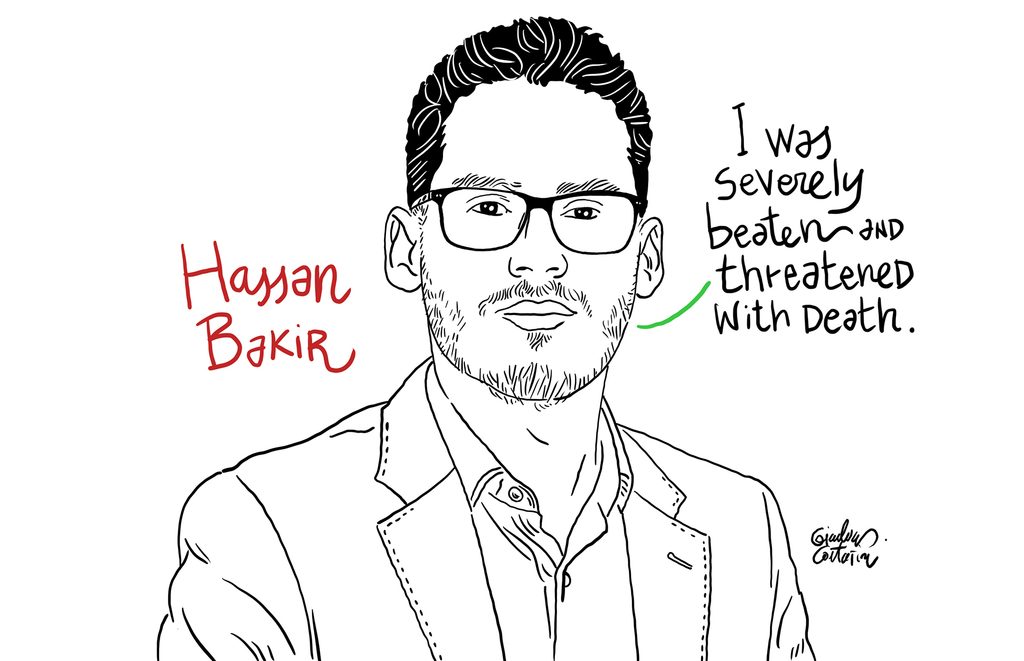
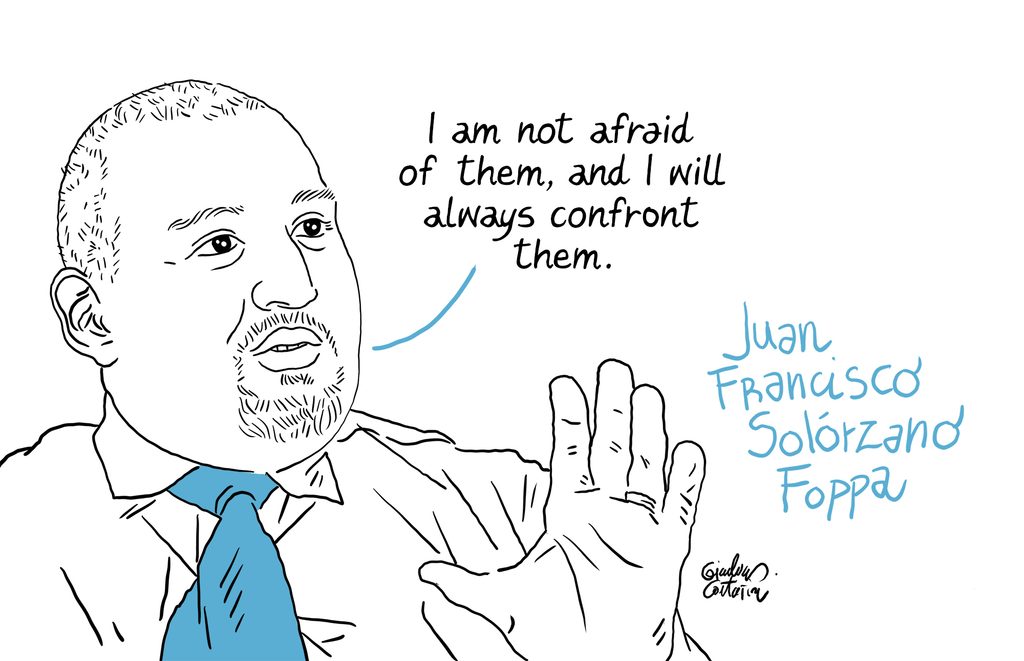
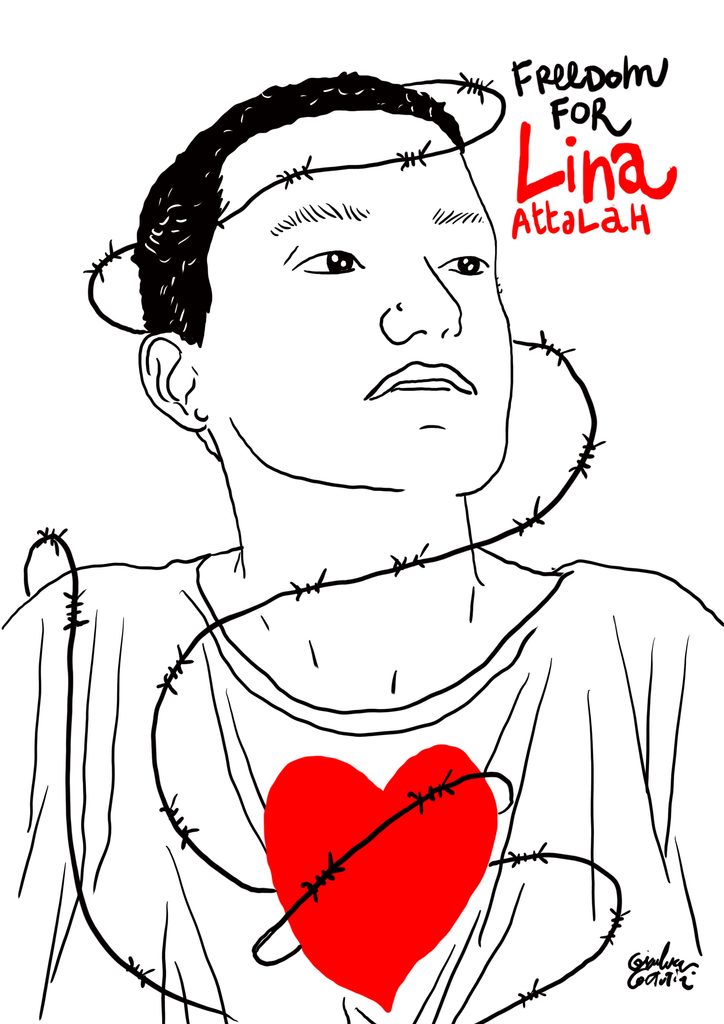
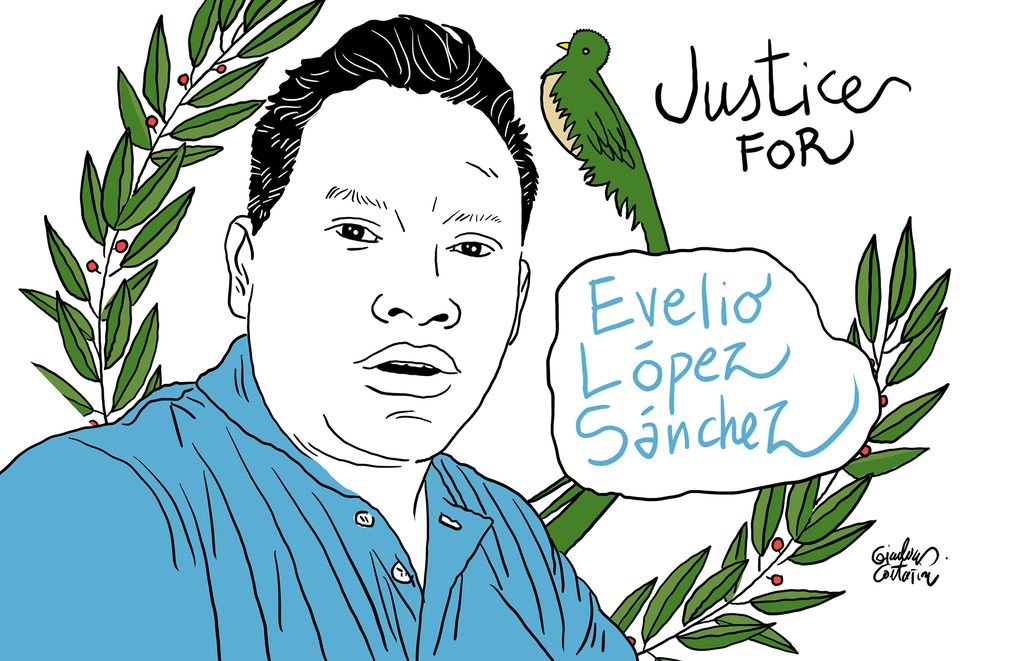
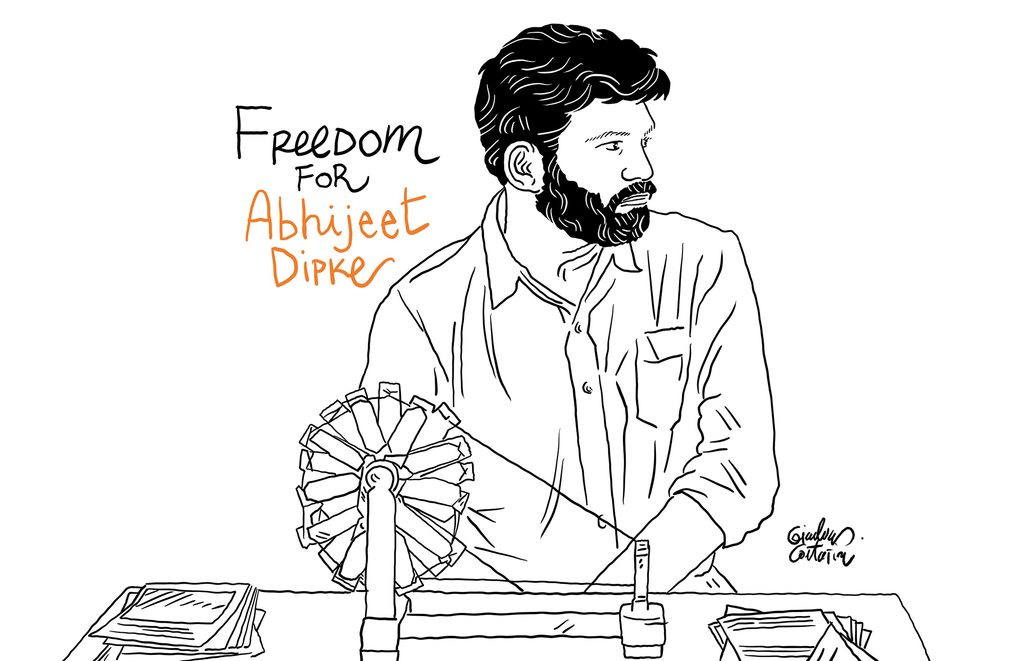
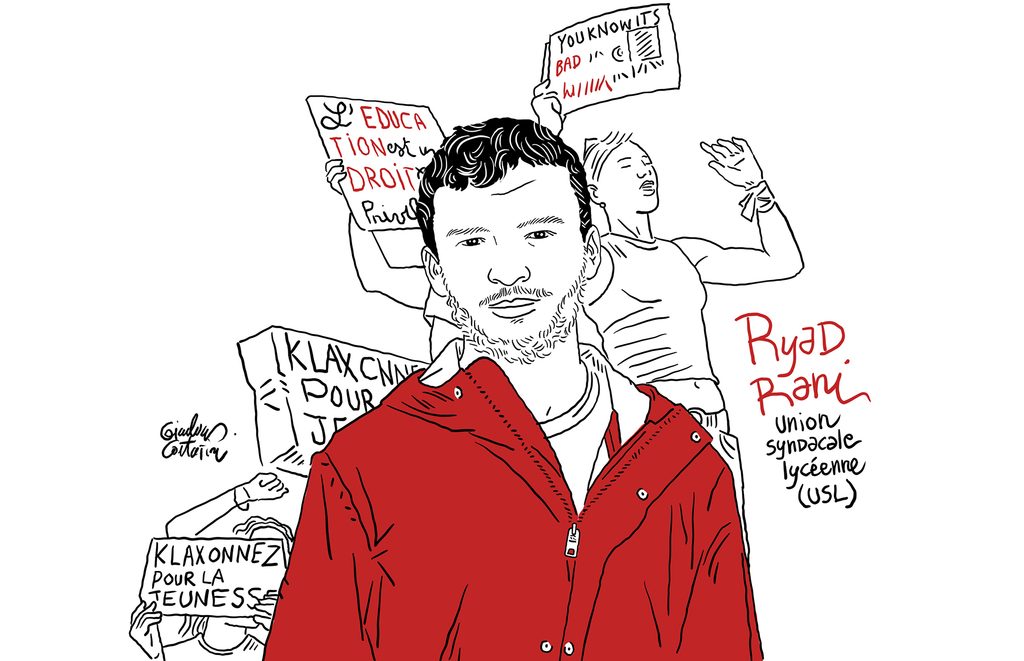
On ChannelDraw, I can place a drawing alongside the person’s name, their story, and the sources that allowed me to tell it. A portrait seen for just a few seconds can lead to something worth spending time with. Here you can see the homepage and the QR code to access it. The work shown on the screen, After the Flood, begins with a place and the people who live there.
Among the stories on the website, you can see one about Lina Attalah, an Egyptian journalist. One of the things I can do with an archive is return to a story after its initial publication. When a news item disappears from our screens, the person it concerned continues living with what happened to them. Over time, I can add what I have learned or explain more precisely where a piece of information came from. Someone arriving later can see that the story has continued.
A website allows me to bring together different versions that we might otherwise encounter months apart, perhaps in completely different places. There is the drawing I published on the first day. Then there might be a photograph of that drawing at a demonstration, or a new source that helps us understand the story better. Someone arriving after the news has faded from the headlines can follow the journey from the beginning.
With the map, you can also begin with a place. Perhaps you know the name of a city, and when you open it, you encounter someone whose name you would never have thought to search for. From there, you can follow a story starting with a face, or discover what connects that story to a street, a house, or a place where someone works. A snowy street is also where the comic I am about to show you begins.
6. Minneapolis: What Happens Outside the Image
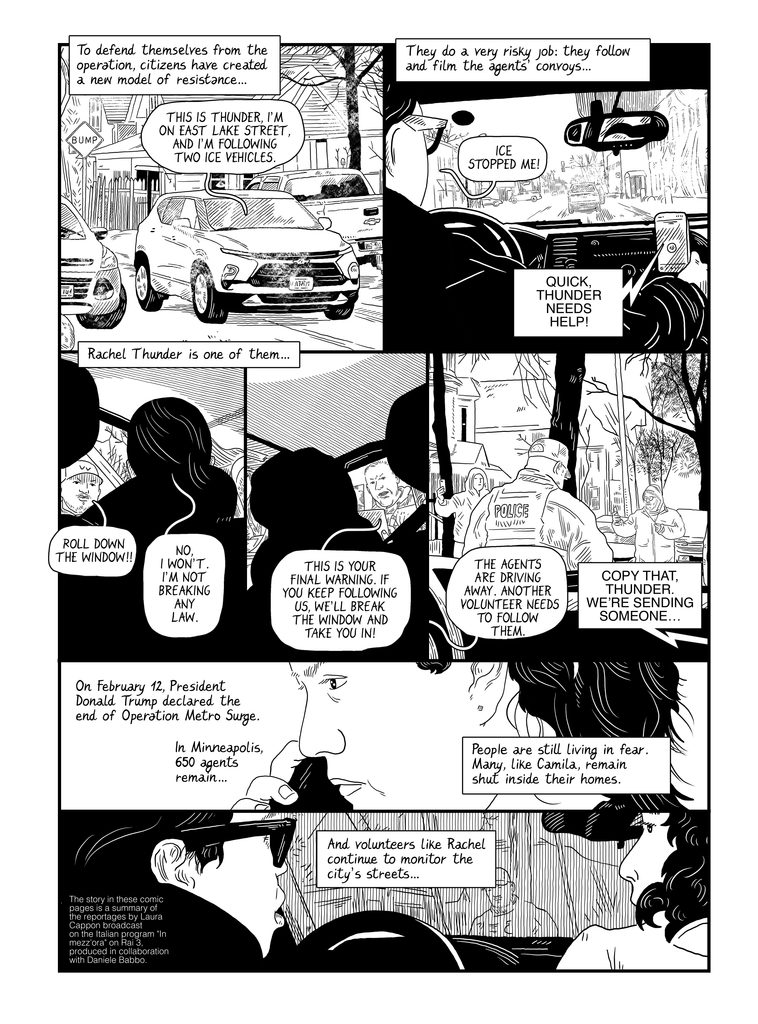
This two-page graphic reportage was published in Internazionale. It was written by Laura Cappon, based on reporting she carried out with Daniele Babbo for In mezz’ora. We are in Minneapolis during operations by ICE, the United States Immigration and Customs Enforcement agency.
The first page begins outside. There are streets, cars, and snow. Then we enter a house. From that moment on, we see the street from the point of view of someone who has to decide whether it is safe to go outside.
Look at the window. From there, only a small part of the street is visible. Everything else has to be imagined. Think about how an ordinary action, going to work, changes when the first thing you have to do is decide whether you can leave your home.
The woman who shared this experience with us is called Camila in the comic. It is a pseudonym. Protecting her also meant thinking carefully about the drawing. Sometimes, a distinctive window or the layout of a room is enough to identify the person who lives there. As you draw, you look for details that help explain the situation while deciding which ones are better left out.
On a page like this, I can also decide how long to make the reader wait. If I show the entire street in a single panel, the reader immediately knows what is outside. If I show only the part visible through the window, for a moment they have to wait alongside the person living in the house. It is a small choice of framing, but it changes how much information we have when we encounter Camila.
On the second page, we are still looking through glass. This time, it is the windshield of a car. Inside are people who have organised themselves to observe and document the movements of ICE agents. We have moved from a house into a vehicle travelling through the city precisely to see what is happening in the streets.
Among those people is Rachel Thunder. In two pages, using a window and a windshield, we can see two different ways of living in the same city. Someone looks outside to decide whether they can leave. Someone else goes outside to document what is happening. Even when the authorities announce that an operation has ended, the person living in that house may need time before feeling safe again.
To learn about these stories, we also need someone who can be outside, observe, and report what they have seen. In Gaza, I began working on the faces of people who were doing exactly that.

7. The Faces of Those Who Told the Stories
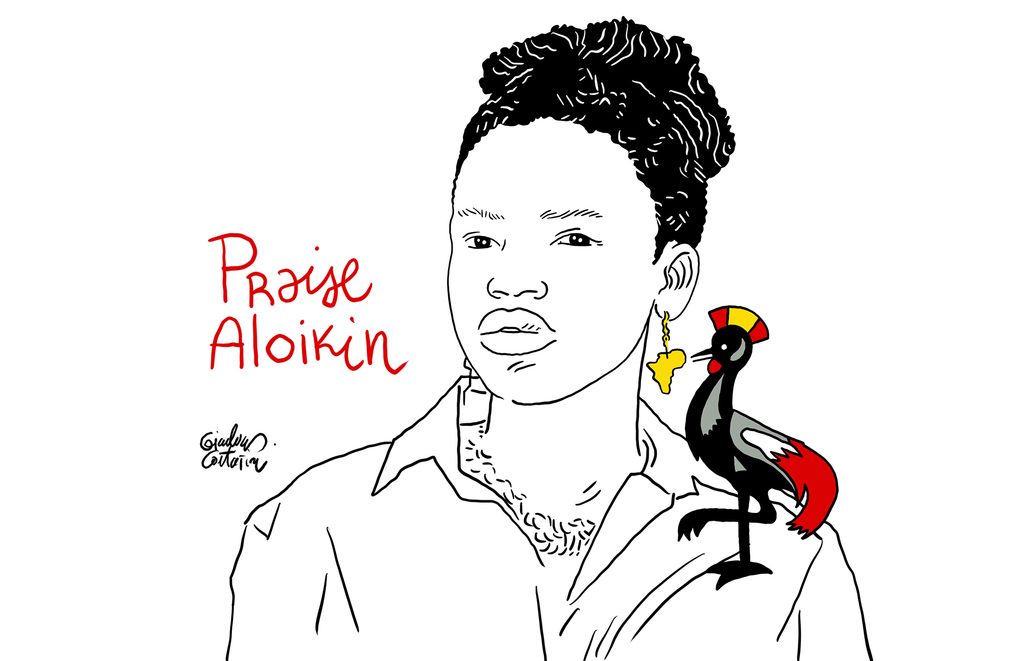
Since October 2023, I have been working on Nel Mirino della Memoria, an archive of journalists and media workers killed in Gaza. I also use information from the Committee to Protect Journalists in New York, with whom I collaborate.
Here we see them together. Before moving on to the next portrait, I would like to reflect on what the word journalist means in a place at war. It means being somewhere while something is happening. It means carrying a camera, finding someone willing to speak, and managing to communicate what you have witnessed to the outside world. When one of these people is killed, we also lose the stories they might have told us.
This is Ahmed Fatima. He was a photographer for Al Qahera News TV and worked with Press House – Palestine. Alongside the portrait, I wrote his name, the work he did, and the sources that reported his death.

What matters to me is that someone can begin with that name. A person looking at the drawing can read it and search for it. They can try to discover what he photographed or where he worked. The portrait then becomes the starting point for further research.
The name and the sources are as much a part of the page as the lines that define the face. When we look at a portrait, we may feel that we already know enough. What interests me is the moment when we realise that the face leads to a body of work, a place, and other people. That is where the drawing can make room for the voice of the person I have portrayed.
If we look at all the portraits together again, what strikes us is how many there are. Then our eyes settle on just one. We read another name. For me, the work of the archive also lies in that transition, from the sheer number of images to the time we devote to one person.
8. What Remains After a Drawing
I would like to return to Patrick. At the beginning, there was a drawing I had published. Some time later, someone crossing Piazza Maggiore could find that face on the façade of a building. Between those two moments were decisions made by many people. Someone saw the drawing and thought it could belong in that very place.
In this final image, I have drawn myself sitting at my desk. Around me are people holding up signs with different demands. This is how I often think about my work. I spend many hours sitting down, but I often begin with something someone else has done outside my studio. Someone has told a story, collected a testimony, or taken to the streets.
When people ask me what a drawing can do, I think back to that face in Piazza Maggiore. I know what I had in front of me when I drew it. What I would love to know is the moment when someone else looked at it and had the idea of placing it on that façade.
Thank you.


CHANNELDRAW STUDIO · INDEPENDENT PUBLISHING
Active Art Yearbook
A year of drawings, stories and civic engagement. Discover the Channeldraw annual volumes.
Explore the yearbooks →