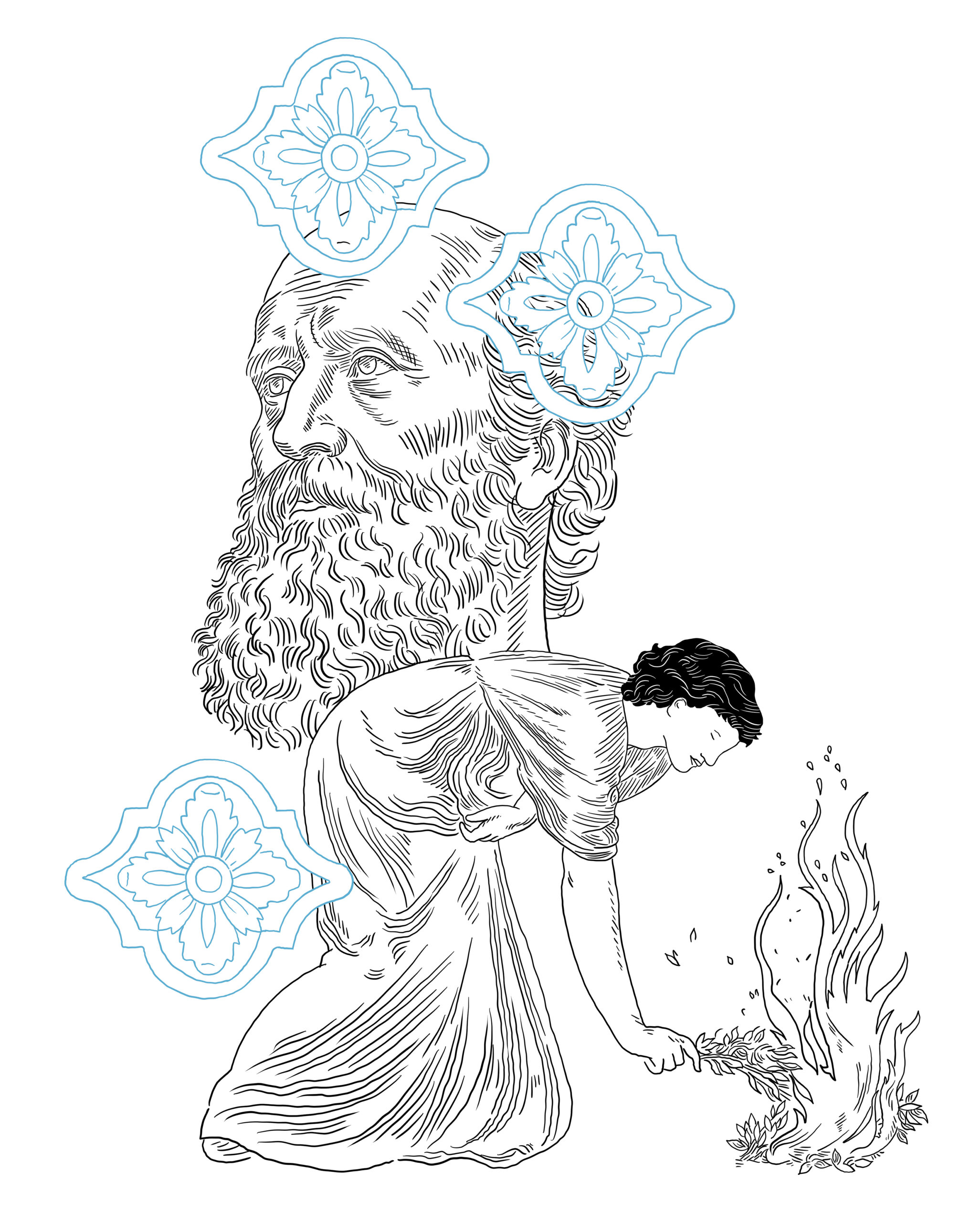
From the symbols of the Evangelists on the façade to the Adoration of the Magi inside, the American mural painter who carried the mosaic programme of St. Paul’s Within the Walls into a new century.
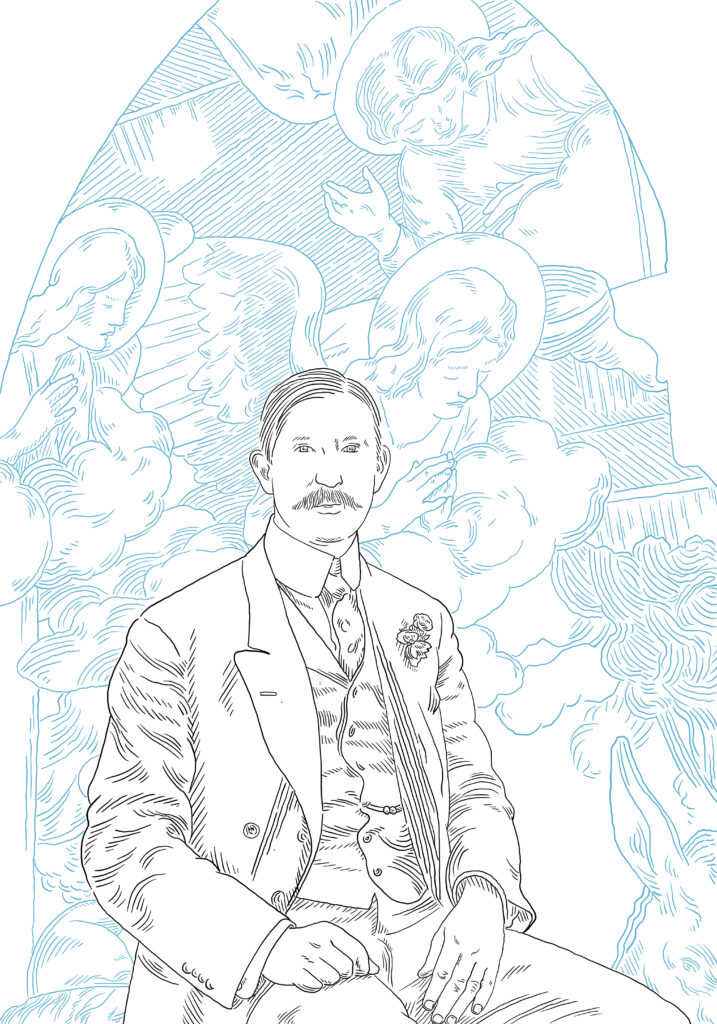
Risograph print produced by Tiratura in Ravenna, in an edition of 6 copies, 2026
An American painter in Rome
At St. Paul’s Within the Walls, you encounter George Breck’s work before you enter the church. The symbols of the four Evangelists appear on the façade, around the rose window. Once inside, it is easy to keep walking towards Burne-Jones’s mosaics in the apse. To see Breck’s Adoration of the Magi, you have to turn back towards the entrance. His work occupies both sides of the wall you have just passed through. Century Archives, George William Breck · Italian General Catalogue of Cultural Heritage, Adoration of the Magi
George William Breck (1863–1920) was born in Washington, D.C., and came to Rome as the first recipient of the Lazarus Scholarship for mural painting. He studied at the American Academy in Rome and later became its director. A memorial published the year after his death places the mosaics at St. Paul’s alongside his murals for a private home in New York, a church in Albany and the public library in Watertown. Across these commissions, he worked with an image’s eventual surroundings in mind. A painting made for a wall has to account for where people stand, what they can see from there and how they move through the room. Century Archives, George William Breck · Smithsonian Archives of American Art, American Academy in Rome records
From the façade to the west wall
Breck continued the church’s mosaic programme in the early twentieth century, designing the Evangelists for the exterior and then turning to the wall above the entrance on the inside. In the Adoration of the Magi, the visitors who have come to see the child are joined by shepherds and angels. The subject is one of arrival, yet a visitor to the church may only notice it on the way out, when the west wall comes into view. The position of the mosaic makes it possible to miss on a first visit and gives you a reason to look back on the next. Italian General Catalogue of Cultural Heritage, Adoration of the Magi
The mosaic was made in Venice under Breck’s direct supervision and inaugurated on Christmas Day 1913. Like the designers who worked at St. Paul’s before him, Breck depended on a workshop to translate his drawing into glass. His involvement in Venice puts him in the middle of that process, where the colours and contours drawn on paper had to be worked out in individual tesserae. The design travelled from one city to another before it became part of the building in Rome. Italian General Catalogue of Cultural Heritage, Adoration of the Magi
The portrait in the exhibition
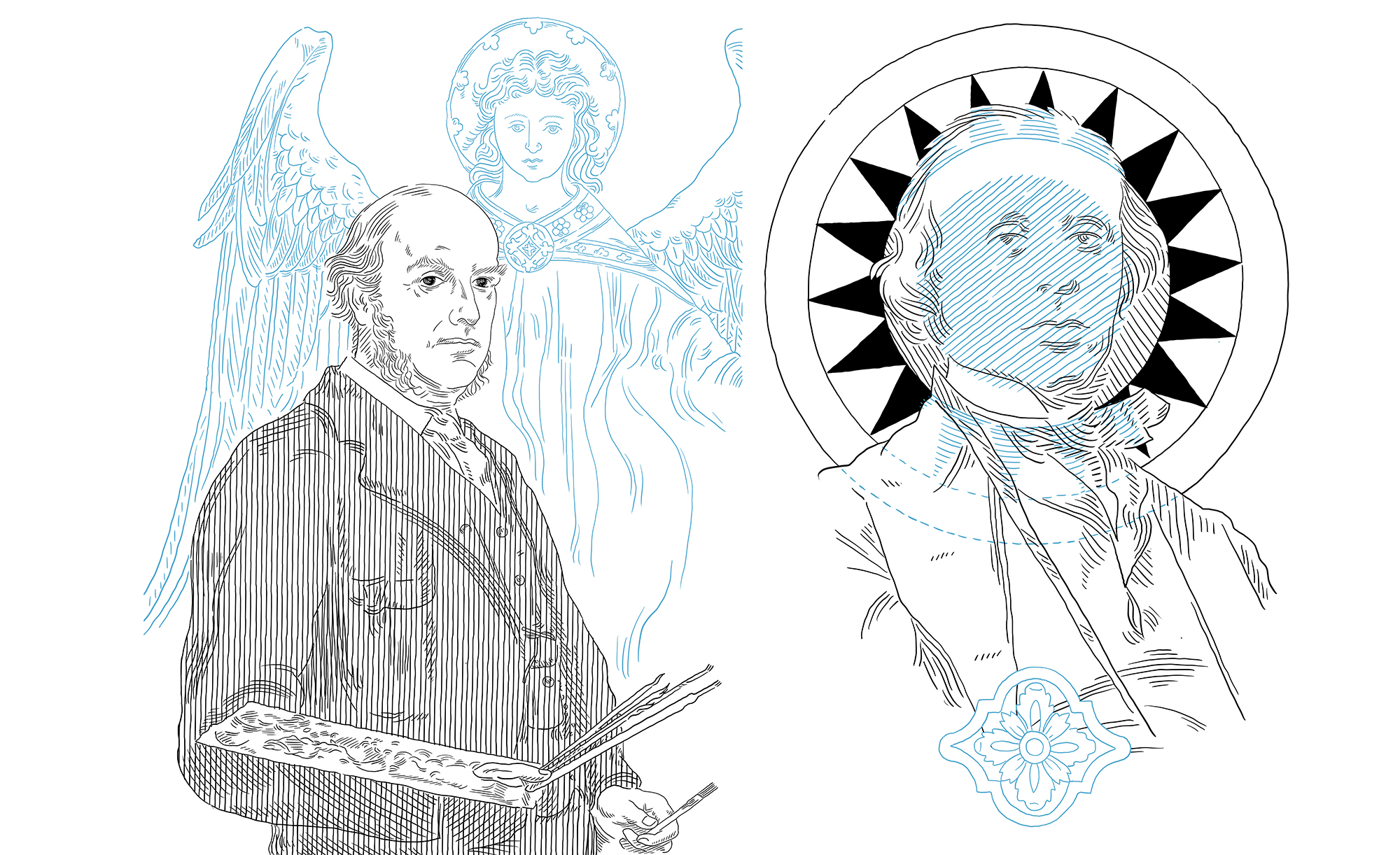
In The Day the Angels Remembered Who Had Drawn Them, I drew Breck seated, looking straight ahead, with a small cluster of flowers on his lapel. The angels behind him are drawn in pale blue. Their wings and robes fill the space above his head, while his hands rest low in the foreground, one on his knee. Tiratura printed the portrait in Ravenna in an edition of six. The separate passes of the Risograph let the black of the seated figure and the blue of the angels retain their own weight on the paper.
The title imagines Breck crossing the sky with his hands still covered in earth. I wanted to keep his hands visible even as the angels draw the eye upwards. When I look back at the mosaic above the door at St. Paul’s, I think of the work that had to happen at a table before those figures could take their place so far above us.