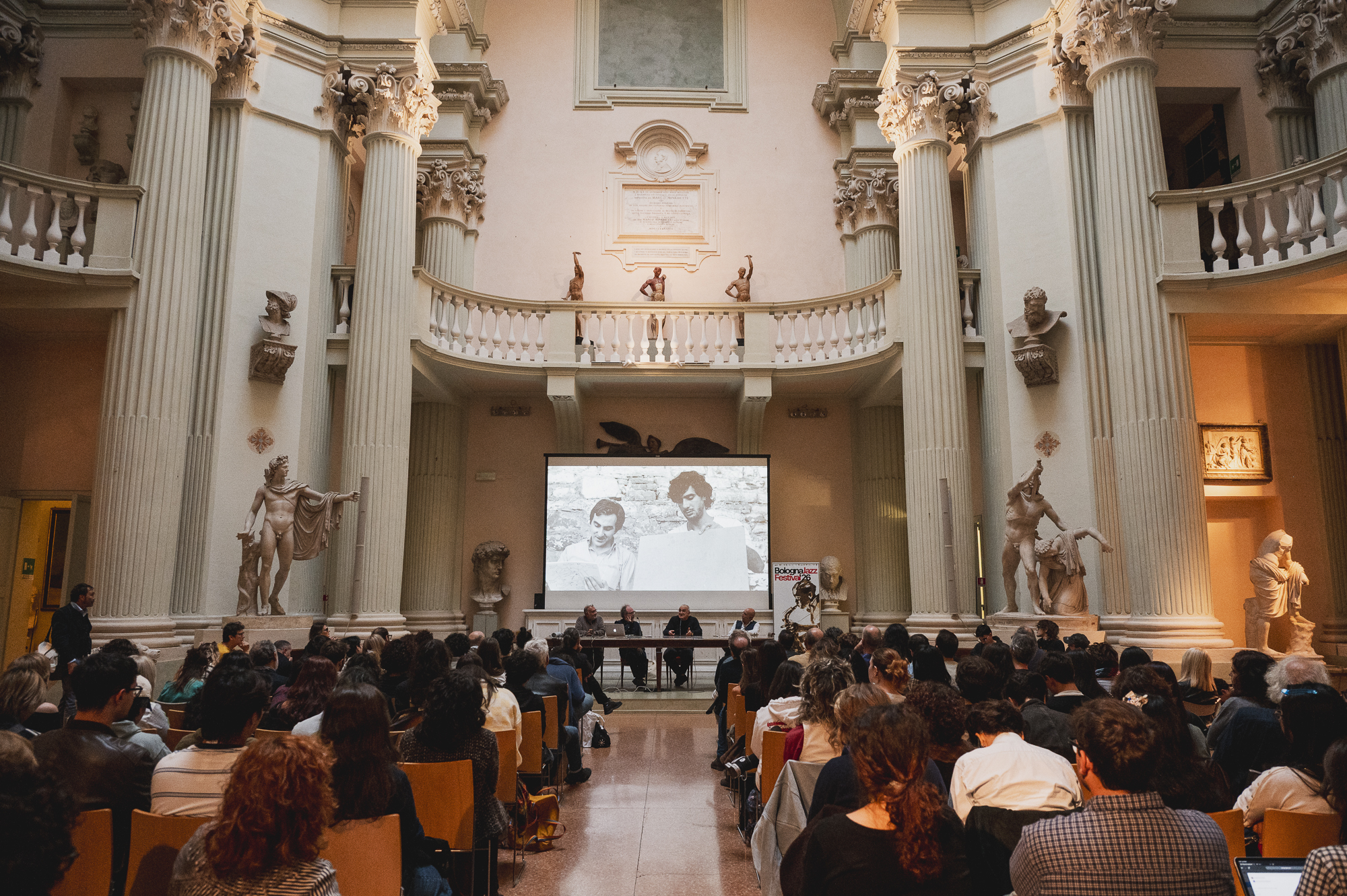
Cartoonist, illustrator, exhibition curator, and professor at the Academy of Fine Arts of Bologna: Gianluca Costantini is all this and more. His work and creations tell the story of the world and current events. Through his drawings, he speaks to the collective.
Interview published in the Italian magazine In Magazine.
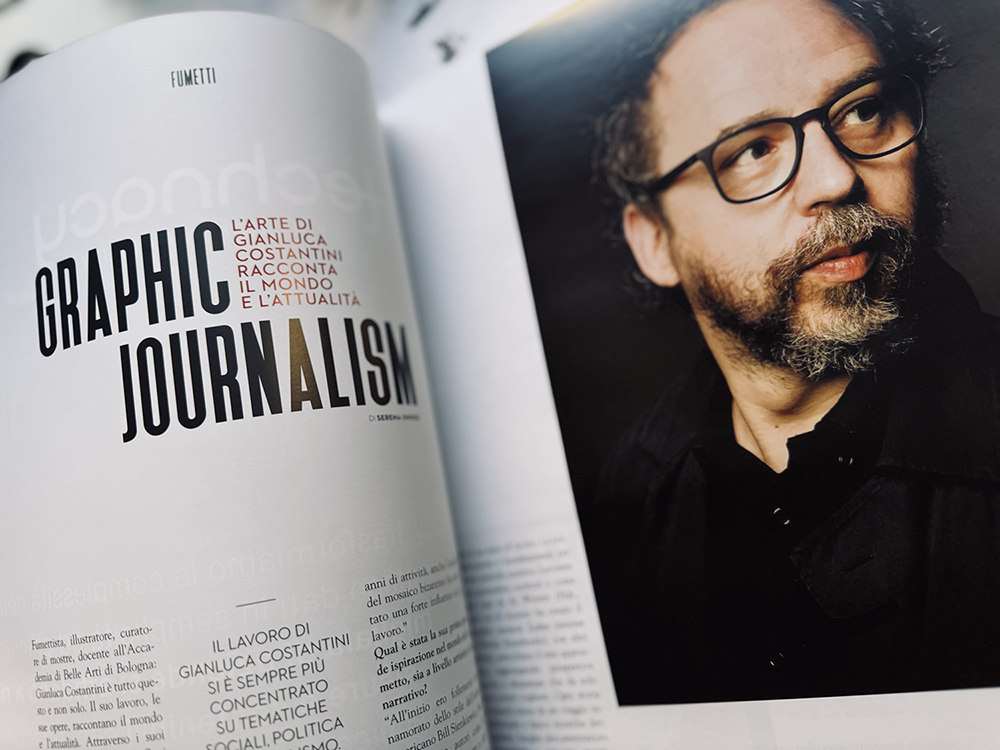
Gianluca Costantini: Artist, Activist, and Graphic Journalist
Today, Gianluca Costantini is not only an artist but also a human rights activist. Over the past two decades, his work has increasingly focused on social issues, politics, and graphic journalism. Costantini developed his artistic voice in Ravenna, where, alongside Elettra Stamboulis, he organized numerous events for over 15 years, including the renowned Komikazen festival. “An extraordinary and energizing experience.” Comics and poetry were his first loves during his studies at the Art Institute for Mosaic in Ravenna. “After graduating, I attended the Academy of Fine Arts in Ravenna, where I was fortunate to learn from exceptional teachers such as Fabrizio Passarella, Carlo Branzaglia, Dede Auregli, Vittorio D’Augusta, and many others.
During a school event, I met the celebrated illustrator Vittorio Giardino. From that moment, I began frequenting his studio in Bologna, an invaluable experience for my artistic development. In my early years, the aesthetics of Byzantine mosaics also strongly influenced my work.”
Inspiration and Early Influences
Q. Gianluca Costantini, what was your first major inspiration in the world of comics, both artistically and narratively?
A. At the beginning, I was deeply in love with the style of American artist Bill Sienkiewicz. Later, authors like Joe Sacco, Seth Tobocman, and Aleksander Zograf guided me toward reality-based comics, shaping my passion for social and political themes.
The Creative Process
Q. Can you describe the creative process behind one of your comics?
A. Every day, I translate my perspective on the world into drawings that portray people and political events. Over time, some of these sketches grow and become the seeds of a book. However, creating a graphic novel is a meticulous and lengthy process that often takes over a year. Collaboration is essential to my creative method.
Working with journalists, writers, or, as in the case of Ai Weiwei (with whom I recently collaborated on the graphic memoir Zodiac alongside Elettra Stamboulis), other artists enriches my approach. It introduces new perspectives and nuances that I could not achieve alone. Each graphic story emerges from an intellectual and physical journey: detailed research, extensive photographic documentation, and sometimes traveling to locations that provide context and authenticity. Each step adds depth and truth to the narrative.

Tools and Techniques
Q. What tools or techniques do you prefer when working on your drawings?
A. In recent years, I’ve worked extensively with the iPad. Drawing on a glowing screen has its own unique allure—it feels like tracing ideas directly onto a luminous surface, blending artistic gesture with the ethereal. This digital environment offers a new creative dimension, a dialogue between traditional drawing and technological innovation.
Recurring Themes
Q. Are there recurring themes in your works?
A. In my recent works, there is always a call for freedom—freedom of movement, of the press, and of opinion—for those who have been deprived of it.
Exploring Comics
Q. Are there places or events you recommend to those new to the world of comics?
A. Walk into a bookstore and let yourself be drawn to the illustrations. Choose instinctively what appeals to you most—it’s a simple yet deeply personal act. The world of comics is so vast and diverse that it can resonate with any sensibility, making each choice unique and intimate. For me, if I had to recommend a must-read, it would be From Hell by Alan Moore.
Current Projects
Q. Are you working on new stories?
A. Right now, I’m involved in several interconnected projects. I’m working on a book about German artist Joseph Beuys, exploring his worldview and societal impact.
Simultaneously, I’m creating short stories about Palestine in collaboration with journalist Francesca Mannocchi, aiming to depict a complex and dramatic reality. Additionally, I’m working on an illustrated book for children with journalist Laura Cappon, intending to ignite their curiosity and awareness about human rights.
A Milestone Moment
Q. Was there a specific moment that made you think, ‘I’ve made it’?
A. I still feel like a young artist, driven by an almost adolescent enthusiasm. I don’t like the idea of having ‘arrived’; the thought of stopping unsettles me. Every achievement, no matter how significant, is just a step along a journey I want to keep exploring. For me, growth is a lifelong adventure.