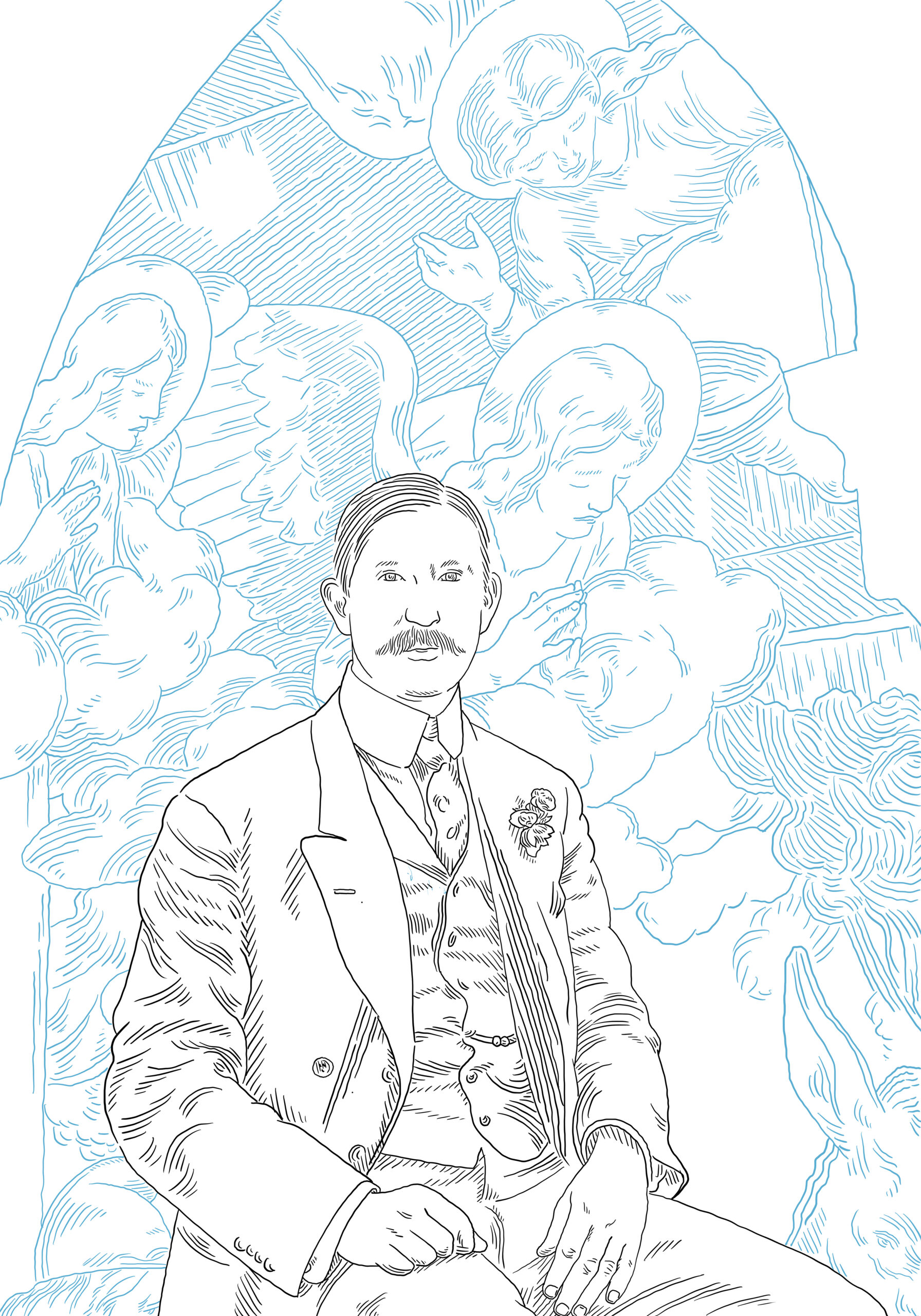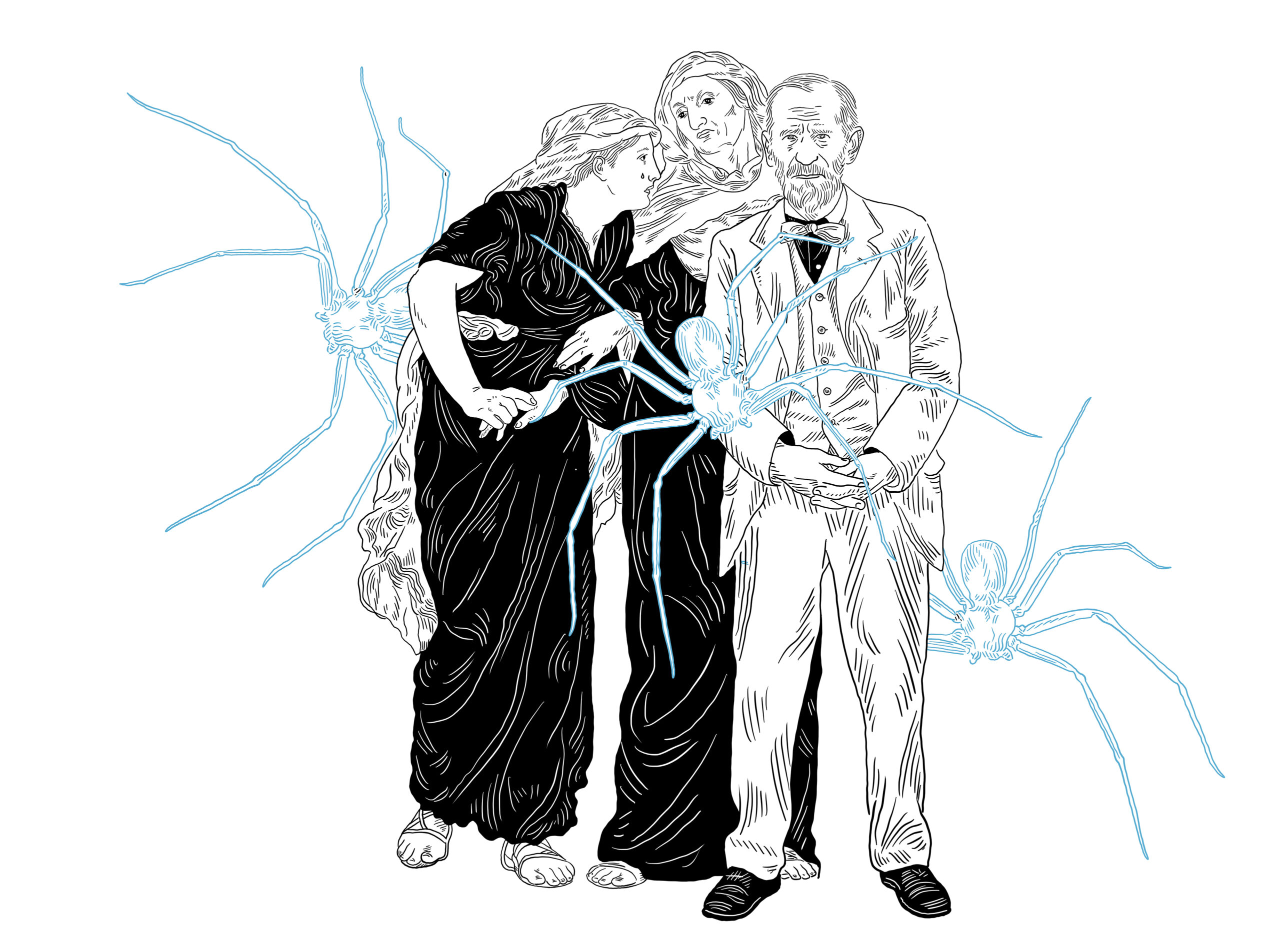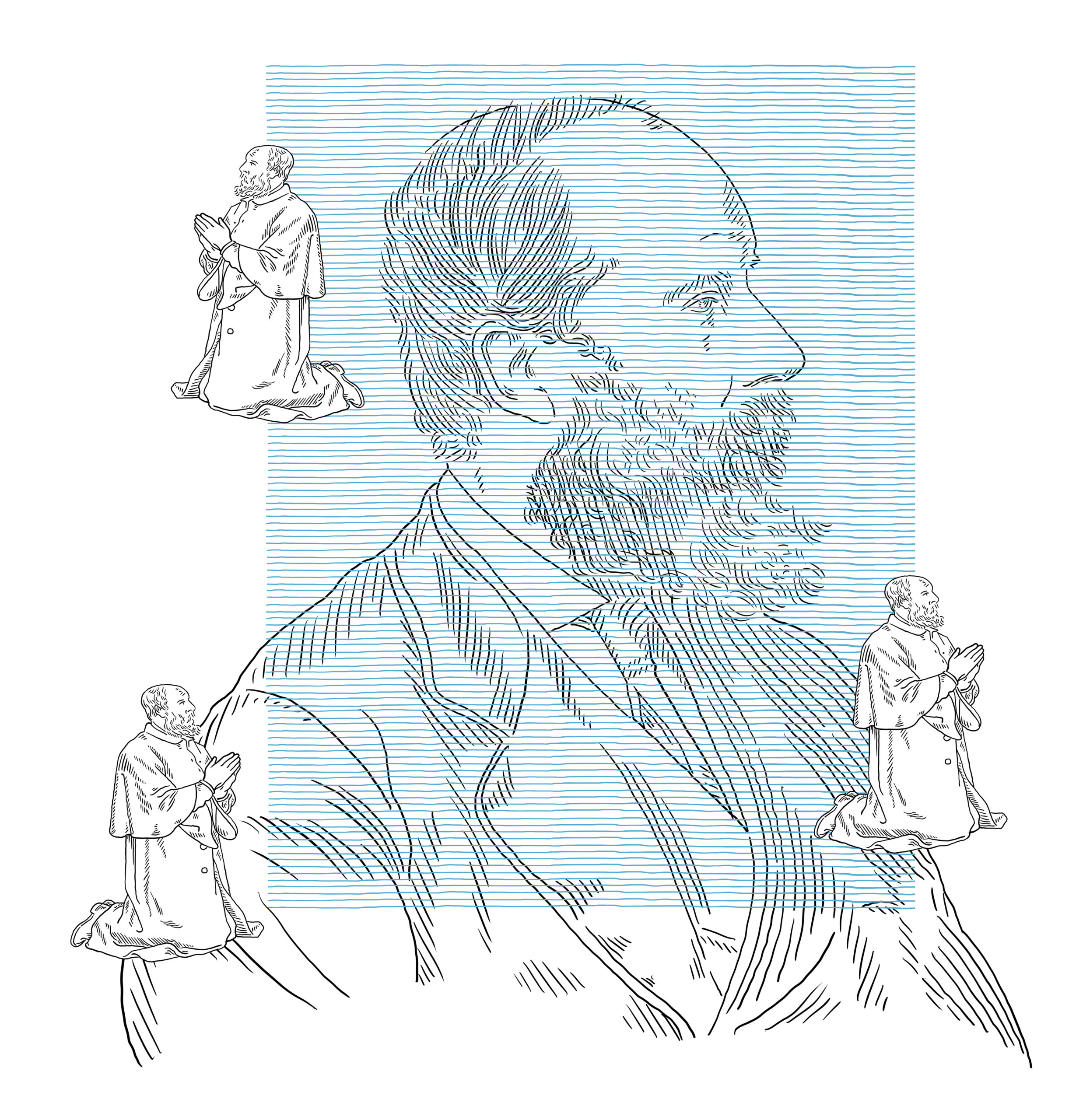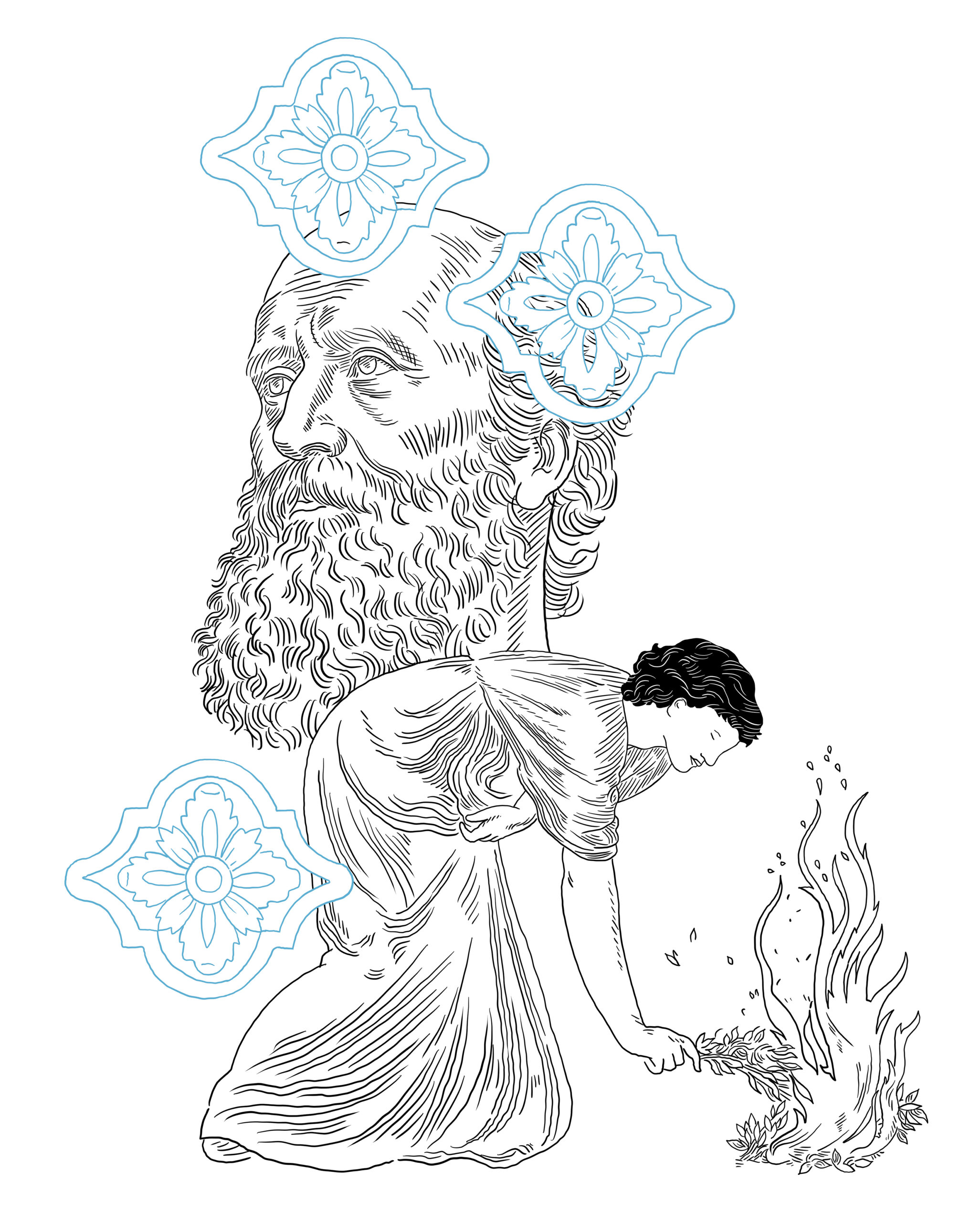
Risograph print produced by Tiratura in Ravenna, in an edition of 6 copies, 2026
Two paths to the same workshop
When you enter St. Paul’s Within the Walls in Rome, you can read the story of the apostle Paul along the nave. It unfolds in stained glass, and the light changes as you move from one window to the next. The windows were made by Clayton & Bell, a London firm whose name joins two artists who came to glass by different routes. Roma Capitale, St. Paul’s Within the Walls
John Richard Clayton (1827–1913) was born in London. He worked as an illustrator and sculptor and was close to Dante Gabriel Rossetti. One of his early works at Westminster was the figure of St. George for the Westminster School Crimean War Memorial. Later, he designed the Last Supper mosaic for the high altar at Westminster Abbey, executed with the Venetian glassmaker Antonio Salviati. His career kept bringing him back to the question of how a figure drawn on paper could take shape in another material. Westminster Abbey, J. R. Clayton & Alfred Bell
Alfred Bell (1832–1895) grew up in the west of England and entered the office of the Gothic Revival architect George Gilbert Scott while still young. There he learned to work with drawings that had to become part of a building. A window had to fit the opening the architect had given it, and the figures had to remain legible from the floor of the church. Scott encouraged the partnership and gave Clayton and Bell some of their earliest commissions. National Library of Wales, Alfred Bell · Historic England, The Church and Chapel Interiors of John Loughborough Pearson
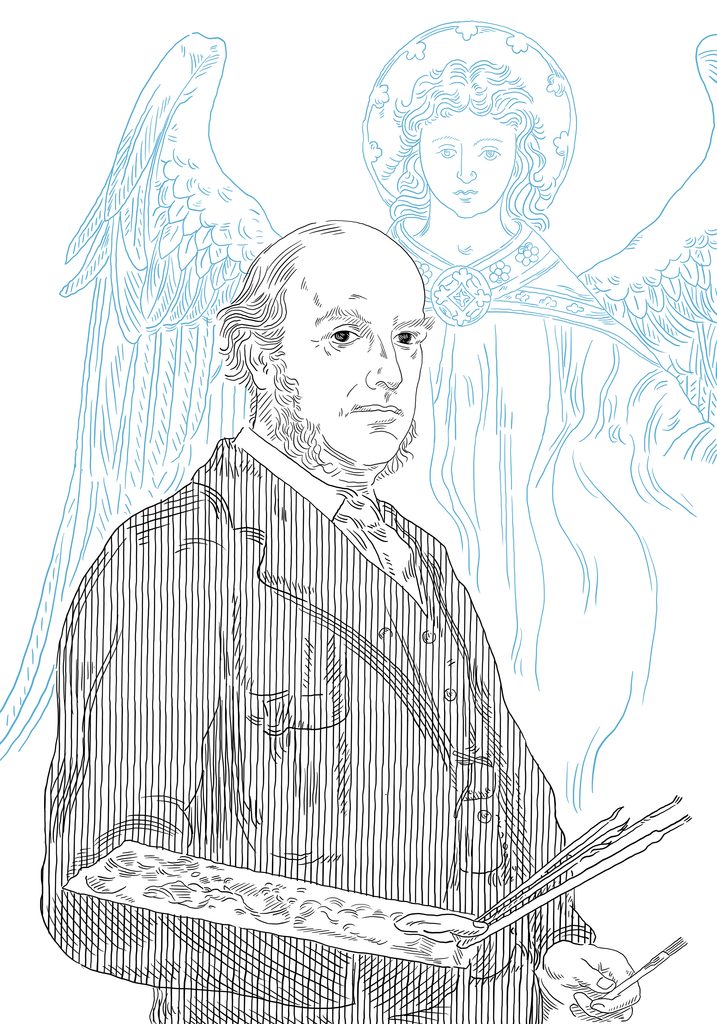
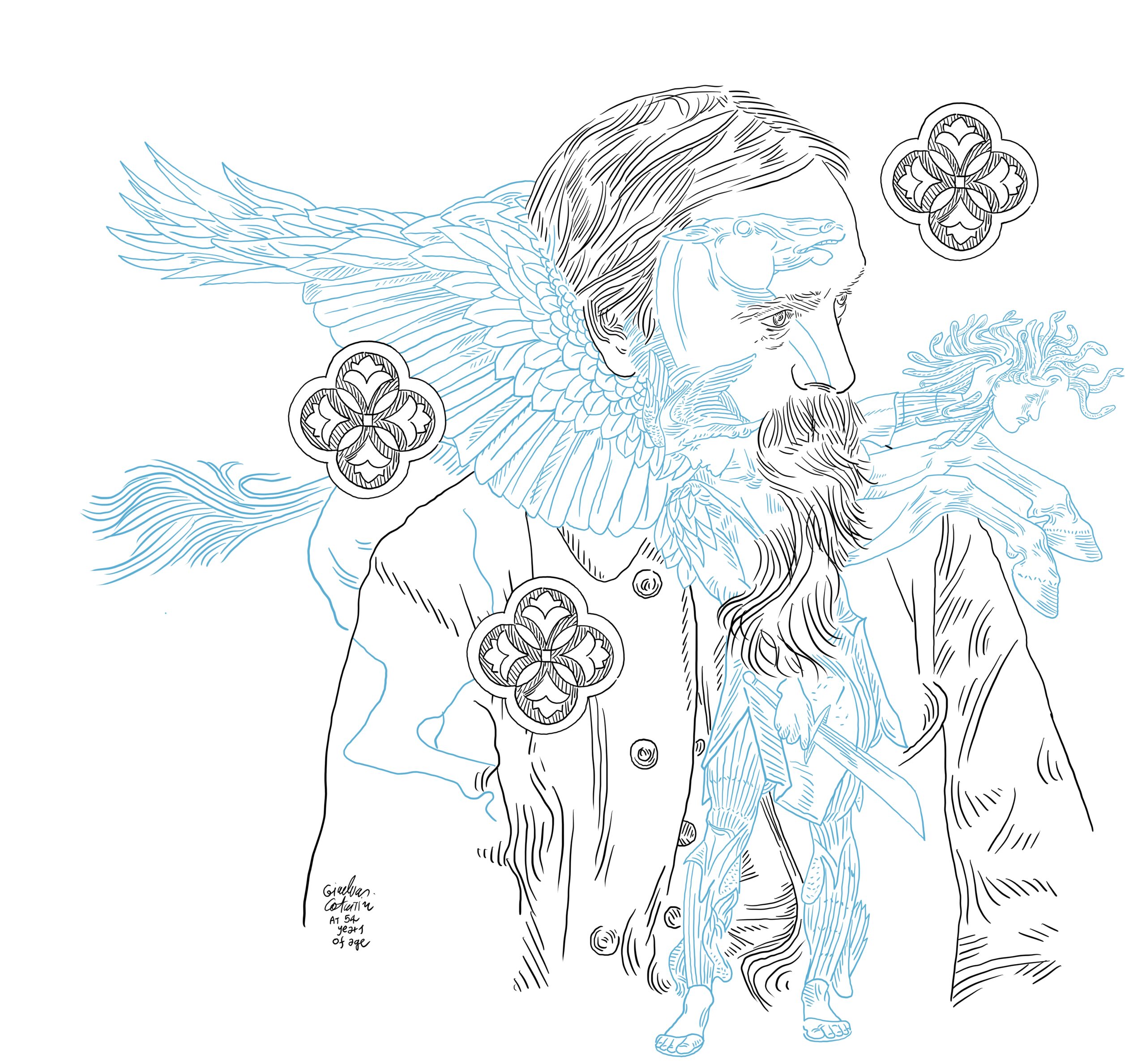
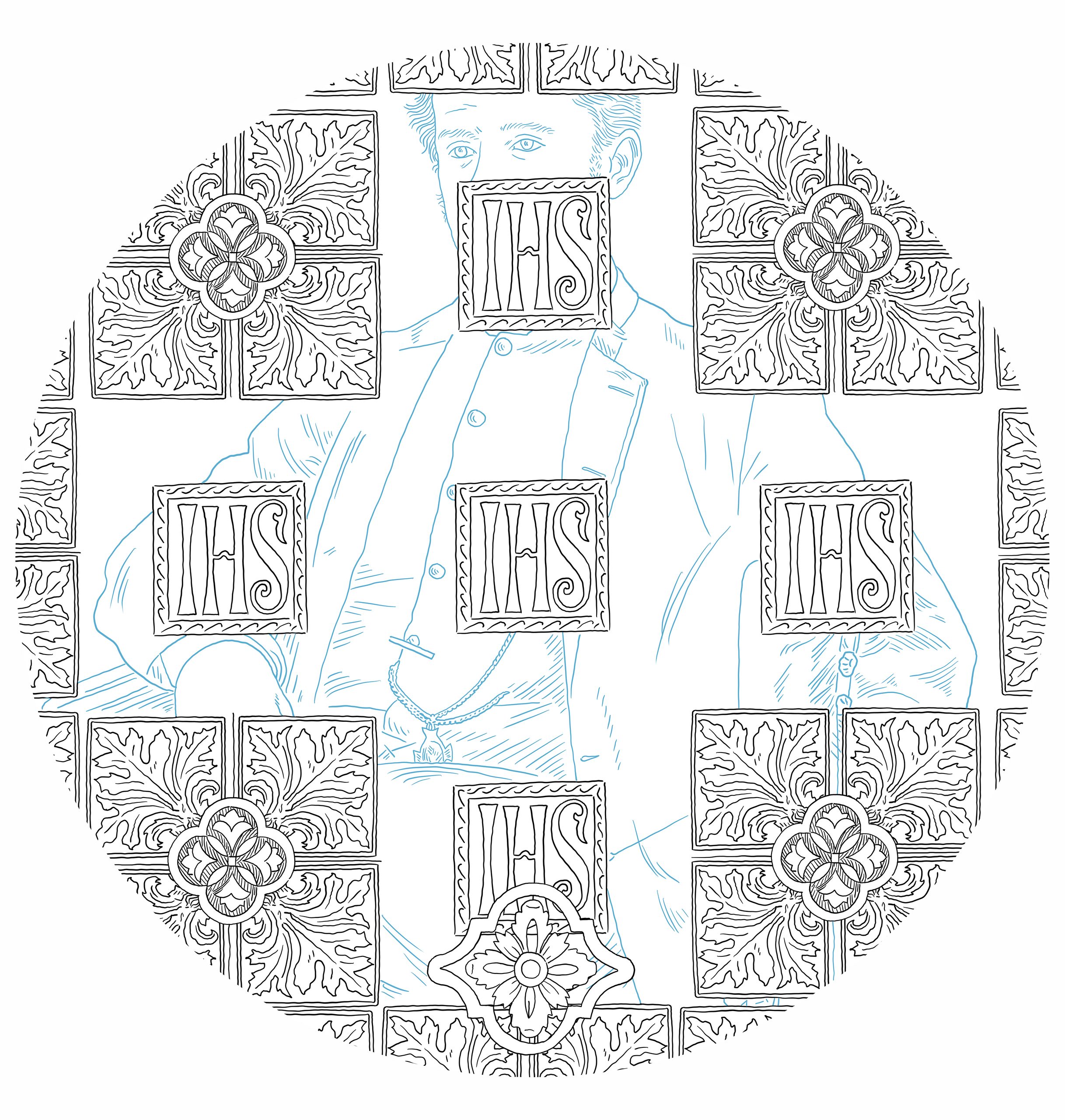
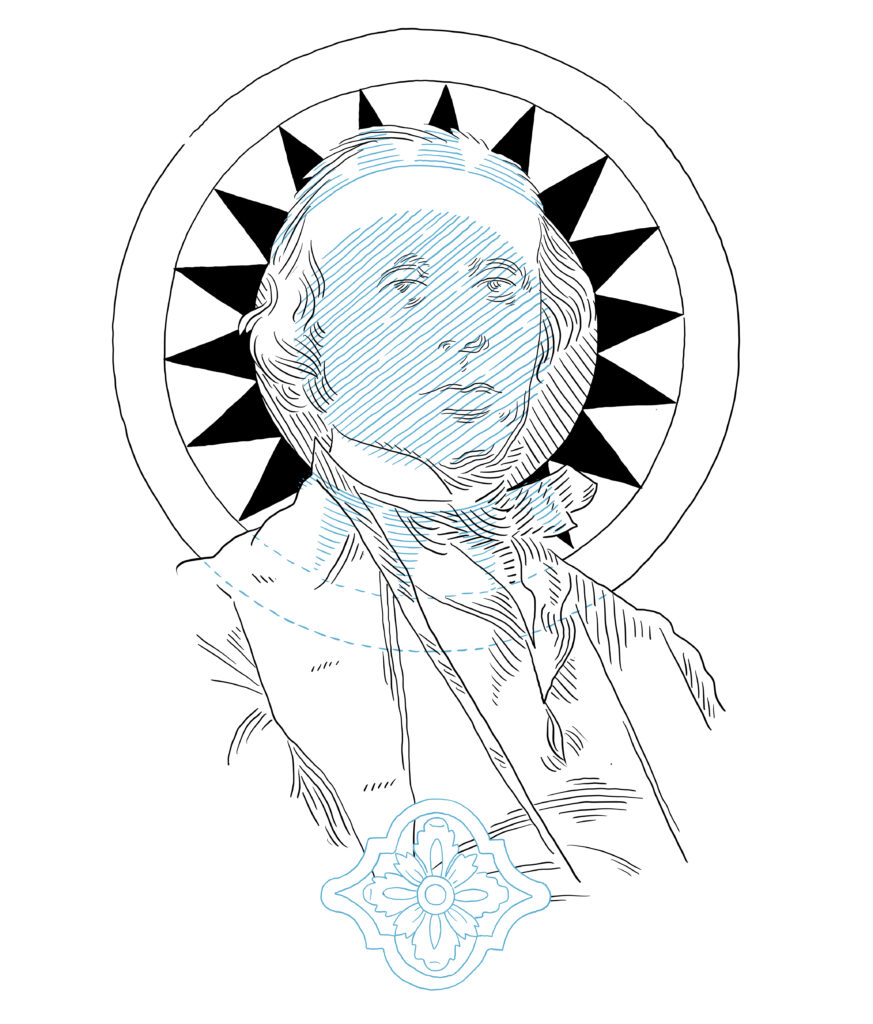
Risograph print produced by Tiratura in Ravenna, in an edition of 6 copies, 2026
From drawing to glass
Clayton and Bell established their London partnership in the mid-1850s. At first they supplied designs and relied on other workshops to make the windows. Their firm went on to run a large workshop in Regent Street, where it handled stained glass and other decorative work. The partnership eventually took on commissions on the scale of the window programme at Truro Cathedral. Their sons, John Essex Clayton and John Clement Bell, later joined the business. The name remained in use long after Alfred Bell’s death in 1895 and Clayton’s in 1913. Historic England · Truro Cathedral, Stained Glass Windows · Church of England, Church Heritage Record
A stained-glass design passes through several hands. Glass is selected and cut. Faces and details are painted. The pieces are joined with lead, and those dark seams become part of the drawing. The window only begins to work in the way it was intended when it is set into the building and daylight passes through it. At St. Paul’s, one of the windows depicts St. Paul and Nathanael. Looking up at it from the nave, you can follow both the scene and the divisions between the individual pieces of glass that make it legible. Italian General Catalogue of Cultural Heritage, San Paolo e Natanaele
The portraits in the exhibition
In The Day the Angels Remembered Who Had Drawn Them, I made a portrait of each artist. Their names usually appear together beneath a window or in a catalogue entry. Here, each has a face and a title of his own.
Someone has hidden the night in John Richard Clayton’s glass, and now every colour remembers it
Alfred Bell’s face appears when the red of the window reaches an angel’s eyes
Both portraits were produced as Risograph prints by Tiratura in Ravenna in 2026, each in an edition of six. In Risograph printing, the colours are printed in separate passes. I was interested in how that process might recall the way a window gathers an image from separate pieces of glass. Clayton’s title starts with darkness held inside the glass. Bell’s starts with colour in motion, reaching the eyes of a figure. A hundred and fifty years after the consecration of St. Paul’s, the two portraits ask us to look again at what happens between a drawn line, a coloured surface and the light that reaches us.