From Ravenna’s mosaics to St. Paul’s Within the Walls in Rome, tracing Edward Burne-Jones’s work through a portrait etched in black and pale blue.
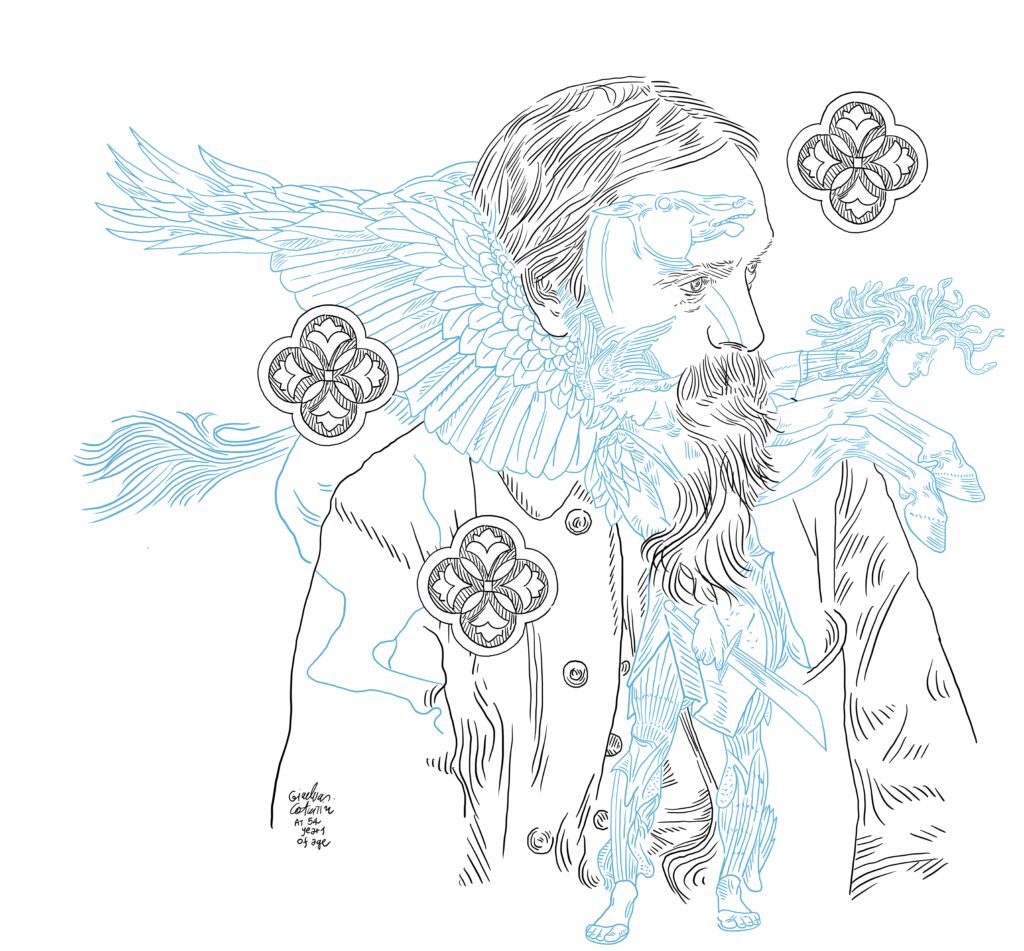
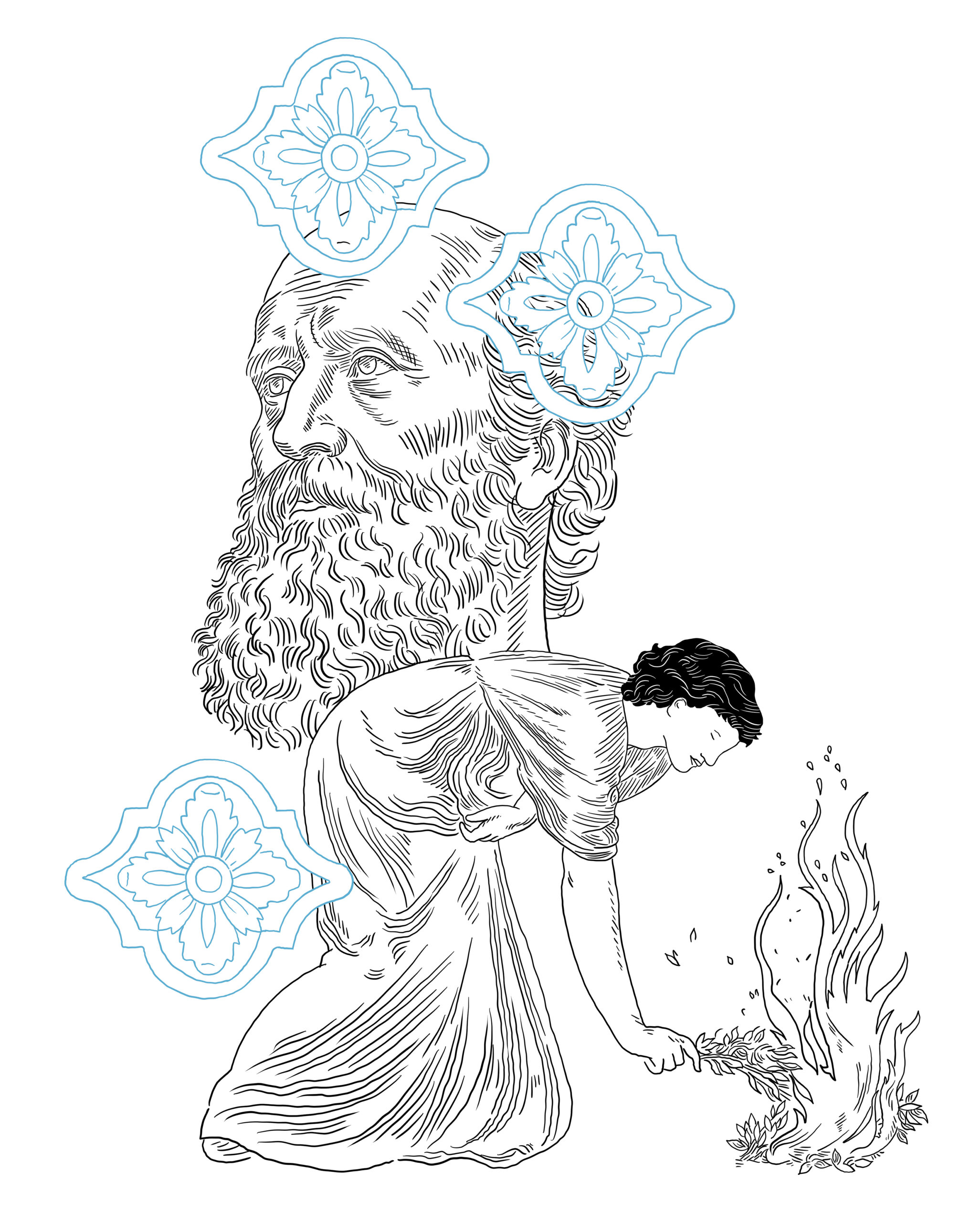
Etching from two plates, printed by Stamperia d’Arte Albicocco in Udine, in an edition of 10 copies, 2026
From Birmingham to Ravenna
At St. Paul’s Within the Walls in Rome, a tree grows across the arch leading into the chancel. Its branches spread around the figure of Christ, following the curve of the architecture. Edward Burne-Jones designed the mosaic in England, and Venetian mosaicists translated his drawing into glass. The image we see from the nave began on paper, but its shape was already determined by the space it would occupy. Burne-Jones Catalogue Raisonné, St. Paul’s Within the Walls
Burne-Jones (1833–1898) was born in Birmingham, the son of a frame-maker. He went to Oxford to study theology and met William Morris there. Their friendship grew out of a shared interest in medieval art and literature, and the work of Dante Gabriel Rossetti helped draw Burne-Jones towards painting. He became one of the leading artists of the later Pre-Raphaelite movement and designed stained glass for Morris’s firm. Long before the commission in Rome, he was already making drawings that other hands would carry into workshops and buildings. National Portrait Gallery, Edward Burne-Jones
In 1873, Burne-Jones travelled to Ravenna. The visit was cut short by illness, but the city stayed with him. In a later letter reproduced in Georgiana Burne-Jones’s Memorials, he advised friends to take quinine before visiting its “heavenly churches”. The practical warning makes the affectionate phrase all the more vivid. Years later, when he took on the Roman mosaics, he described his reasons in terms of his love for Venice and Ravenna and for the centuries that lay between them. Georgiana Burne-Jones, Memorials of Edward Burne-Jones
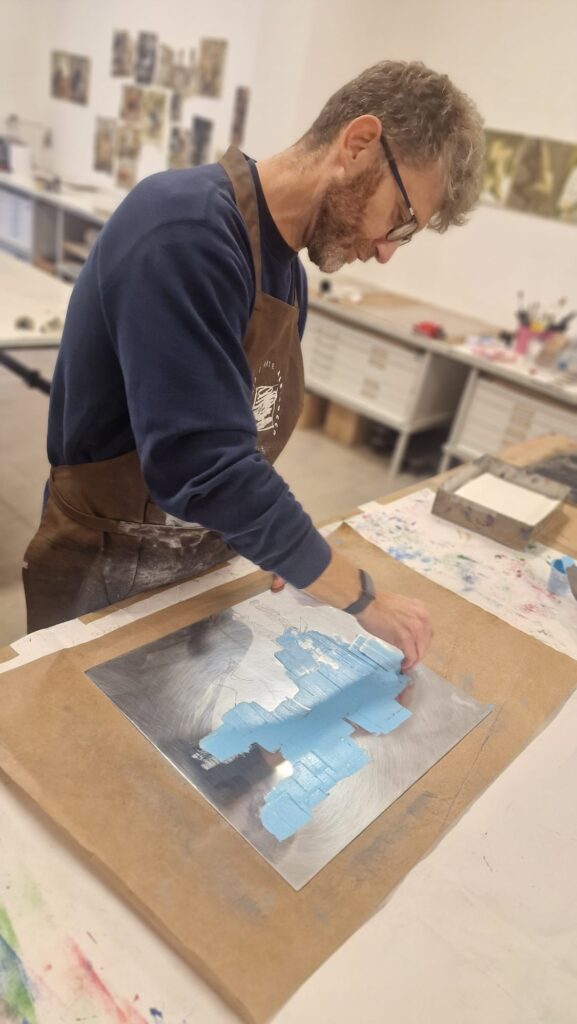
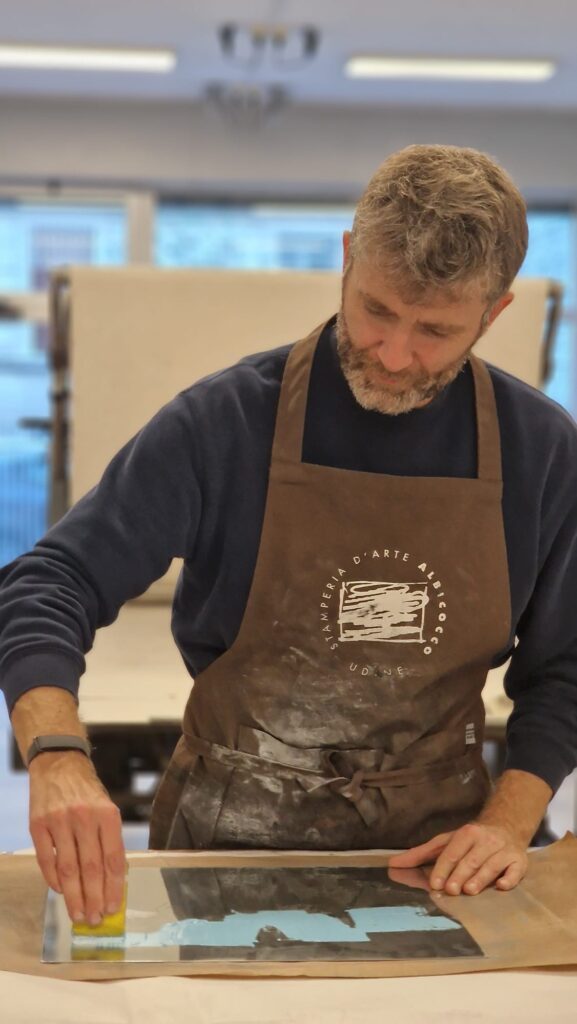
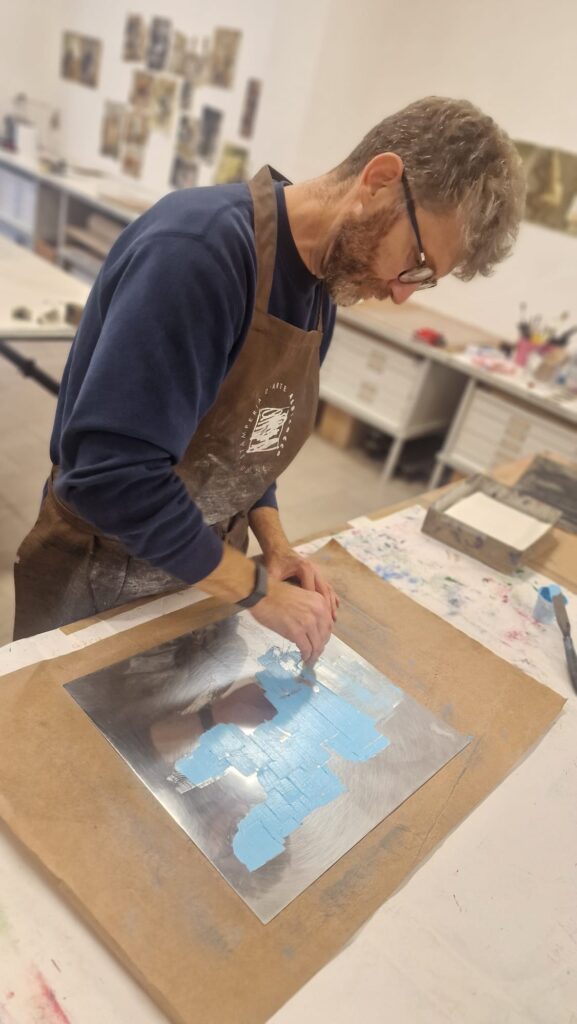
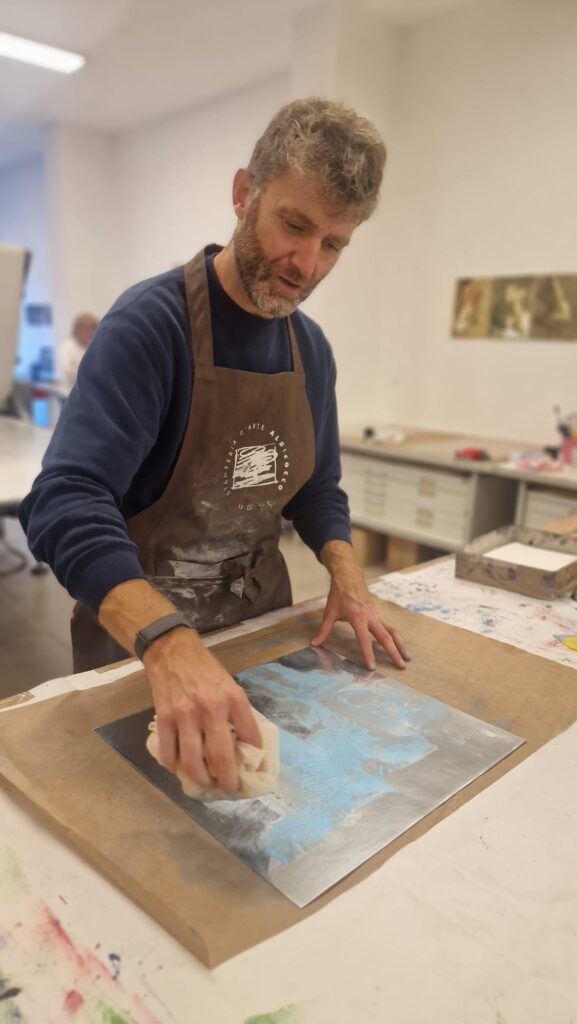
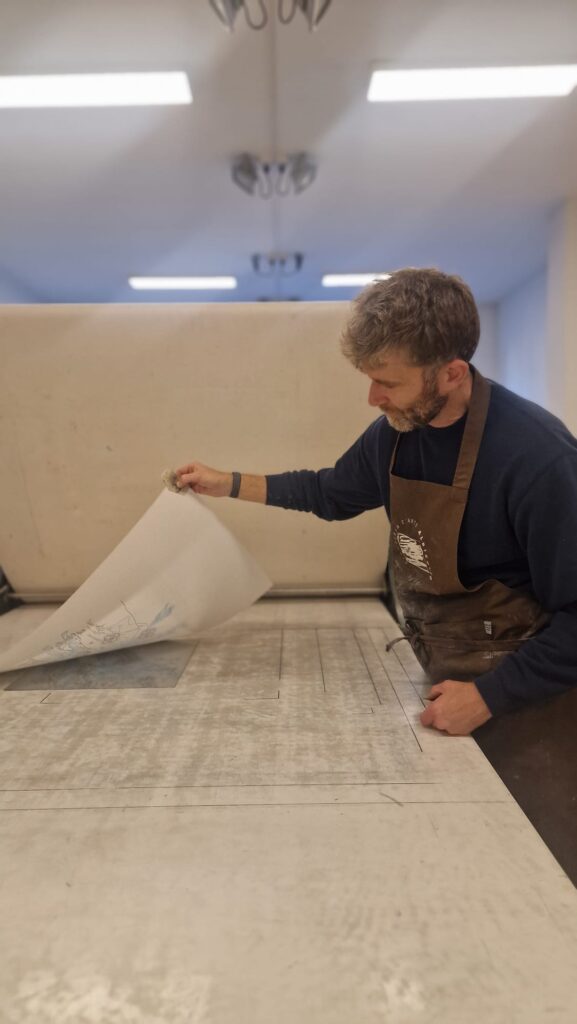
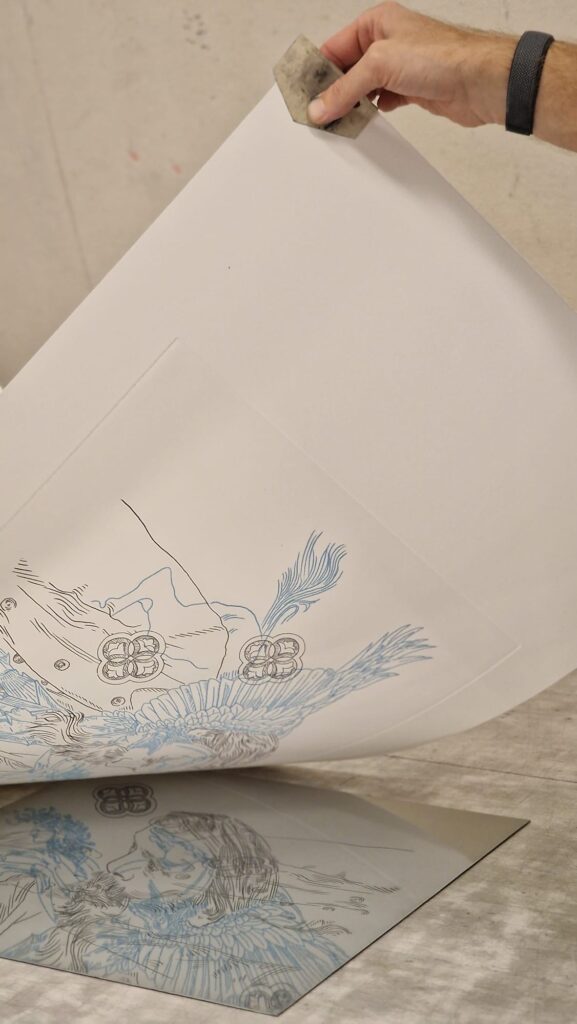
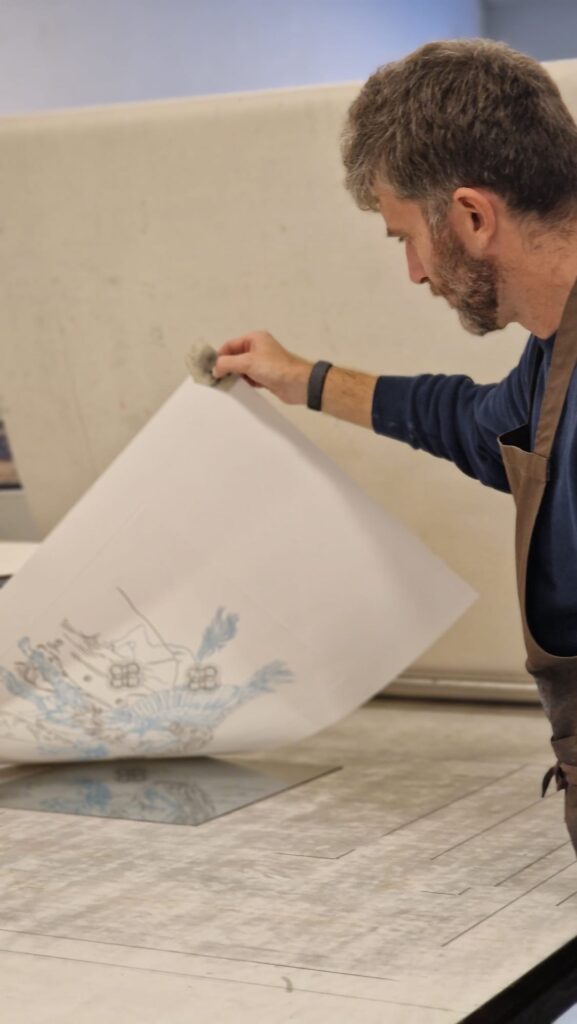
- Gianluca Albicocco of Stamperia d’Arte Albicocco in Udine prints the Edward Burne-Jones etching, 2026.
From drawing to mosaic
George Edmund Street approached Burne-Jones about decorating the American Episcopal church in Rome in 1881. The commission gave him a series of surfaces to work with. The semi-dome of the apse would hold Christ Enthroned in the Heavenly Jerusalem, unveiled in 1885. On the arches leading towards it, The Annunciation and The Tree of Life would be seen in succession as you moved through the church. The lower register of the apse was completed by his assistant Thomas Matthews Rooke and installed in 1907, nine years after Burne-Jones’s death. Burne-Jones Catalogue Raisonné, St. Paul’s Within the Walls
The Delaware Art Museum preserves a sheet of six studies for one of the archangels. On paper, you can see Burne-Jones trying out the figure before it took its place among the others. In the apse, the figures are read at a distance, and their repeated forms give the composition its rhythm. The museum connects the design with the mosaics of Sant’Apollinare Nuovo in Ravenna. Looking from the studies to the finished work, you can follow something of that journey, from the figures Burne-Jones saw in Ravenna to the ones he drew for Rome. Delaware Art Museum, Six studies for Archangel Figure, American Church, Rome
The portrait in the exhibition
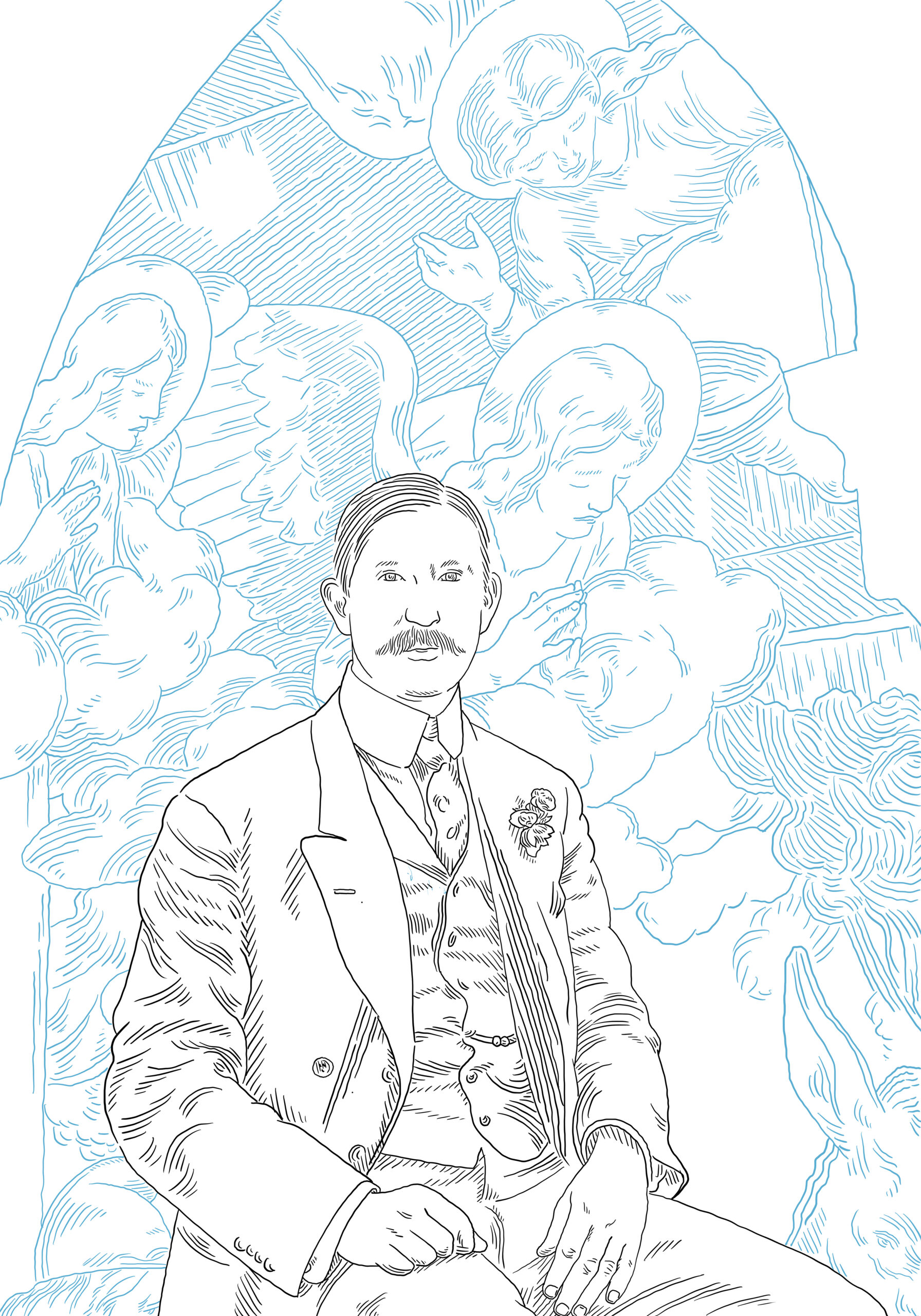
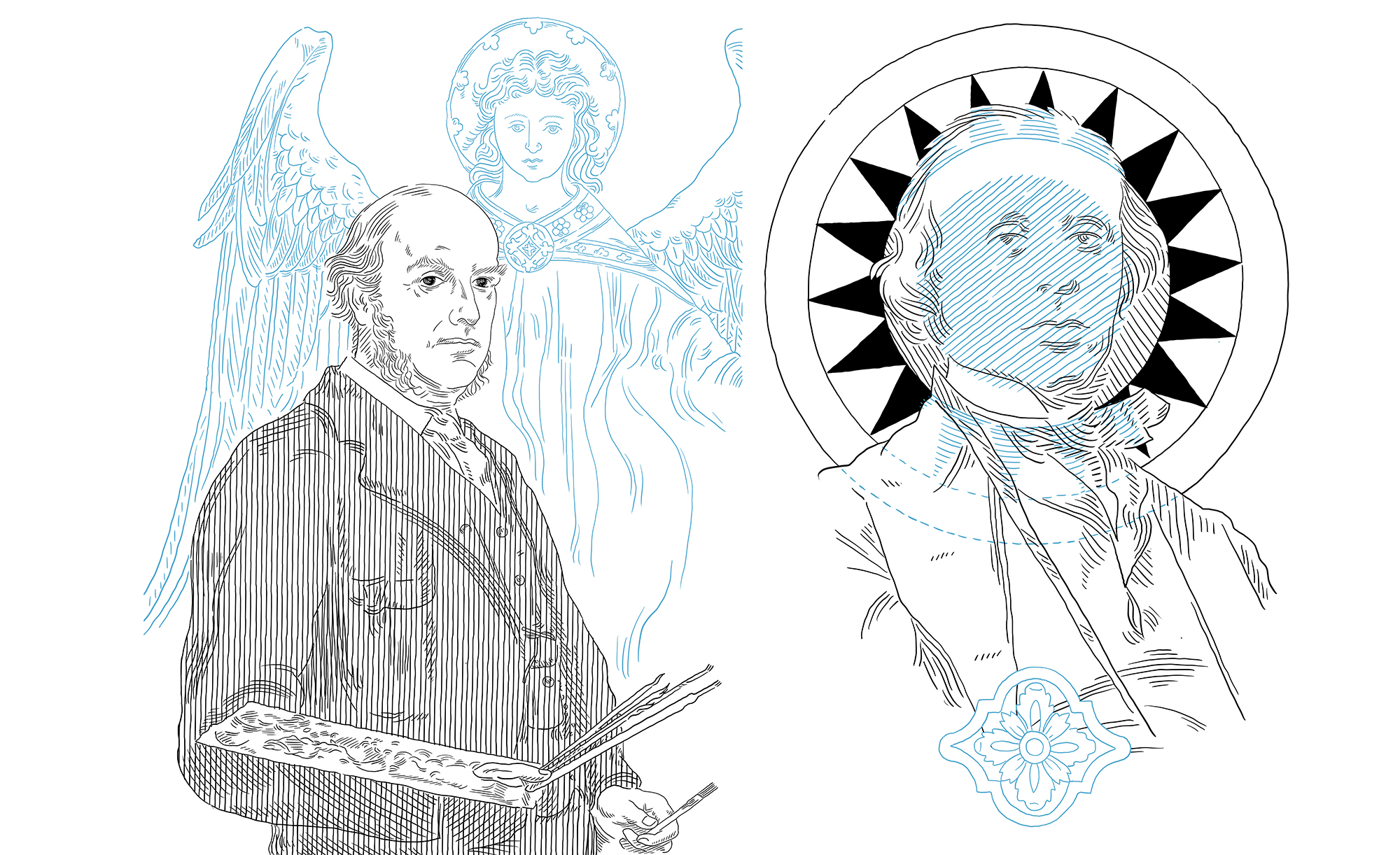
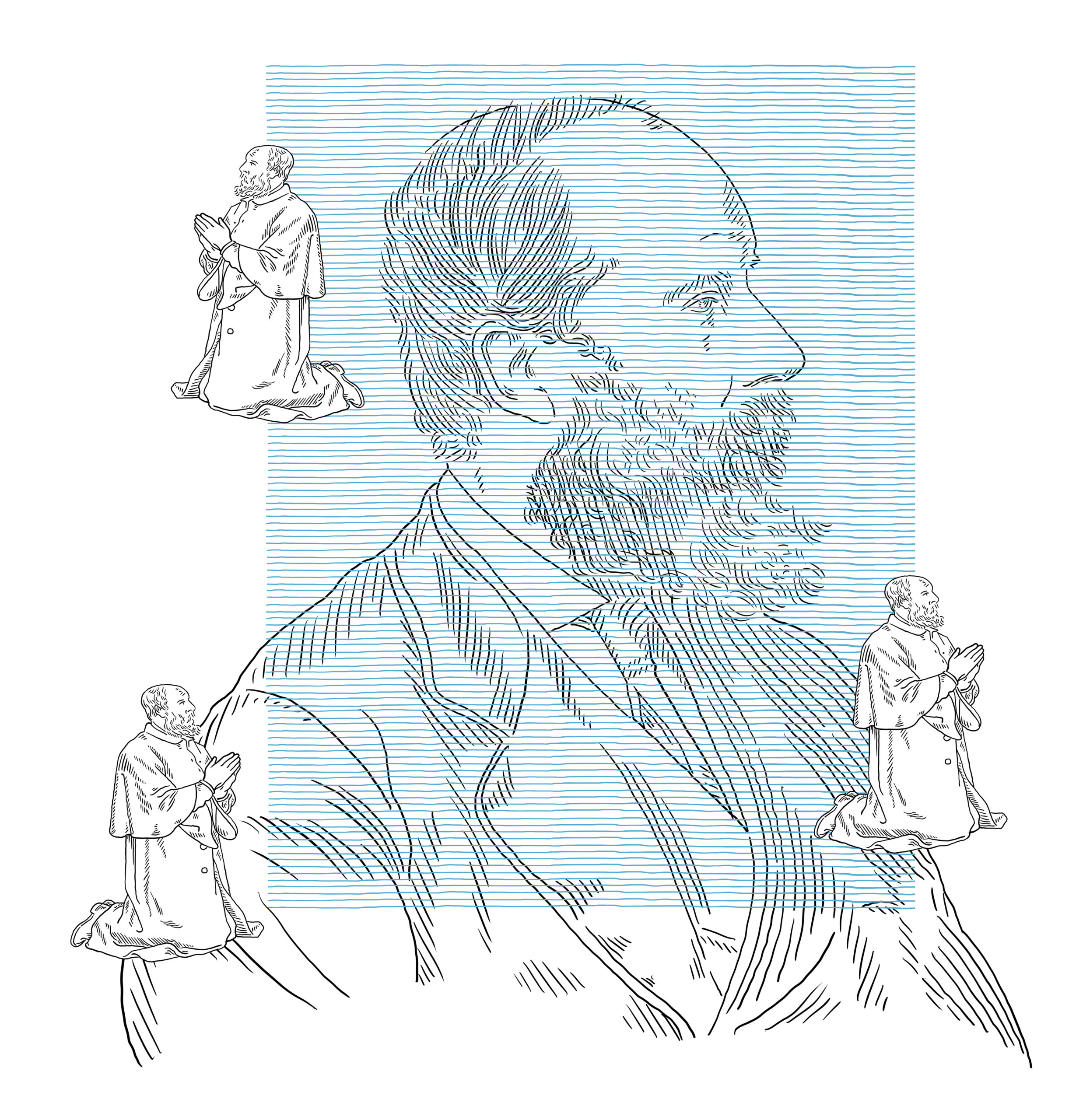
In The Day the Angels Remembered Who Had Drawn Them, I drew Burne-Jones in black, with his head turned and his eyes lowered. A wing opens behind him in pale blue. Other figures pass across his face and coat, and the small floral ornaments sit among the lines of the portrait. As you look, the face comes forward and then gives way to the figures around it.
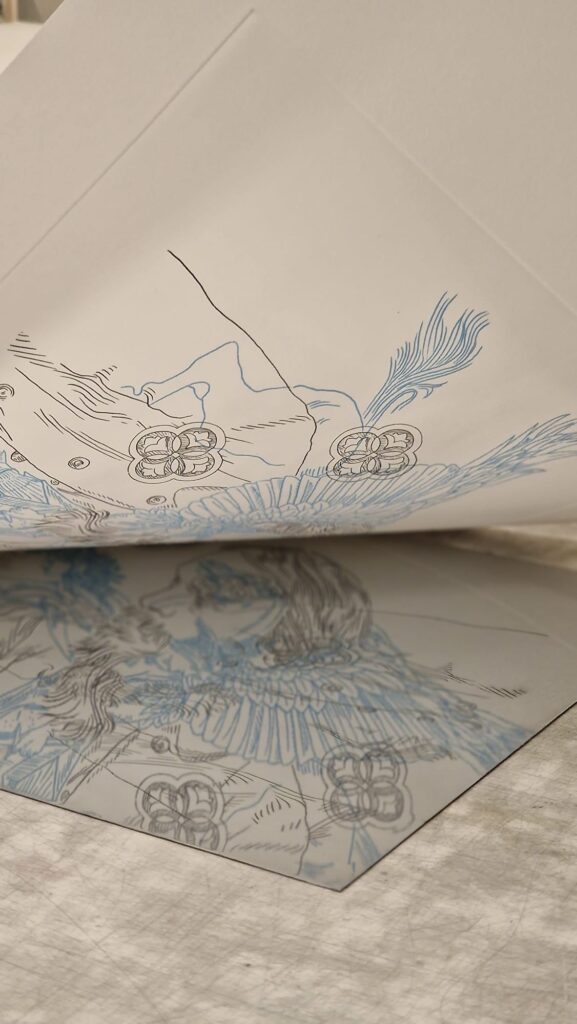
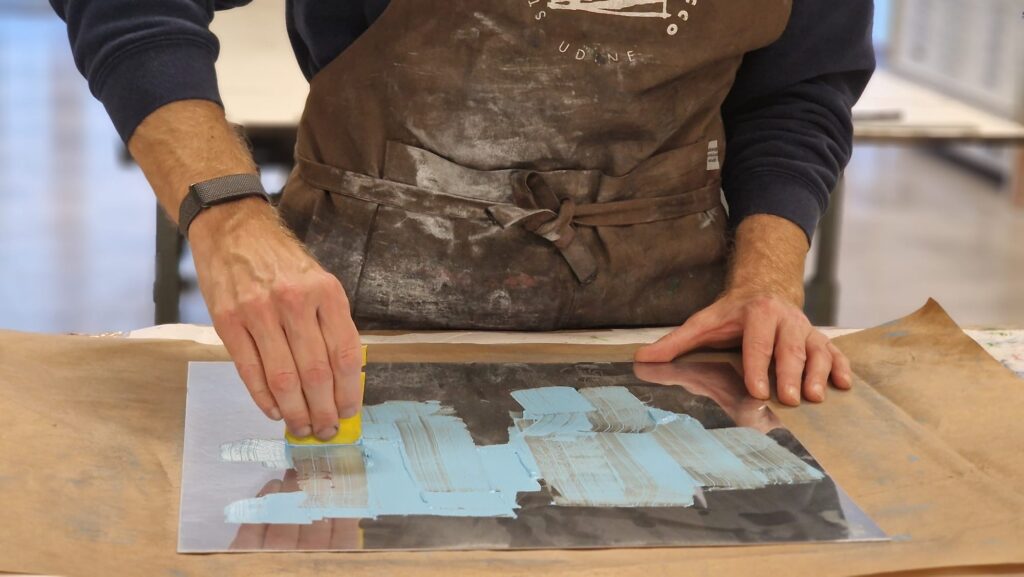
Gianluca Albicocco printed the etching from two plates at Stamperia d’Arte Albicocco in Udine. In the workshop photographs, you can see the blue ink being spread across the metal and the sheet lifting from the plate. I wanted to show that moment alongside the finished work, because it lets you see how the two colours come together on a single sheet.
The title asks what sound lilies make when no one is watching. I thought of it as a question to leave with someone looking at the portrait in the church. If you stay with the drawing for a moment, your eye moves from Burne-Jones’s lowered gaze to the blue wing and back to the small flowers. That movement is where I imagine the sound beginning.