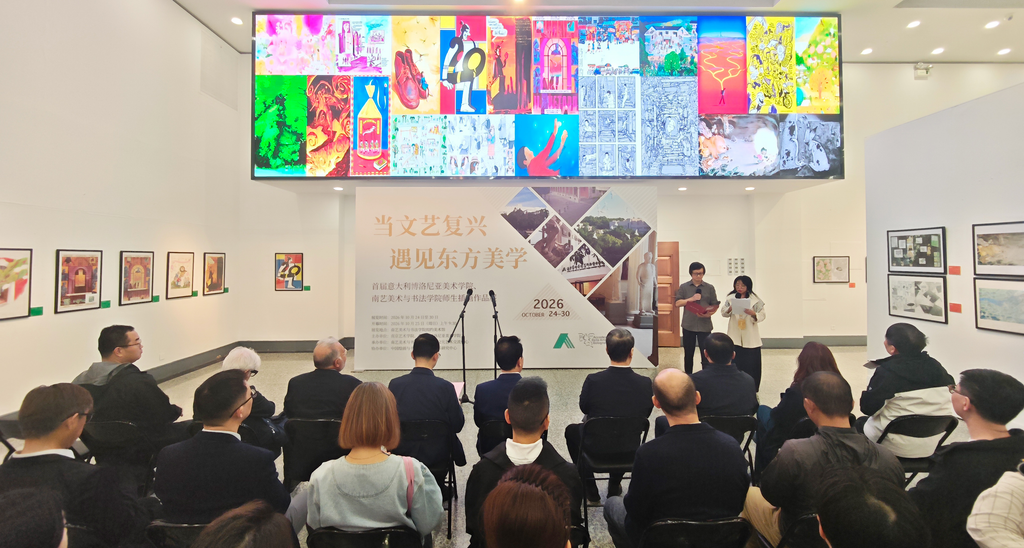
The exhibition marking twenty years of the Comics and Illustration programme was presented at Nanjing University of the Arts. Among the works on display was one of my comics pages, with its text translated into Chinese.
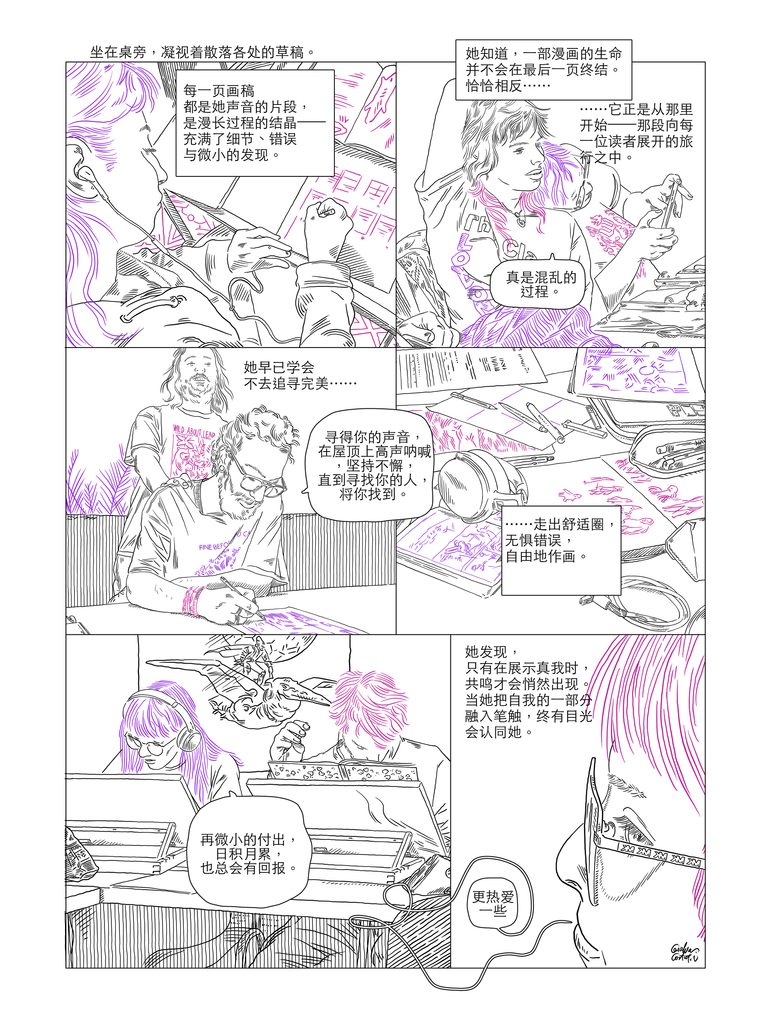
In my comic, a young woman sits at a table, looking at the sketches scattered in front of her. Pencils, headphones and open notebooks surround her. Each page holds a fragment of her voice, along with the mistakes and small discoveries she made while drawing. One caption says that the life of a comic begins where the last page ends, when the work passes into the hands of its readers.
In Nanjing, that page was shown with Chinese lettering. The drawing stayed the same, but the young woman’s voice reached readers in another language.
From Bologna to Nanjing
Avere vent’anni began in 2024 as a celebration of the first two decades of the Comics and Illustration programme at the Bologna Academy of Fine Arts. It opened in the Academy’s Collamarini Wing during the A occhi aperti festival, bringing together work by teachers and former students. The exhibition showed how people who had spent time in the same classrooms had developed very different ways of drawing and telling stories.
The exhibition was presented in China as part of When the Renaissance Meets Eastern Aesthetics (当文艺复兴遇见东方美学), the first China–Italy International Illustration Exhibition organised by Nanjing University of the Arts and the Bologna Academy of Fine Arts. The Beijing Institute of Graphic Communication’s report documents the opening on 25 October 2026 and the week of academic exchange between the two schools, which included talks and workshops. The exhibition brought together work by teachers and students from both academies, spanning comics, picture books and experimental approaches to visual storytelling.
On 30 October, a group of young printmakers from Donghai County visited the exhibition. In a photograph published by Nanjing University of the Arts, the young visitors are standing in front of the works.
Finding your voice
Translated back from the Chinese, one speech balloon reads, “Find your voice, shout it from the rooftops, and keep going until the people looking for you find you.” Elsewhere on the page, the young woman has already learned to let go of the idea of perfection. I wanted to draw the part of the work that disappears from the finished page: the attempts, the half-finished sketches and the time it takes to work out what you want to say.
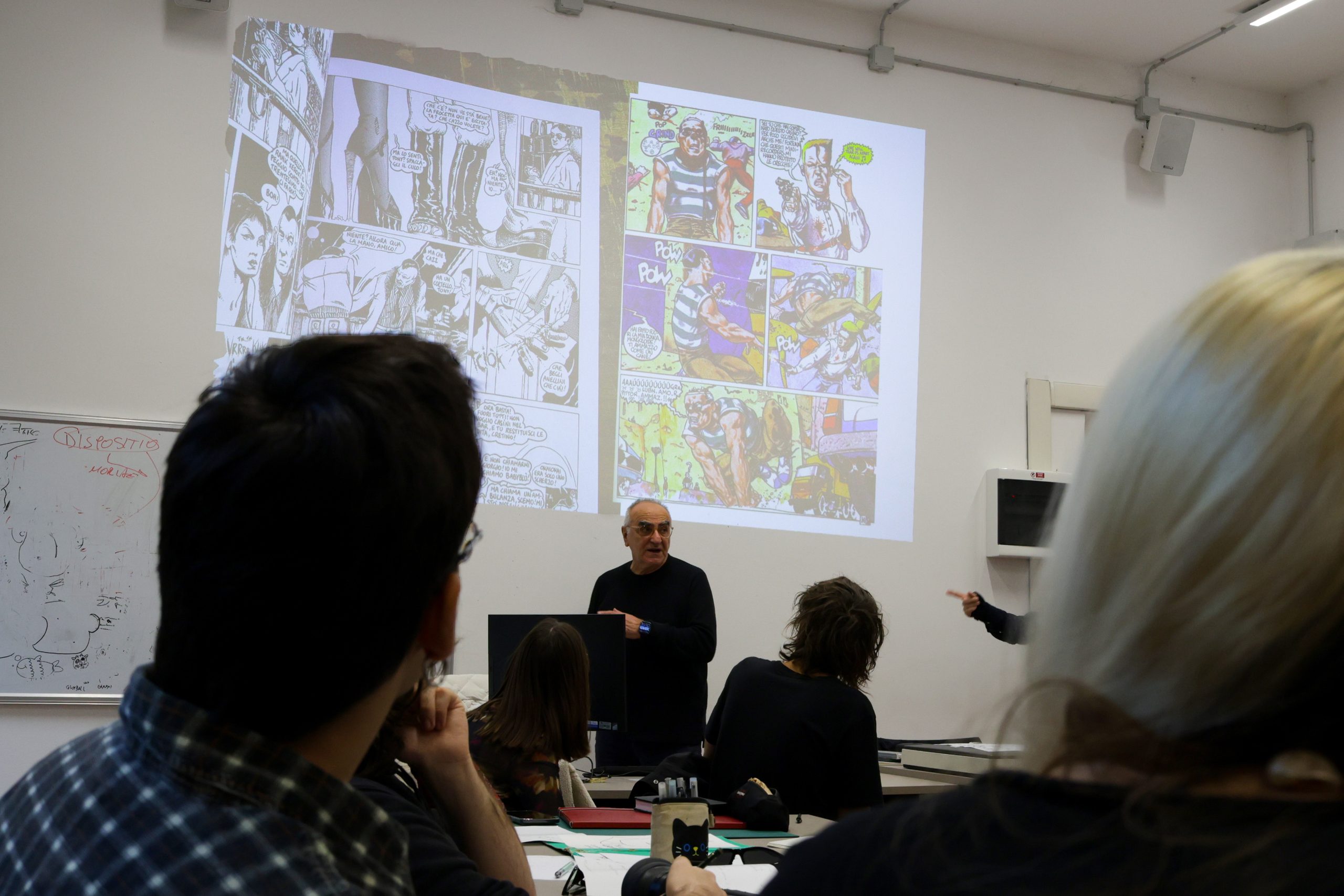
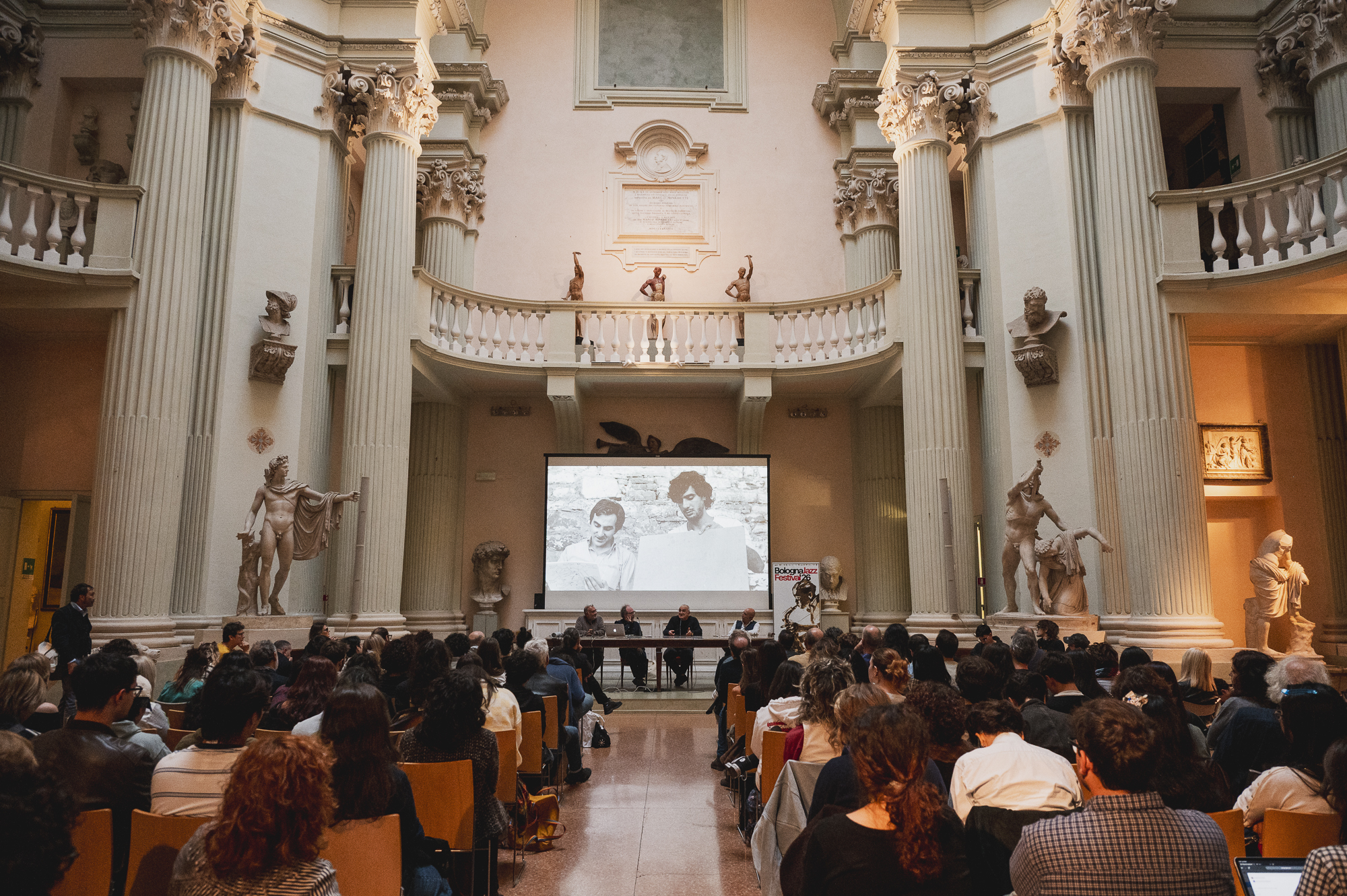
It’s something we often talk about in class. After the public conversation with Tanino Liberatore in the Academy’s Great Hall, we picked up the subject again in the classroom with students, talking about techniques, mistakes and the freedom to experiment. In Nanjing, readers could follow those thoughts in their own language. I like that a page about the everyday work of drawing found another life this way.